Skip to content
My Hangar

Stuttgart Edition · Origins

The Porsche story, from the first sketch to the Taycan.

Every model, the versions that mattered, the races that made the name and the people behind them. Scroll through the years, filter what you care about and open any moment for the details and sources.

181 moments · 33 model generations · 151 years

Before the badge

An engineer from Bohemia builds electric cars, racing cars and a people’s car for others, long before a car carries his name.

  1. 1875

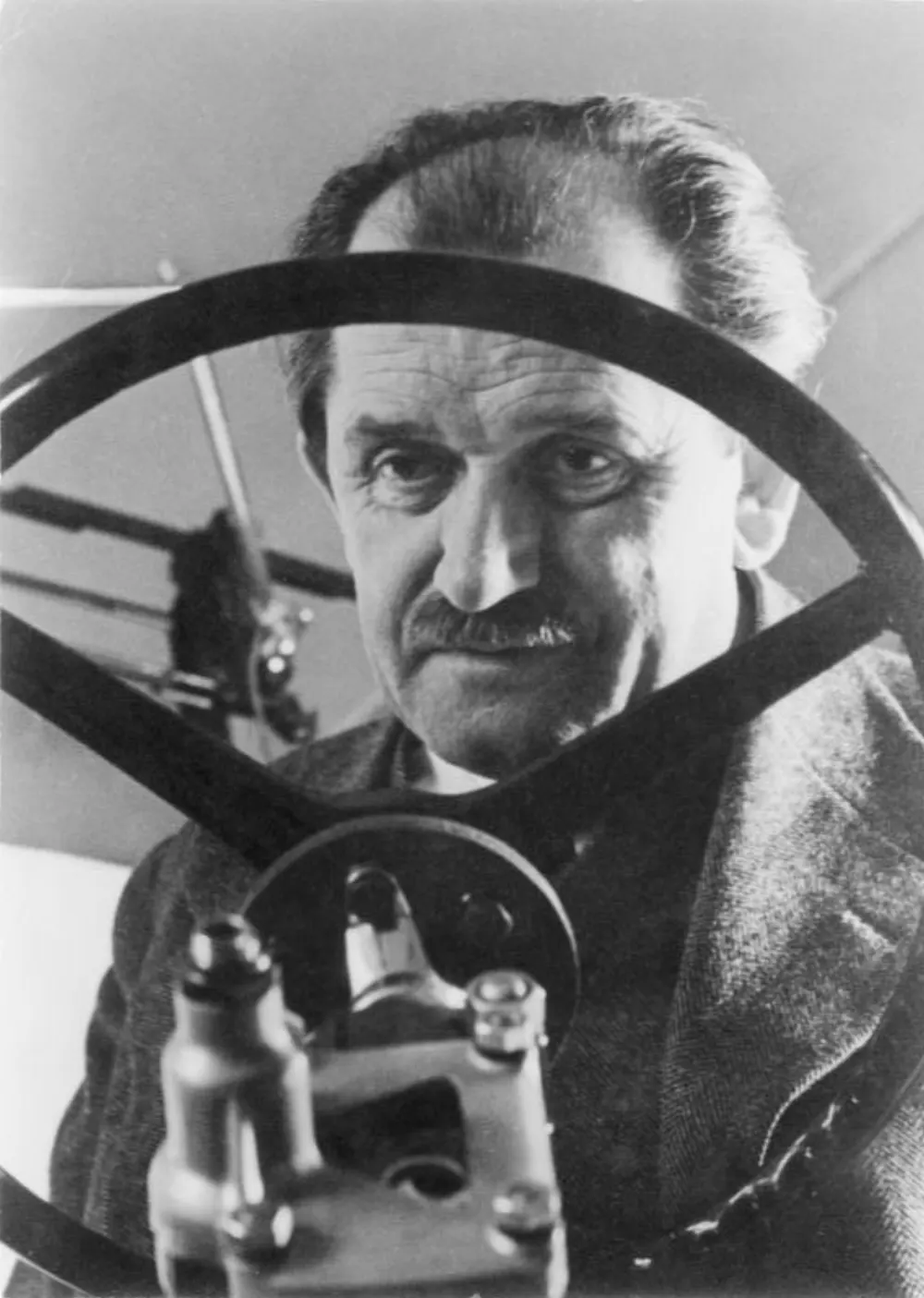
    Black-and-white portrait of Ferdinand Porsche around 1940, looking through the rim of a steering wheel.
    Photo: Unknown photographer / Bundesarchiv (Bild 183-2005-1017-525) · Wikimedia Commons · CC BY-SA 3.0 DE
    People

    Ferdinand Porsche is born in Maffersdorf, Bohemia

    The third of five children of tinsmith Anton Porsche is born in Maffersdorf, today Vratislavice nad Nisou in the Czech Republic. He is meant to take over the family workshop, but electricity fascinates him far more than sheet metal.
  2. 1893

    People

    Aged 18, Porsche leaves home for Vienna

    After wiring his parents’ house with electric light and a doorbell, the young Porsche heads for Vienna. There he works for the electrical firm Béla Egger & Co. and develops his first wheel-hub electric motor.

  3. 1900

    Technology

    Semper Vivus: a petrol-electric hybrid in 1900

    Because batteries were heavy and charging points almost nonexistent, Porsche added petrol engines that drove generators feeding the hub motors. The Semper Vivus (“always alive”) is regarded as the first functional hybrid car; the Mixte series version followed.

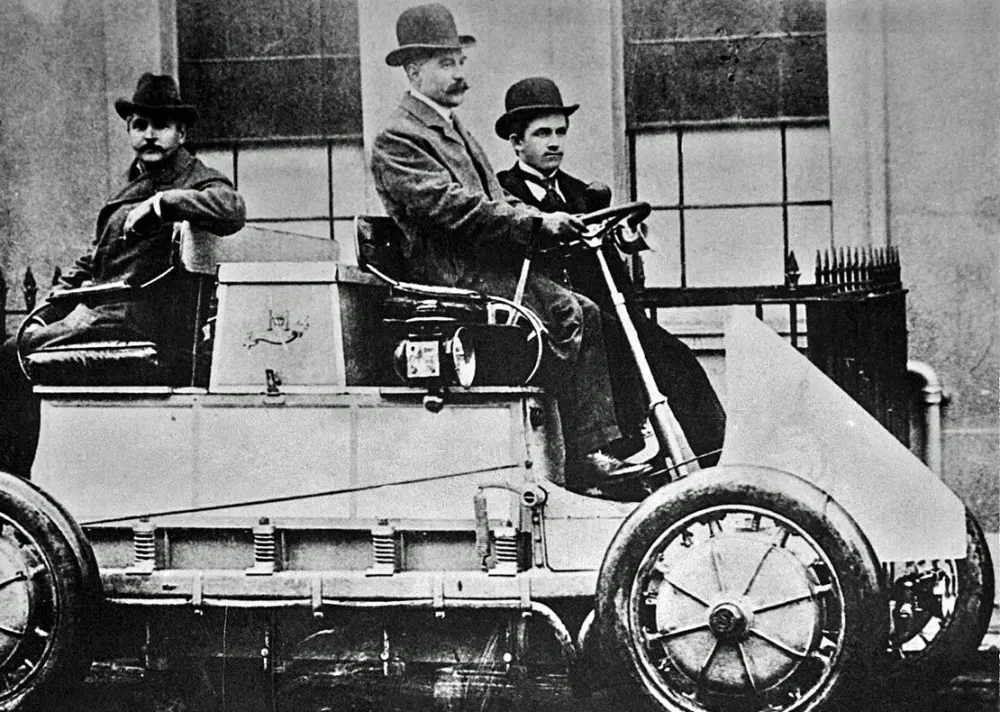
  4. Black-and-white photo from around 1901–02 of an early Lohner-Porsche car with wheel-hub motors; three men in bowler hats sit aboard, Ferdinand Porsche beside the driver.
    Photo: Unknown photographer (1901–02) · Wikimedia Commons · Public domain · Modified: cropped (removed bystanders and a studio imprint at the edges)
    Technology

    Lohner-Porsche electric car stars at the Paris World Fair

    Built for Viennese coachbuilder Jacob Lohner & Co., the car has electric motors inside its front wheel hubs and no gearbox or drive shafts. Shown at the 1900 Exposition in Paris, it makes the 24-year-old engineer’s name internationally.

  5. 1906

    People

    Porsche becomes chief engineer at Austro-Daimler

    Aged 31, Porsche leaves Lohner for Austro-Daimler in Wiener Neustadt, taking charge of the model range of one of Europe’s big carmakers. He will stay until 1923 and build his reputation there.

  6. 1909

    People

    Ferry Porsche is born in Wiener Neustadt

    Ferdinand Anton Ernst Porsche, known as Ferry, grows up in the Austro-Daimler works, where his father is in charge. He will later turn the family design office into a sports-car maker.

  7. 1923

    People

    Porsche moves to Daimler in Stuttgart

    After leaving Austro-Daimler, Porsche becomes technical director and board member at Daimler-Motoren-Gesellschaft in Stuttgart. The family settles in the city that will become the brand’s home.

  8. 1928

    New model

    Supercharged Mercedes-Benz SSK, a Porsche design

    At Daimler, Porsche shapes the supercharged S-family sports cars, culminating in the short-wheelbase SSK of 1928. The big-engined Mercedes dominate motorsport, but costly projects clash with the cost cutting after the 1926 Daimler-Benz merger.

  9. 1929

    People

    A short spell as technical director at Steyr

    Porsche joins Steyr in Upper Austria early in 1929 and designs the eight-cylinder Steyr Austria. When Steyr moves closer to Austro-Daimler and the Depression bites, he leaves in 1930 to work for himself.

  10. 1931

    Technology

    First orders: a Wanderer saloon and torsion-bar suspension

    The office’s first official order comes from Wanderer: a six-cylinder engine and chassis (Type 7) that becomes the Wanderer W21/22. The same year Porsche patents torsion-bar suspension, a design that later appears in the Volkswagen and early Porsches.

  11. Company

    Porsche’s design office is registered in Stuttgart

    In the middle of the Great Depression, “Dr. Ing. h.c. F. Porsche GmbH”, an independent office for engine and vehicle design, is entered in the commercial register. Based at Kronenstraße 24, it is the forerunner of today’s Porsche AG.

  12. 1932

    New model

    Type 12 for Zündapp sketches the future people’s car

    For motorcycle maker Zündapp the office designs a small, streamlined car with its engine in the rear. Zündapp drops the project, but the Type 12 is seen as the first draft of the later Volkswagen Beetle.

  13. 1933

    Racing

    Auto Union orders Porsche’s 16-cylinder Grand Prix car

    In early 1933 Auto Union commissions the “P” car, designed to the new 750 kg formula with a V16 behind the driver. Its success in 1934 secures the young office’s future and its name in motorsport.

  14. New model

    Type 32 for NSU refines the rear-engine small car

    A similar small-car study for NSU combines an air-cooled rear engine, torsion-bar suspension and a rounded tail. Several of its ideas resurface in the Volkswagen.

  15. 1934

    Company

    Porsche is contracted to design the Volkswagen

    After Porsche sends his memorandum on a German people’s car to the Reich Transport Ministry in January 1934, the automotive industry association signs a contract for prototypes. The project, backed by the Nazi regime, becomes the Beetle.

  16. 1935

    People

    Ferdinand Alexander “Butzi” Porsche is born

    Ferry Porsche’s eldest son is born in Stuttgart. Known as Butzi, he will design the shape of the 911 and later found Porsche Design.

  17. 1937

    Company

    Porsche KG buys land in Zuffenhausen

    The design office becomes Dr. Ing. h.c. F. Porsche KG and, needing room to build and test Volkswagen prototypes, Ferry Porsche buys a plot on Spitalwaldstraße in Zuffenhausen in May 1937.

  18. 1938

    Company

    Foundation stone laid for the Volkswagen factory

    Near Fallersleben, in what will become Wolfsburg, the regime lays the foundation stone of the plant for the car now called the “KdF-Wagen”. Porsche directs the planning. During the war it builds mainly military vehicles.

  19. Company

    Design office moves into its own Zuffenhausen building

    Porsche leaves Kronenstraße 24 for a purpose-built building at Spitalwaldstraße 2 in Stuttgart-Zuffenhausen, later known as Werk 1. Zuffenhausen remains the brand’s home to this day.

  20. 1939

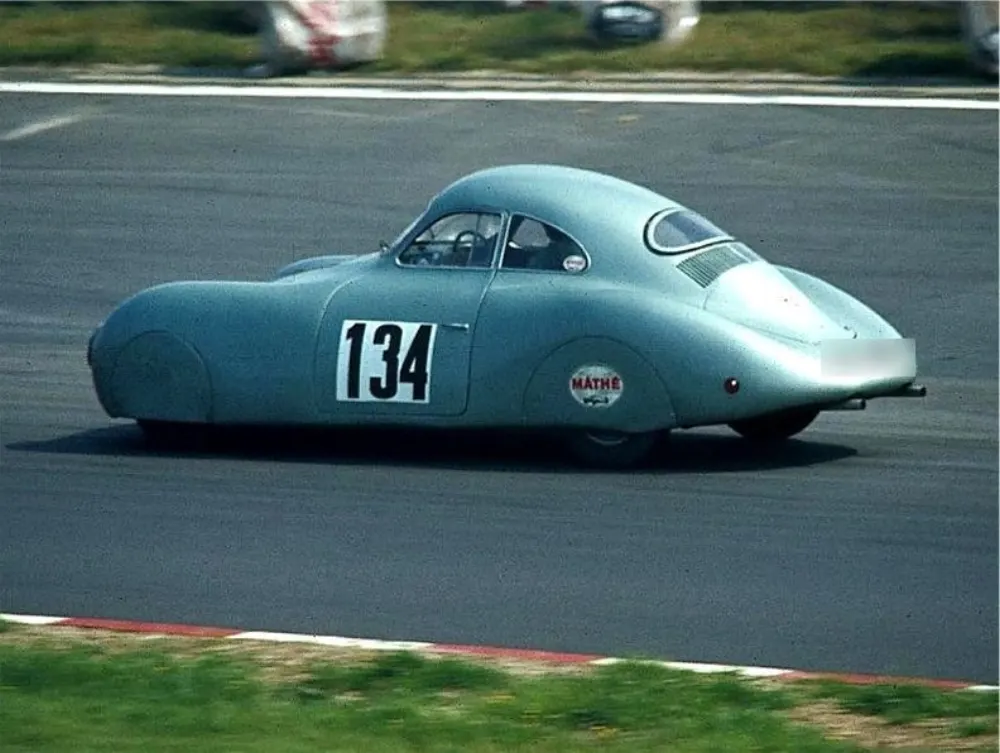
    The surviving 1939 Type 64 “Berlin–Rome” streamlined coupé, pale silver-blue with race number 134, on a circuit at a historic event in 1981.
    Photo: Lothar Spurzem · Wikimedia Commons · CC BY-SA 2.0 DE · Modified: licence plate blurred
    New model

    Type 64 “Berlin–Rome car”, ancestor of the Porsche sports car

    Three streamlined coupés are built on Volkswagen mechanicals for a planned long-distance race from Berlin to Rome. The war cancels the race, but the Type 64 is regarded as the forefather of every later Porsche sports car.

  21. 1940

    Company

    War work: military vehicles replace civilian projects

    With the war, the office turns to military projects for the Nazi regime, from the Volkswagen-based Kübelwagen, in production from 1940, to heavy tank designs. Ferdinand Porsche is closely tied to the regime’s war effort.

  22. 1944

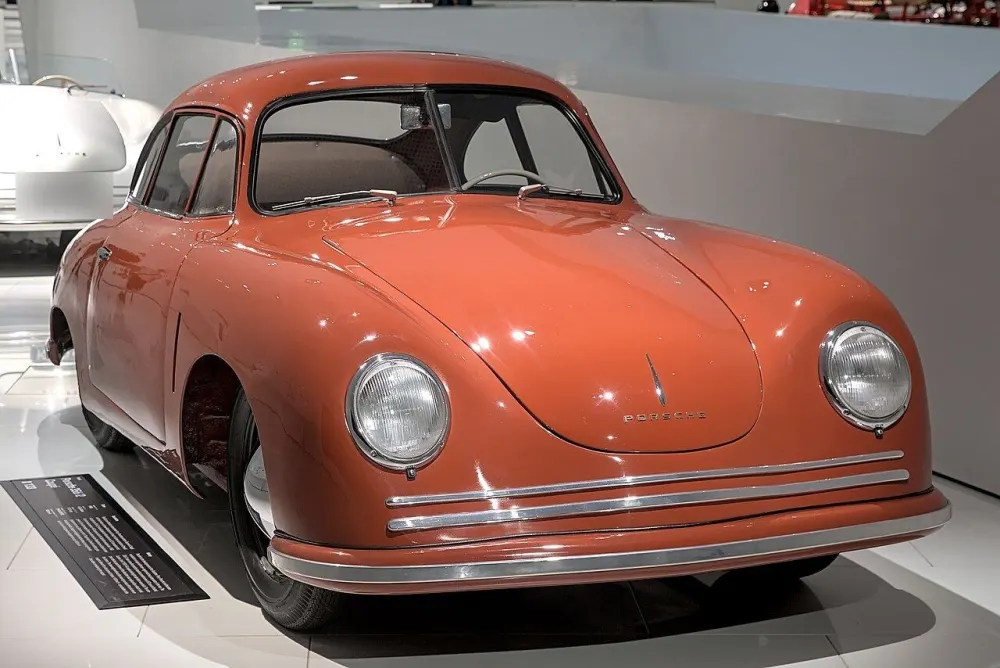
    A red-orange Porsche 356/2 coupé, one of the hand-built cars from the Gmünd works, on display at the Porsche Museum.
    Photo: Alexander Migl · Wikimedia Commons · CC BY-SA 4.0 · Modified: licence plate blurred
    Company

    Bombing raids drive the office to Gmünd in Carinthia

    As Allied raids on Stuttgart intensify, the design office moves to a former sawmill in Gmünd, in the Austrian province of Carinthia. Around 300 staff work in cramped wooden huts; the first Porsche car will be built here.

  23. 1945

    People

    Ferdinand Porsche is interned by the French

    In December 1945 French authorities arrest Ferdinand Porsche, his son-in-law Anton Piëch and Ferry. Ferry is freed after some months; his father is held until 1947, leaving Ferry and his sister Louise to keep the company alive.

  24. 1947

    Company

    Ferry and Louise found Porsche Konstruktionen GmbH

    With their father still detained, Ferry Porsche and Louise Piëch formally set up an Austrian company in Gmünd to carry on the business. It will build the first cars to bear the Porsche name.

  25. Racing

    Cisitalia Type 360 commission funds the Porsche dream

    Italian industrialist Piero Dusio orders a Grand Prix car from Porsche. The Type 360, with a mid-mounted engine and four-wheel drive, is too costly to race, but the fees help finance Ferry’s own sports car.

Gmünd and the 356

In a former sawmill in Austria a small team builds the first car under the Porsche name. Within a few years it moves to Stuttgart and starts winning races.

  1. 1948

    New model

    356/2: the first Gmünd coupés move the engine to the rear

    Alongside No. 1, Porsche develops the 356/2 with a steel box-section chassis and the engine behind the rear axle. The first coupé is finished in August 1948, and a small run of hand-built aluminium coupés and cabriolets follows until 1950.

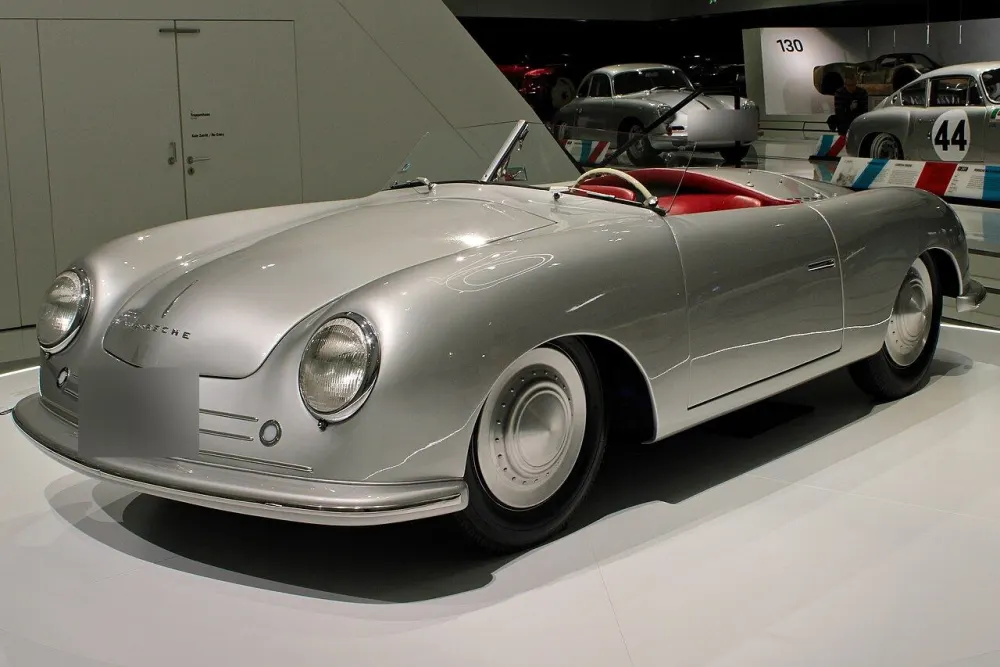
  2. The silver 356 “No. 1” Roadster with red seats and a low windscreen, displayed at the Porsche Museum in Stuttgart.
    Photo: Alexander Migl · Wikimedia Commons · CC BY-SA 4.0 · Modified: licence plates blurred
    New model

    356 “No. 1” Roadster receives its road permit

    The Carinthian state government approves the first car to carry the Porsche name, chassis 356-001. With an aluminium body on a tubular frame and a tuned VW engine ahead of the rear axle, it is seen as the birth of the Porsche brand.

  3. 1950

    Company

    Max Hoffman opens the American market

    At the 1950 Paris Motor Show, New York importer Max Hoffman agrees to sell the 356 in the US. Ferry had hoped for five cars a year; by 1955 American deliveries exceed 1,500, over half of Porsche’s sales.

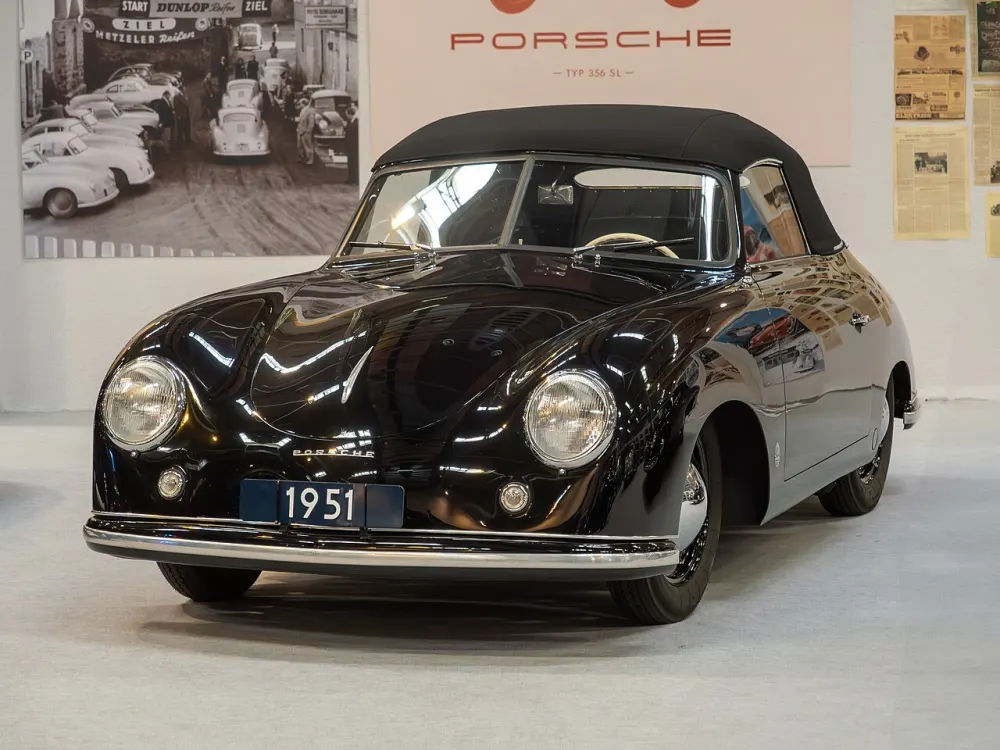
  4. A black early Porsche 356 cabriolet from 1951 with a split windscreen, shown at the Techno-Classica fair in Essen.
    Photo: Matti Blume · Wikimedia Commons · CC BY-SA 4.0
    Company

    First Porsche 356 built in Stuttgart-Zuffenhausen

    Back in Stuttgart, Porsche starts series production of the 356, now with steel bodies built by neighbouring coachbuilder Reutter. With its own Werk 1 still occupied by the US Army, it rents space at Reutter. By the end of 1950, 317 cars are built.

  5. 1951

    People

    Death of Ferdinand Porsche

    The company’s founder dies in Stuttgart aged 75, weeks after suffering a stroke. Ferry Porsche, already running the business, leads it from now on.

  6. Racing

    356 SL wins its class on Porsche’s Le Mans debut

    Auguste Veuillet and Edmond Mouche take a lightweight aluminium 356 SL to victory in the 1.1-litre class at the 24 Hours of Le Mans. It is the start of an unbroken run: Porsche has raced at Le Mans every year since.

  7. 1952

    Design

    The Porsche crest is created

    After importer Max Hoffman asks for a quality emblem, designer Franz Xaver Reimspieß draws a crest combining the Stuttgart horse with the antlers and colours of Württemberg-Hohenzollern. It first appears on the horn button at the end of 1952.

  8. Company

    The first Porsche club is founded in Westphalia

    Owners near Dortmund form the Westfälischer Porsche Club Hohensyburg, today Porsche Club Westfalen and the oldest Porsche club in the world. Belgium follows in 1953 and the Porsche Club of America in 1955.

  9. 1953

    Technology

    Ernst Fuhrmann’s four-cam engine (Type 547)

    Engineer Ernst Fuhrmann designs a flat-four with two overhead camshafts per bank. Shown at the Paris Motor Show in October 1953 in the 550 Spyder racer, it later powers the road-going Carrera versions of the 356.

  10. 1954

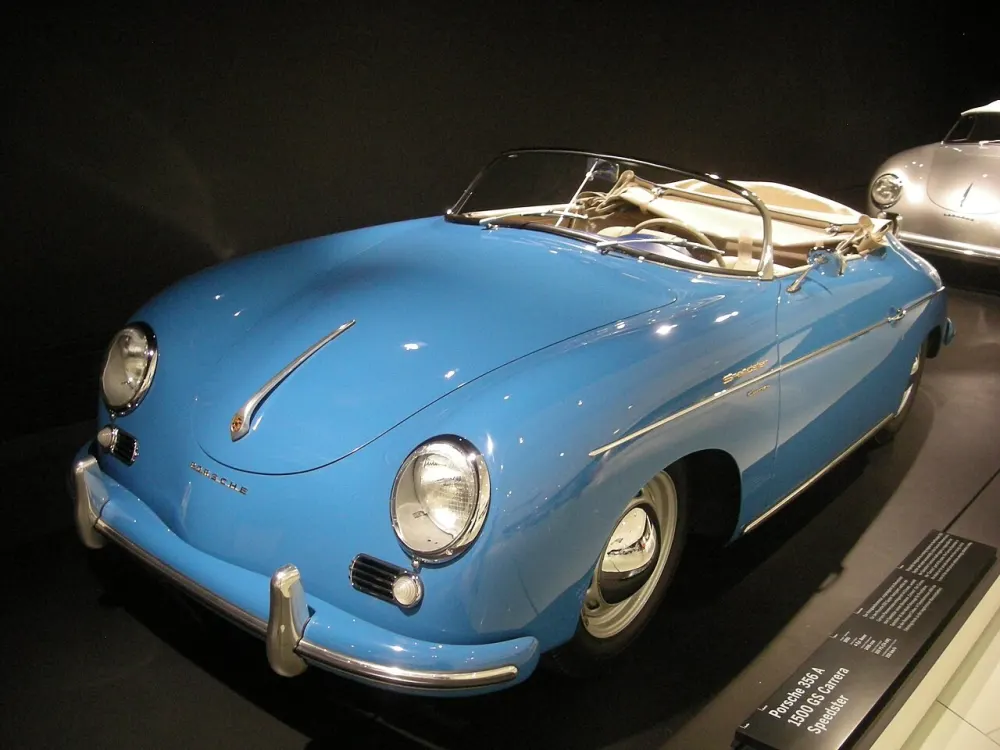
    A light-blue Porsche 356 Speedster from 1955 with its low, raked windscreen and folded top, on display at the Porsche Museum.
    Photo: Michael Barera · Wikimedia Commons · CC BY-SA 4.0
    Version

    356 Speedster: a stripped-down roadster for America

    At Max Hoffman’s urging, Porsche builds a cheaper, lighter open 356 with a low, raked windscreen and a simple folding top. Launched in late 1954, it becomes a hit in California; 1,033 are sold in 1955 alone.

  11. Racing

    Herrmann ducks under a level crossing on the Mille Miglia

    Finding the barrier coming down at a railway crossing, Hans Herrmann keeps his foot in and slips the low 550 Spyder underneath it, with co-driver Herbert Linge ducking beside him. They go on to win their class.

  12. Racing

    Carrera Panamericana: a class win and third overall for the 550

    On Mexico’s brutal road race, Hans Herrmann drives a 550 Spyder to the 1.5-litre class win and third place overall, beaten only by two big Ferraris. Porsche would soon borrow the race’s name: Carrera.

  13. 1955

    Version

    Carrera: the racing engine goes on sale in the 356

    The 356 A 1500 GS Carrera puts Fuhrmann’s four-cam racing engine in a road car. The name honours Porsche’s class successes at the Carrera Panamericana in Mexico and comes to mark the fastest Porsches.

  14. Version

    356 A arrives with a curved one-piece windscreen

    The much-revised 356 A (“T1”) replaces the original car, recognisable by its curved panoramic windscreen. Five engines are offered at launch, from 44 PS to the 100 PS Carrera.

  15. 1956

    Company

    10,000th Porsche marks the 25th anniversary

    In time for the company’s 25th anniversary, the 10,000th Porsche, a 356 A coupé, leaves the line in Zuffenhausen. By then the brand counts some 400 racing victories.

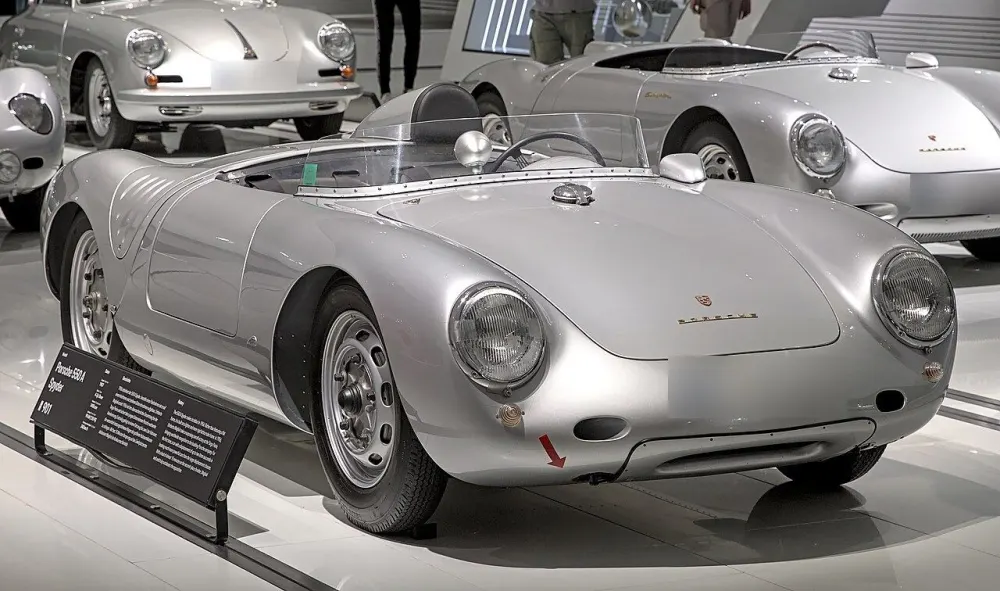
  16. Silver Porsche 550 A Spyder on display at the Porsche Museum, with other 1950s Porsches behind it
    Photo: Alexander Migl · Wikimedia Commons · CC BY-SA 4.0 · Modified: licence plates blurred
    Racing

    Maglioli gives Porsche its first Targa Florio win

    Umberto Maglioli drives a 550 A Spyder to outright victory on the Sicilian mountain roads of the Targa Florio, beating far more powerful Ferraris and Maseratis. It is the first of Porsche’s record eleven wins there.

  17. 1958

    Racing

    718 RSK takes Porsche’s first overall Le Mans podium

    After years of class wins, Jean Behra and Hans Herrmann finish third overall at Le Mans in a 718 RSK, winning the 2-litre class. It is the first time a Porsche reaches the overall podium at the Sarthe.

  18. 1959

    Version

    356 B brings a thorough update

    The completely overhauled 356 B (T5 body) replaces the 356 A, with engines ranging from 60 PS to 140 PS in the 2-litre Carrera 2. A further update (T6), with a wider front lid and twin engine-lid grilles, follows from 1961.

  19. 1960

    Racing

    Sebring 12 Hours: first overall win in a world championship race

    Hans Herrmann and Olivier Gendebien win the Sebring 12 Hours in a 718 RS 60 Spyder, with a second RS 60 in second place. It is Porsche’s first outright victory in a World Sportscar Championship race.

  20. 1961

    Company

    Ground is broken for the Weissach test centre

    Short of space for testing, Ferry Porsche breaks ground on fields near Weissach and Flacht, 25 km west of Stuttgart. The first facility is a large skid pad for chassis tests, previously carried out at Malmsheim airfield.

  21. 1962

    Company

    50,000th Porsche, a 356 B; first Weissach track in use

    Porsche builds its 50,000th car, a 356 B. The same year the first section of the new Weissach test grounds goes into use; from October engineers push early 901 prototypes to the limit on its skid pad.

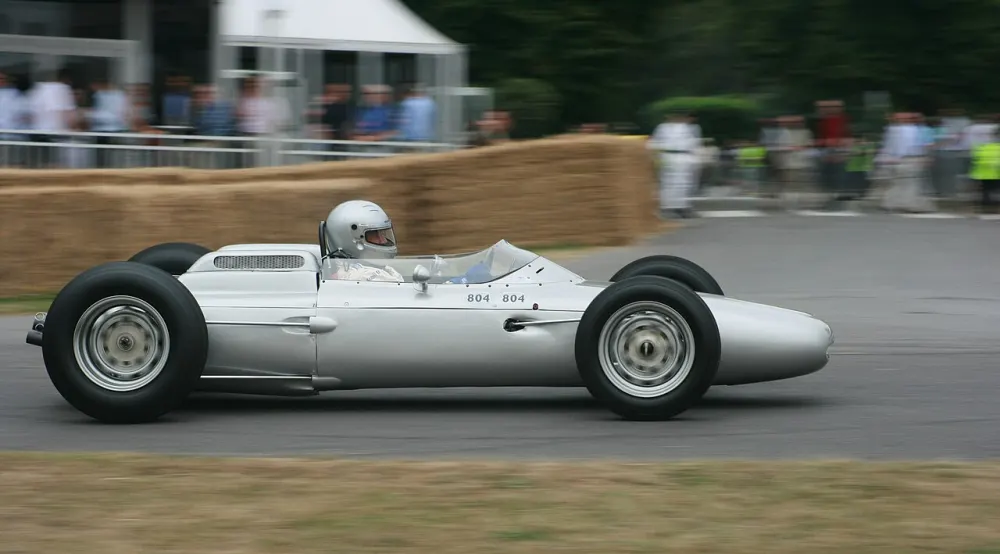
  22. Silver Porsche 804 Formula One car being driven at the Goodwood Festival of Speed in 2010
    Photo: Ian McWilliams · Wikimedia Commons · CC BY 2.0
    Racing

    Dan Gurney wins the French Grand Prix in the Porsche 804

    At Rouen-les-Essarts, Dan Gurney takes the eight-cylinder 804 to Porsche’s first and only Formula One championship win as a constructor. Porsche quit Formula One at the end of the season.

The 911 arrives

The 356 needs a successor. The answer becomes the most enduring sports car ever made, and Porsche learns to win outright.

  1. 1963

    Design

    Butzi Porsche gives the 911 its shape

    Ferdinand Alexander Porsche, who joined the body design department under Erwin Komenda in 1957, draws the new car: headlights in raised wings, a flat bonnet between them, a sloping fastback roof and short overhangs.

  2. People

    Ferdinand Piëch starts work at Porsche

    Ferdinand Porsche’s grandson, son of Louise Piëch, joins the engine testing department in Zuffenhausen. He rises quickly to lead testing and then development, steering the 911’s flat-six to production and later the 917 racer.

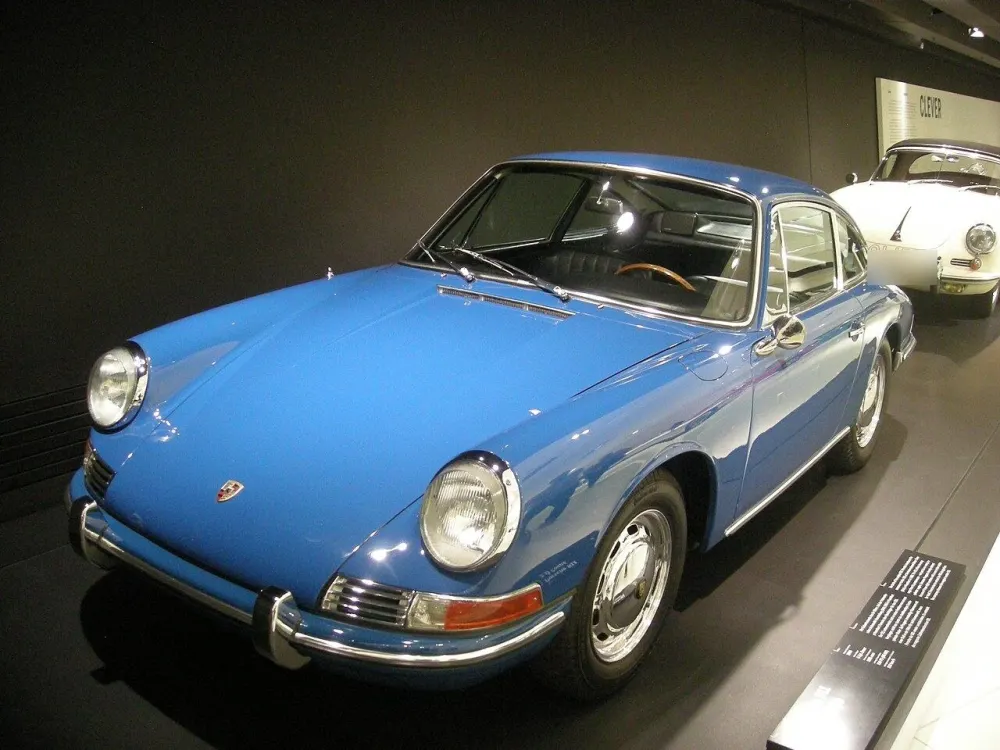
  3. An early blue Porsche 911 2.0 coupé from 1965 with round headlights in raised wings, displayed at the Porsche Museum.
    Photo: Michael Barera · Wikimedia Commons · CC BY-SA 4.0 · Modified: licence plate blurred
    New model

    Porsche 901 premieres at the Frankfurt IAA

    The successor to the 356 is unveiled at the Frankfurt motor show as the 901: a 2+2 fastback coupé with an air-cooled two-litre flat-six in the tail. It will become the 911, the core of the brand.

  4. Version

    356 C: disc brakes on all four wheels

    The final 356 replaces the 356 B. Its main change is disc brakes as standard all round; the entry engine is now the 75 PS unit, and the 2-litre Carrera 2 tops the range with 130 PS.

  5. Company

    Porsche buys the Reutter body plant

    Porsche takes over the body works of Reutter, its long-time neighbour and body supplier, with around 1,000 employees, almost doubling its workforce and securing the Zuffenhausen site for 911 production. Reutter’s seat business continues as Recaro.

  6. 1964

    New model

    Peugeot objects, and the 901 becomes the 911

    Peugeot claims the rights in France to three-digit car names with a zero in the middle. Porsche renames its new sports car 911 for all markets as series production starts in Zuffenhausen in autumn 1964.

  7. Racing

    904 Carrera GTS scores a Targa Florio one-two

    Colin Davis and Antonio Pucci win the Targa Florio in a 904 Carrera GTS, ahead of a sister car. The 904 is the first Porsche with a glass-fibre-reinforced plastic body.

  8. 1965

    New model

    End of 356 production after some 78,000 cars

    Seventeen years after No. 1, the 356 bows out. Ferry Porsche had expected to sell about 500; Porsche puts the final total at around 78,000 cars.

  9. New model

    912: the 911 body with a four-cylinder engine

    To keep 356 buyers who found the 911 too expensive, Porsche launches the 912, combining the new body with the 356’s 1.6-litre four-cylinder boxer. It sells well until 1969.

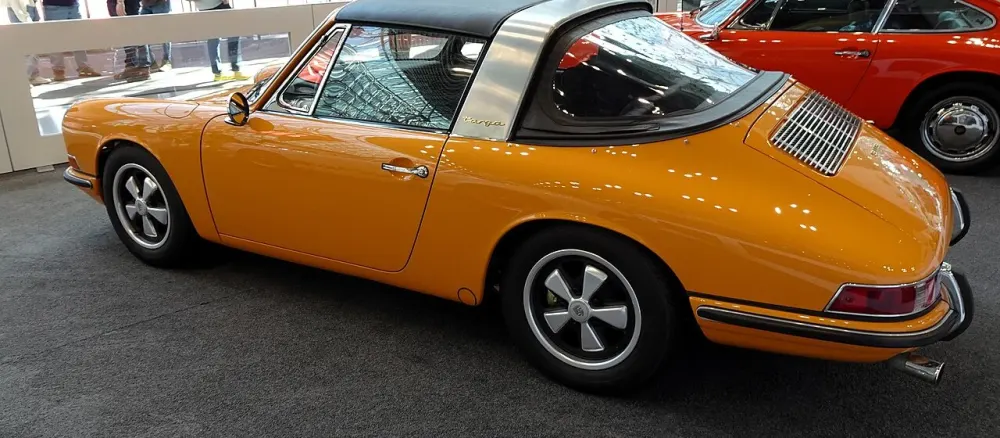
  10. Side view of an orange 1968 Porsche 911 S Targa with brushed stainless-steel roll bar and soft folding rear window, at an indoor car show.
    Photo: Charles from Port Chester, New York · Wikimedia Commons · CC BY 2.0 · Modified: cropped
    Version

    911 Targa, the “safety cabriolet”, is unveiled

    With convertibles threatened by planned US safety rules, Porsche shows a 911 with a fixed stainless-steel roll bar, removable roof panel and folding rear window at the Frankfurt IAA. Named after the Targa Florio, it reaches customers from early 1967.

  11. 1966

    Company

    100,000th Porsche is a police 912 Targa

    Porsche reaches 100,000 cars with a 912 Targa fitted out for the police of Baden-Württemberg, its home state.

  12. 1967

    Technology

    Sportomatic: a clutch pedal–free 911

    Porsche offers the 911 with the Sportomatic, a semi-automatic four-speed gearbox that pairs a torque converter with an automatically operated clutch, so the car needs no clutch pedal.

  13. 1968

    Racing

    Vic Elford wins the Monte Carlo Rally in a 911

    Vic Elford and David Stone overturn a deficit on the icy Col de Turini to win the Monte Carlo Rally, with teammate Pauli Toivonen second. It is the biggest win so far for Porsche and the young 911.

  14. Racing

    907 long-tails sweep the 24 Hours of Daytona

    The new 907 makes a dream start: works cars finish first, second and third at Daytona. It is Porsche’s first overall win in a 24-hour race, and the 907 adds the Sebring 12 Hours soon after.

  15. 1969

    Version

    911 grows: longer wheelbase and 2.2 litres

    From model year 1969 the 911’s wheelbase is stretched by 57 mm, and in 1969 the flat-six grows to 2.2 litres across the T, E and S versions.

  16. Racing

    917 unveiled in Geneva, built to win Le Mans

    Porsche shows the 917 at the Geneva Motor Show: a lightweight coupé with the company’s first twelve-cylinder engine. To homologate it, 25 cars have to be built within weeks, and the factory lines them up for the inspectors in April.

  17. Company

    VW-Porsche sales company founded

    Porsche and Volkswagen set up a jointly owned sales company, with five million marks of capital, to market the 914/4 and 914/6 sports cars developed together.

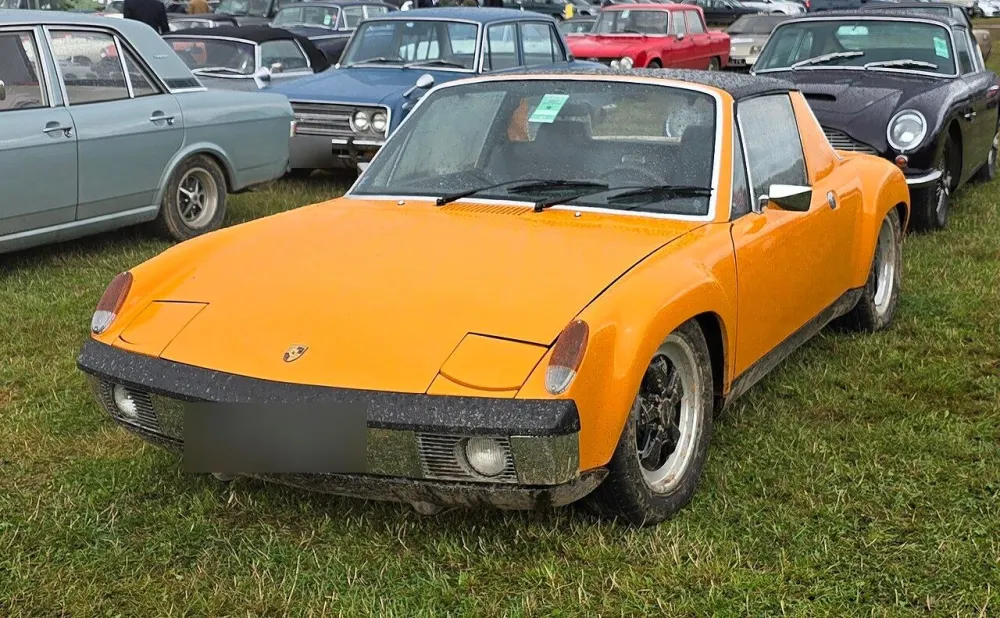
  18. An orange 1970 Porsche 914 with black Targa roof and pop-up headlights, parked on grass among other classic cars.
    Photo: Calreyn88 · Wikimedia Commons · CC BY-SA 4.0 · Modified: licence plates blurred
    New model

    VW-Porsche 914 debuts at Frankfurt

    Germany’s first series-production mid-engined sports car is unveiled at the IAA. The four-cylinder 914 is sold as a VW-Porsche in Europe, the six-cylinder 914/6 as a Porsche; the cheaper four-cylinder becomes the big seller.

  19. 1970

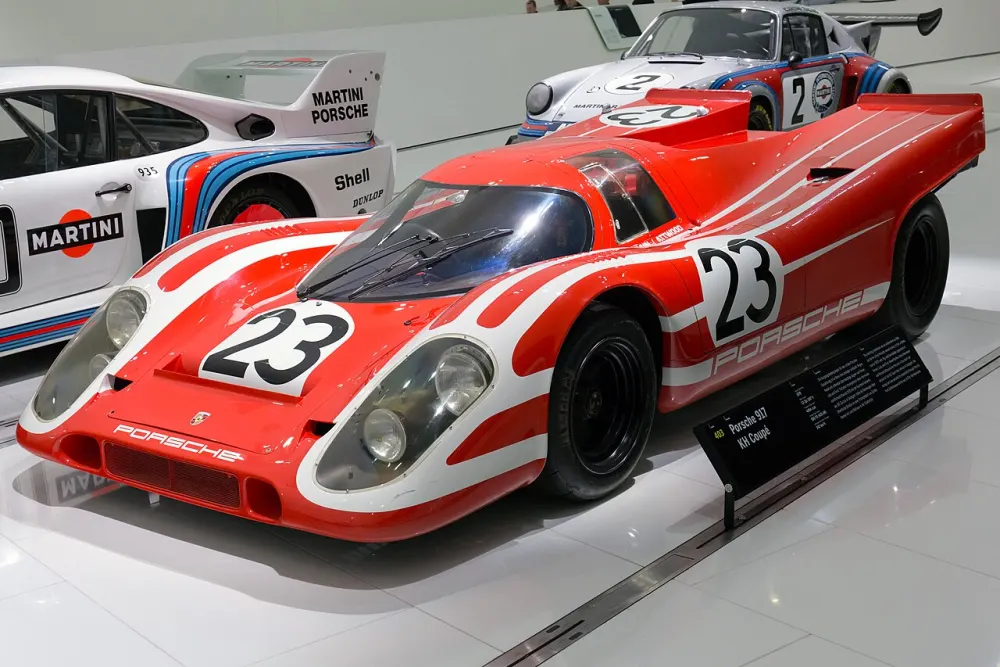
    The red-and-white No. 23 Porsche 917 KH coupé that won Le Mans in 1970, displayed at the Porsche Museum
    Photo: Morio · Wikimedia Commons · CC BY-SA 3.0
    Racing

    First overall Le Mans win: Herrmann and Attwood in the 917 KH

    After 19 years of trying, Porsche finally wins Le Mans outright. Hans Herrmann and Richard Attwood bring the red-and-white No. 23 917 short-tail home first in treacherous weather, and Herrmann retires on the spot, as he had promised his wife.

  20. 1971

    Company

    Development moves to the new Weissach centre

    Design, engineering and testing leave Zuffenhausen for the Weissach Development Centre (EZW), which is officially inaugurated. It remains the brand’s development hub to this day.

  21. Design

    The “Pink Pig”: a one-off 917/20 in butcher’s livery

    The 917/20 mixed short- and long-tail ideas in an extra-wide body. Designer Anatole Lapine painted it pink and marked the panels like butcher’s cuts. It raced only once, at Le Mans 1971, and retired after an accident.

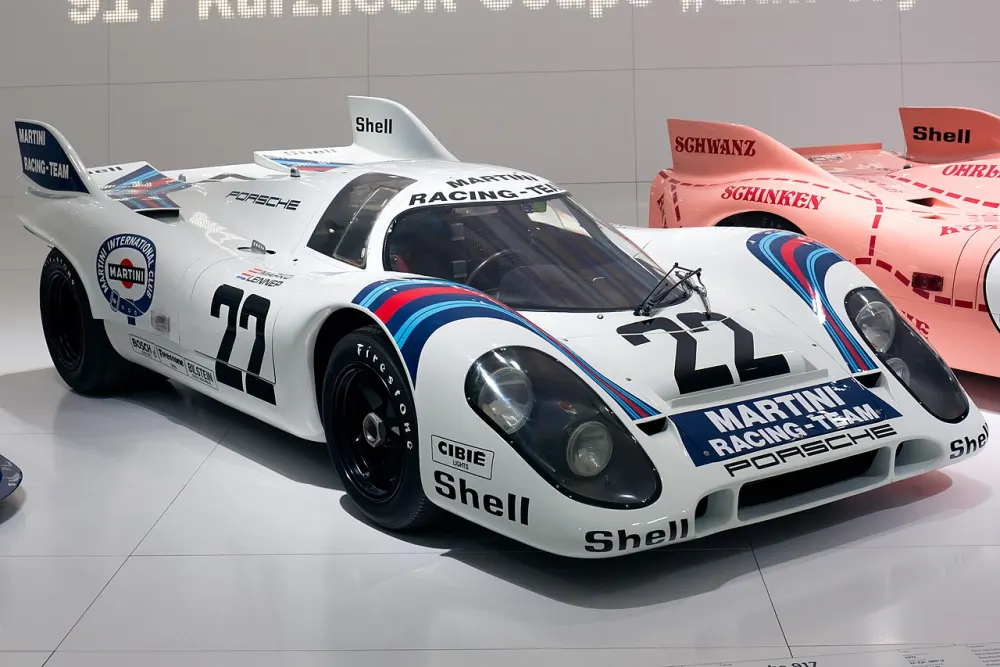
  22. The white No. 22 Martini Porsche 917 KH coupé that won Le Mans in 1971, at the Porsche Museum, with the pink 917/20 beside it
    Photo: Morio · Wikimedia Commons · CC BY-SA 3.0
    Racing

    Marko and van Lennep win Le Mans with a distance record

    The Martini 917 short-tail of Helmut Marko and Gijs van Lennep wins Le Mans after 5,335 km at an average of over 222 km/h. The distance record would stand until 2010.

  23. 1972

    People

    Porsche and Piëch family members step back from management

    With the change to an AG, the families decide that no family member will hold an operational post. Ferdinand Piëch leaves and joins Audi; F.A. Porsche also leaves. The families now act through the Supervisory Board.

  24. Design

    F.A. Porsche founds Porsche Design

    The 911’s designer sets up Porsche Design in Stuttgart with his brother Hans-Peter, to carry the brand’s ideas beyond cars. Its first icon is the black Chronograph I watch.

  25. Racing

    Turbocharged 917/10 wins the Can-Am title

    For North America’s near-unlimited Can-Am series, Porsche fits the 917 with turbochargers for the first time. With Mark Donohue injured in testing, his Penske teammate George Follmer takes the 917/10 to the 1972 championship.

  26. Company

    Porsche KG becomes a joint-stock company

    The family partnership is turned into Dr. Ing. h.c. F. Porsche AG with DM 50 million of share capital. Ferry Porsche chairs the Supervisory Board and Ernst Fuhrmann heads the Executive Board.
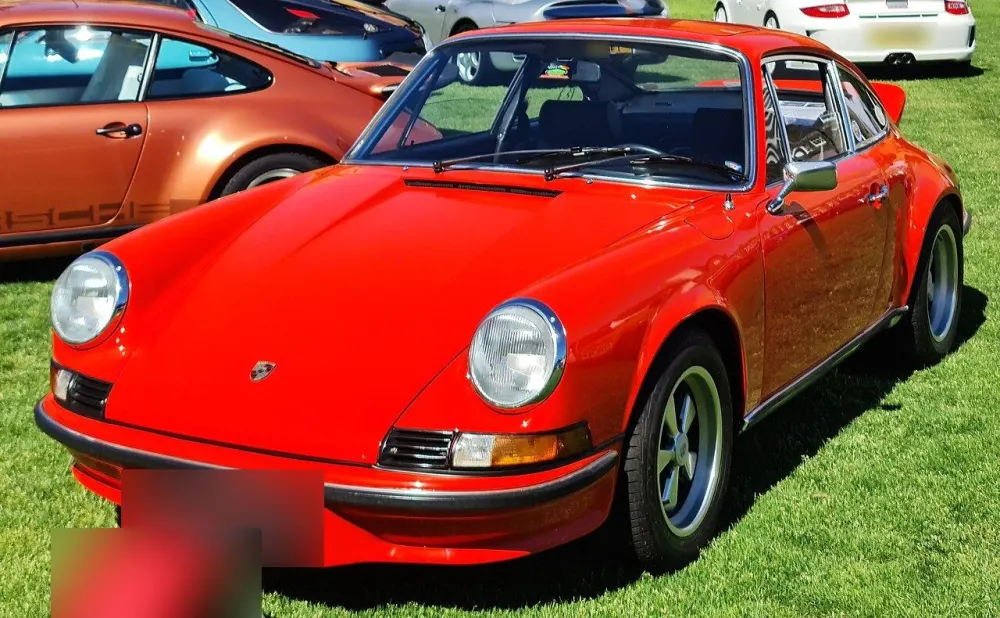
  27. A red 1972 Porsche 911 Carrera RS 2.7 seen from the front three-quarter, showing its deeper front spoiler and widened rear arches, at a concours on grass.
    Photo: MrWalkr · Wikimedia Commons · CC BY-SA 4.0 · Modified: licence plates and a placard blurred
    Version

    911 Carrera RS 2.7 and its “ducktail” are unveiled in Paris

    Built to homologate the 911 for racing, the RS 2.7 is the first 911 called Carrera and the first series car with front and rear spoilers. All 500 planned cars sell within weeks, and Porsche ends up building more than 1,500.

  28. 1973

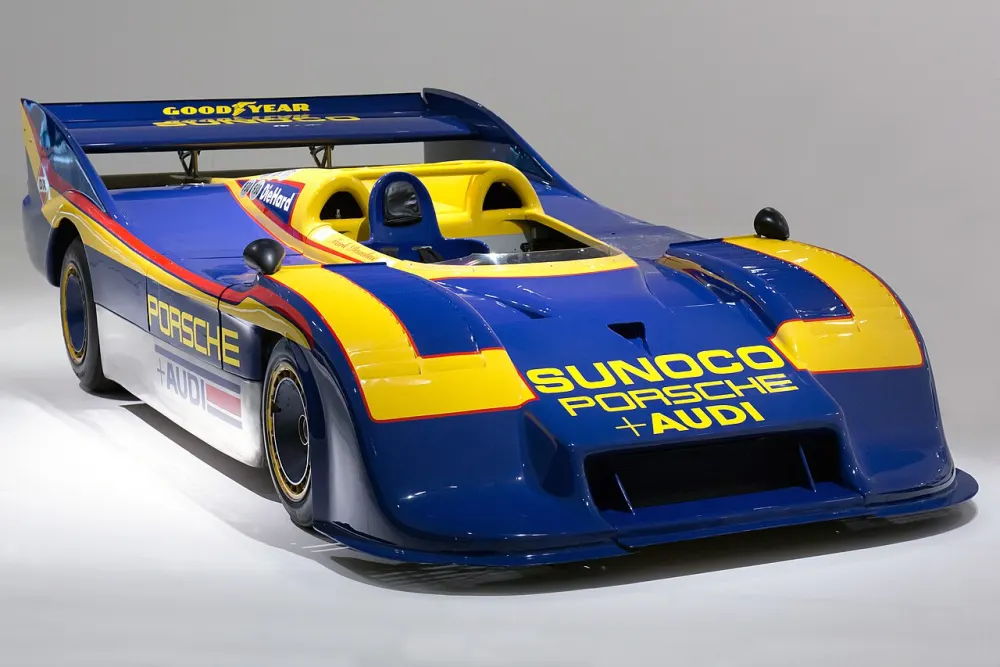
    Blue and yellow Porsche 917/30 Can-Am spyder in Sunoco livery at the Porsche Museum
    Photo: Morio (retouched by Auge=mit) · Wikimedia Commons · CC BY-SA 3.0
    Racing

    917/30: Mark Donohue dominates Can-Am

    The 917/30, the most powerful version of the 917, carries Mark Donohue and Penske to the 1973 Can-Am title with six wins. It was Porsche’s last Can-Am season, and the rules were changed to rein the car in.

  29. Racing

    911 Carrera RSR wins the last championship Targa Florio

    Herbert Müller and Gijs van Lennep win the Targa Florio in a Martini 911 Carrera RSR, beating the prototypes. It is the last time the Sicilian classic counts for the world championship, and Porsche’s eleventh win there.

Turbo and transaxle

Turbocharging moves from the track to the road, a front-engined family arrives, and the 959 shows what the future could look like.

  1. 1974

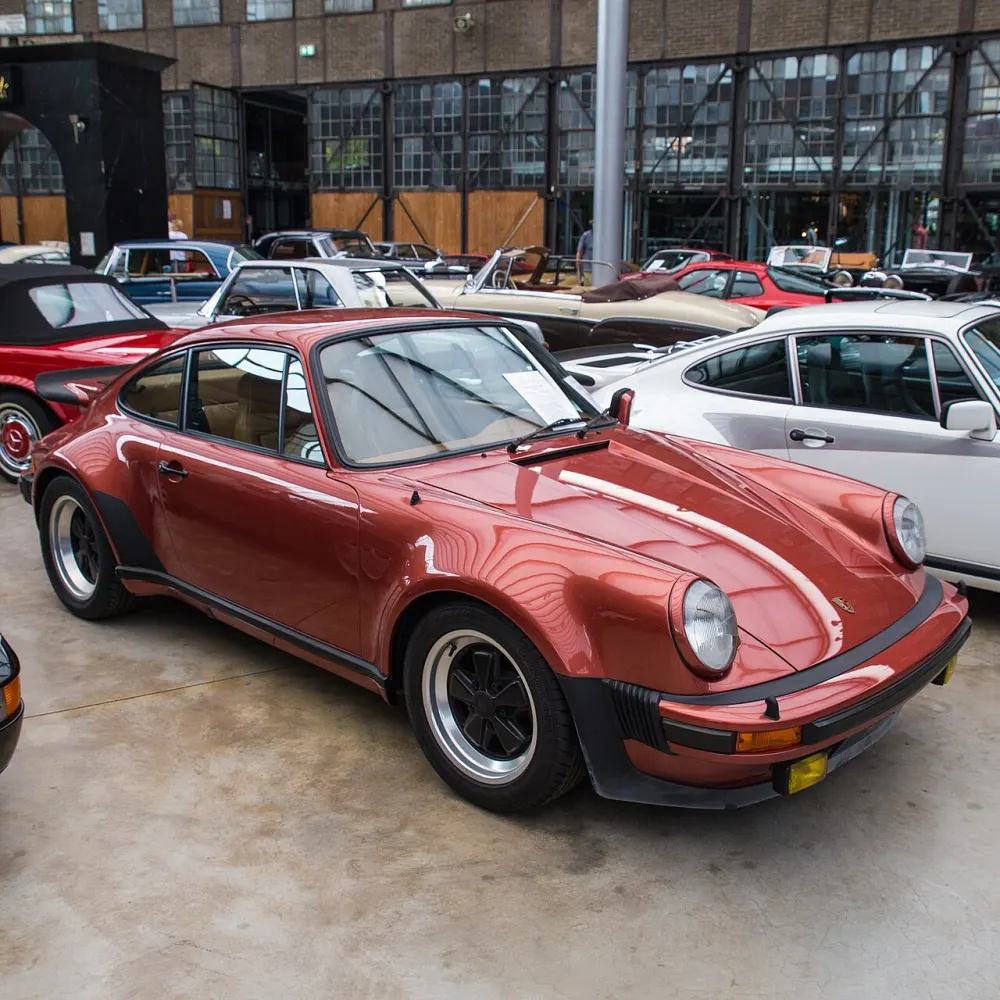
    A surviving 911 Turbo (930) in copper-red metallic with wide rear arches and its big rear spoiler, parked indoors among classic cars
    Photo: Clemens Vasters from Viersen, Germany, Germany · Wikimedia Commons · CC BY 2.0
    New model

    911 Turbo makes its debut at the Paris Motor Show

    In October 1974 Porsche showed the production 911 Turbo (type 930) in Paris. A turbocharged 3.0-litre flat-six gave it 260 PS, and the wide arches and big rear spoiler became an instant icon.

  2. 1975

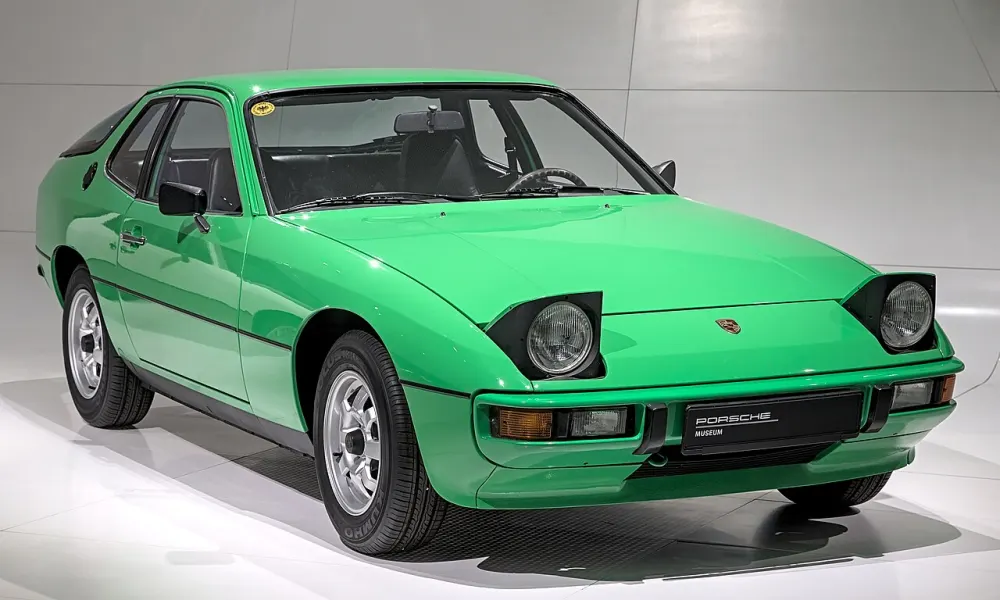
    An early green Porsche 924 with pop-up headlights raised, on display in the Porsche Museum
    Photo: Alexander Migl · Wikimedia Commons · CC BY-SA 4.0
    New model

    Porsche 924 unveiled: the water-cooled entry model

    Born as a Volkswagen commission that VW then dropped, the 924 was bought back by Porsche and unveiled in November 1975. Its front-mounted water-cooled four and rear transaxle opened a new era; series production began in 1976.

  3. 1976

    Racing

    936 wins Le Mans: the turbo era begins

    Jacky Ickx and Gijs van Lennep win Le Mans in the turbocharged 936 spyder. From here on, every Porsche overall win at Le Mans would come with turbo power,. The 936 had made its debut that same season.

  4. 1977

    Version

    911 SC replaces the 911 and Carrera

    From the 1978 model year the naturally aspirated 911 range was simplified to one car, the 911 SC, with a 3.0-litre flat-six and the wide rear wings of the old Carrera. "SC" stood for Super Carrera.

  5. Version

    911 Turbo grows to 3.3 litres with an intercooler

    For 1978 the 911 Turbo gained a 3.3-litre engine and an intercooler, lifting output to 300 PS. It was also one of the first road cars with brakes derived from the 917 racer.

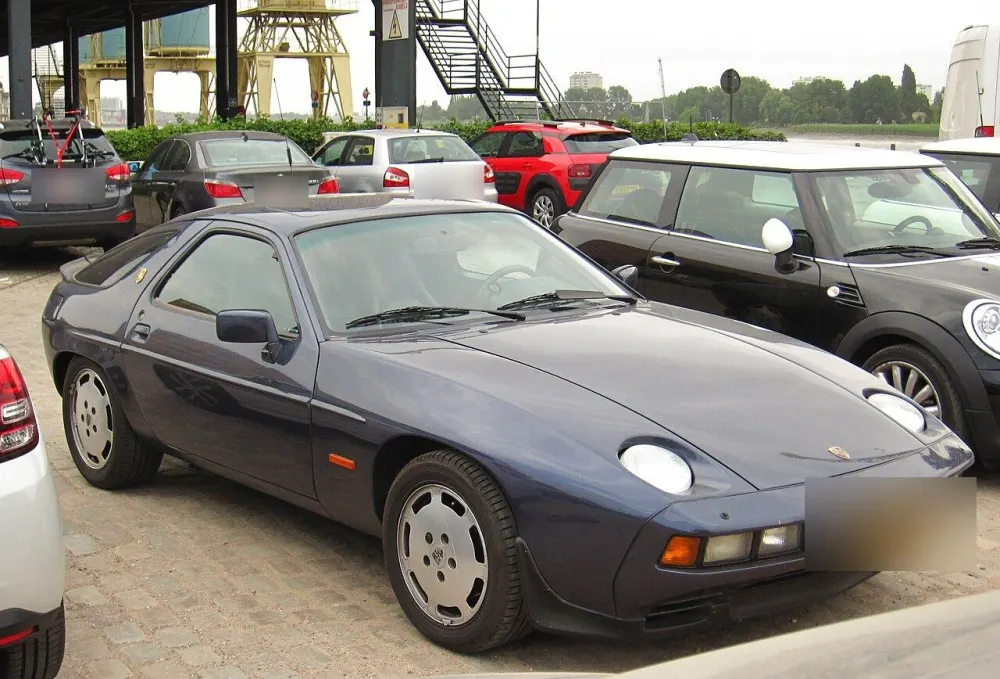
  6. A dark blue-grey Porsche 928 S with its exposed pop-up headlights, parked in a car park
    Photo: Rutger van der Maar · Wikimedia Commons · CC BY 2.0 · Modified: licence plate blurred
    New model

    The V8 Porsche 928 premieres in Geneva

    At the Geneva show in March 1977 Porsche unveiled the 928, a luxurious grand tourer meant to eventually replace the 911. It paired a water-cooled aluminium V8 up front with a rear transaxle and the passive-steering "Weissach axle".

  7. Racing

    936 wins Le Mans again with Ickx, Barth and Haywood

    The 936/77 of Jacky Ickx, Jürgen Barth and Hurley Haywood wins Le Mans, Porsche’s second straight victory with the turbocharged spyder.

  8. 1978

    Company

    928 is voted European Car of the Year

    The 928 won the 1978 European Car of the Year award. It remains the only sports car ever to take the title, a sign of how advanced the transaxle V8 seemed at the time.

  9. Version

    924 Turbo closes the gap to the 911

    In 1978 Porsche added a turbocharged 924 to bridge the performance gap to the 911 and 928. The 2.0-litre engine with turbo raised output to 170 PS and the car gained a NACA duct on the bonnet.

  10. Racing

    935/78 “Moby Dick”, the most extreme racing 911

    Built to exploit the Group 5 rules, the long, white 935/78 earns its whale nickname at first sight. Jacky Ickx and Jochen Mass win the Silverstone 6 Hours with it, and Porsche calls it the most powerful race car ever based on the 911.

  11. 1979

    Racing

    Kremer 935 K3: a customer 911 wins Le Mans outright

    The Kremer team’s 935 K3 driven by Klaus Ludwig and the Whittington brothers wins Le Mans. It is Porsche’s first overall win for a customer team and the only one ever for a rear-engined car.

  12. 1981

    People

    Peter Schutz becomes CEO and keeps the 911 alive

    German-born American engineer Peter W. Schutz took over as Porsche CEO in 1981. He reversed the plan to phase out the 911, and sales and profits rose strongly during his tenure.

  13. Racing

    Ickx and Bell win Le Mans in the 936/81

    Jacky Ickx and Derek Bell win Le Mans in a 936/81. The same weekend, Walter Röhrl and Jürgen Barth win their class in a 944 LM prototype, a preview of the coming 944 road car.

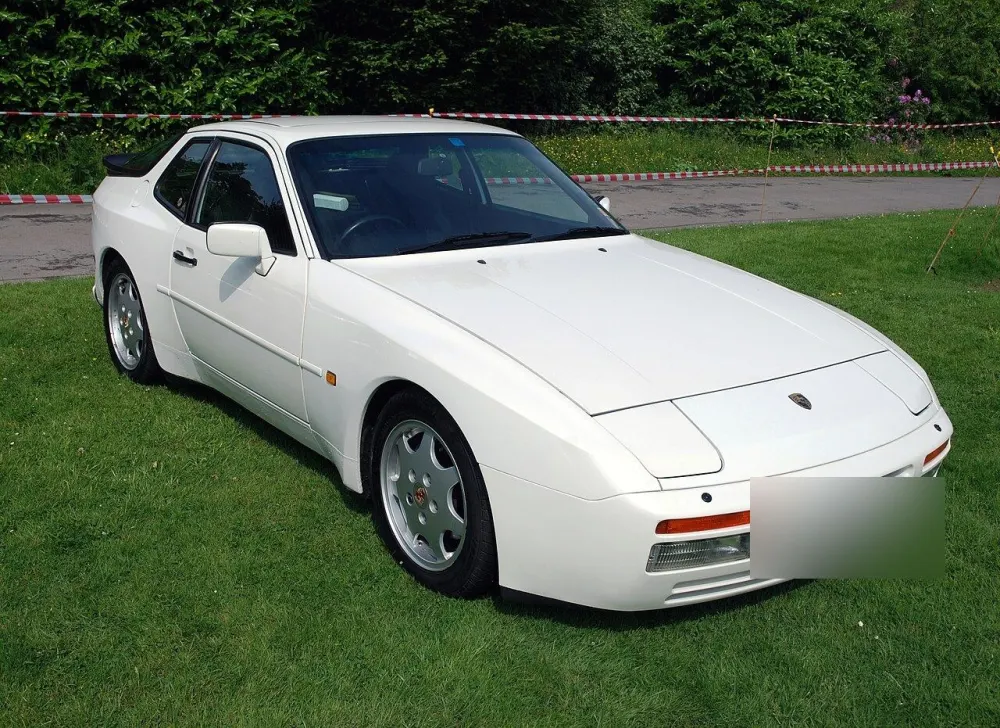
  14. A white Porsche 944 S2, a later version of the 944 with flared arches and a glass hatchback, on grass
    Photo: allen watkin from London, UK · Wikimedia Commons · CC BY-SA 2.0 · Modified: licence plate blurred
    New model

    Porsche 944 arrives at the Frankfurt IAA

    Shown at the 1981 IAA, the 944 used a Porsche-built 2.5-litre four derived from the 928's V8, plus flared arches over the 924 body. With 163 PS it slotted between the 924 and the 911.

  15. 1982

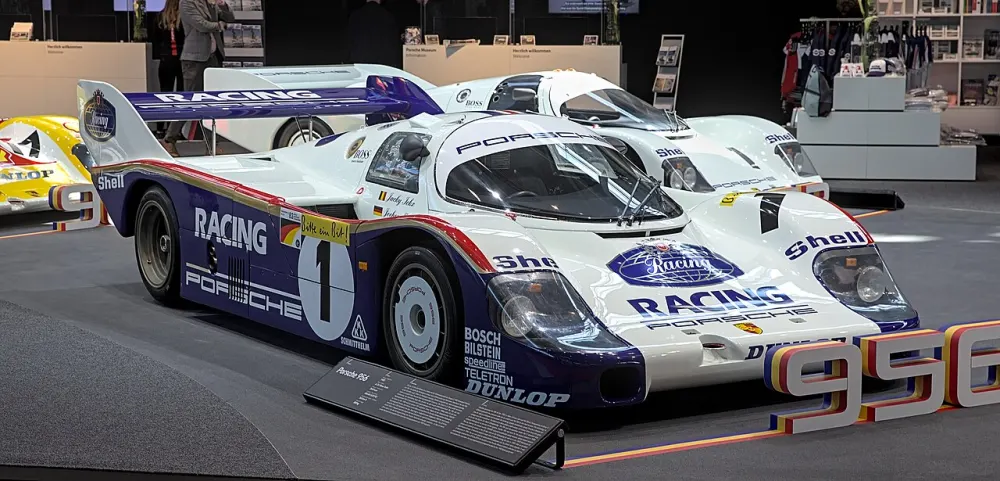
    A Porsche 956 with race number 1 and Jacky Ickx’s name on the window, shown at the Retro Classics fair in Stuttgart
    Photo: Alexander Migl · Wikimedia Commons · CC BY-SA 4.0
    Racing

    New 956 finishes one-two-three at Le Mans

    In its first Le Mans, the Group C 956 sweeps the podium, led home by Jacky Ickx and Derek Bell; Porsches fill the top five. The 956 is Porsche’s first racing car with an aluminium monocoque and ground-effect aerodynamics.

  16. 1983

    Version

    First 911 Cabriolet reaches customers

    Previewed as a concept at the 1981 IAA, the 911 SC Cabriolet went on sale in 1983 as the first fully open 911. In the US it quickly outsold the Targa.

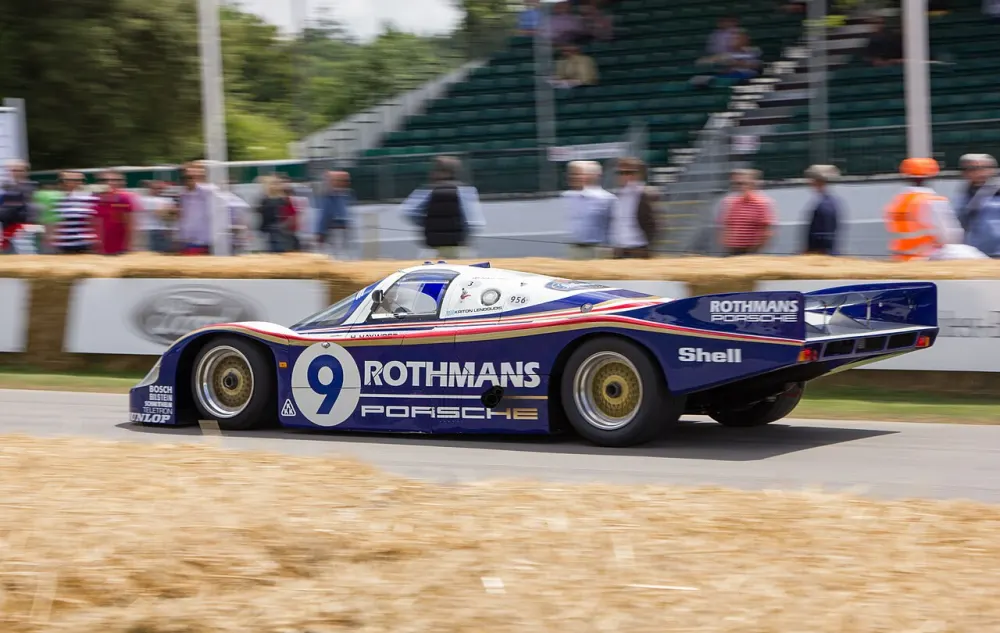
  17. A Rothmans-liveried Porsche 956 at speed on the hill-climb course at the 2014 Goodwood Festival of Speed
    Photo: Stephen Hynds · Wikimedia Commons · CC BY-SA 2.0
    Racing

    Stefan Bellof laps the Nordschleife in 6:11.13

    In qualifying for the Nürburgring 1,000 km, 25-year-old Stefan Bellof laps the Nordschleife in a Rothmans 956 in 6:11.13, over 200 km/h on average. The record stands for 35 years.

  18. Technology

    "Gruppe B" study previews the 959

    At the 1983 IAA Porsche showed a study called Gruppe B, aimed at rallying's new Group B rules. It combined electronically controlled all-wheel drive, a twin-turbo flat-six and a light body with plastic panels.

  19. Version

    The 911 Carrera 3.2 revives the Carrera name

    In September 1983 the 911 SC gave way to the 911 Carrera with a 3.2-litre engine of 231 PS and digital engine electronics. The tough, long-lived engine helped make it one of the most popular classic 911s.

  20. 1984

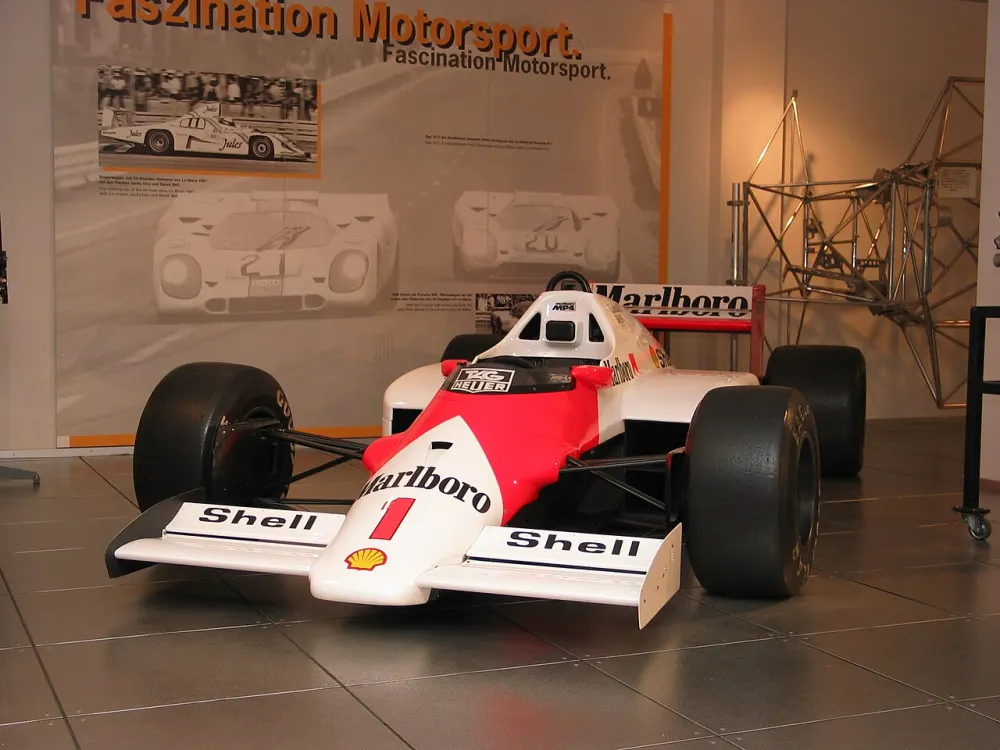
    Red-and-white McLaren MP4/2C with race number 1, the 1986 evolution of the TAG-Porsche-powered car, on display at the Porsche Museum
    Photo: Thomas Vogt · Wikimedia Commons · CC BY 2.0
    Racing

    Niki Lauda wins the F1 title with the TAG Turbo made by Porsche

    Commissioned by McLaren and the TAG group, Porsche’s 1.5-litre twin-turbo V6 powers Niki Lauda to the 1984 drivers’ title by half a point over teammate Alain Prost. McLaren also wins the constructors’ championship.

  21. Company

    Porsche AG lists non-voting shares on the stock market

    In 1984 Porsche AG went public, offering non-voting preference shares to investors while the Porsche and Piëch families kept the ordinary voting stock.

  22. Racing

    911 Carrera 4x4 (953) wins the Paris–Dakar at the first attempt

    René Metge and Dominique Lemoyne win the Paris–Dakar Rally on the debut of the 953, a heavily modified 911 with four-wheel drive. The car served as a test bed for the drive system planned for the 959.

  23. 1985

    Version

    944 Turbo adds 220 PS to the transaxle line

    The 944 Turbo of 1985 brought a turbocharged 2.5-litre four with 220 PS, a smoother nose and stronger brakes, turning the 944 into a genuine rival for the 911.

  24. Racing

    Alain Prost adds two more titles with TAG-Porsche power

    Alain Prost wins the Formula One drivers’ championship in 1985 and again in 1986 with McLaren’s TAG-Porsche V6, and McLaren takes the 1985 constructors’ title too.

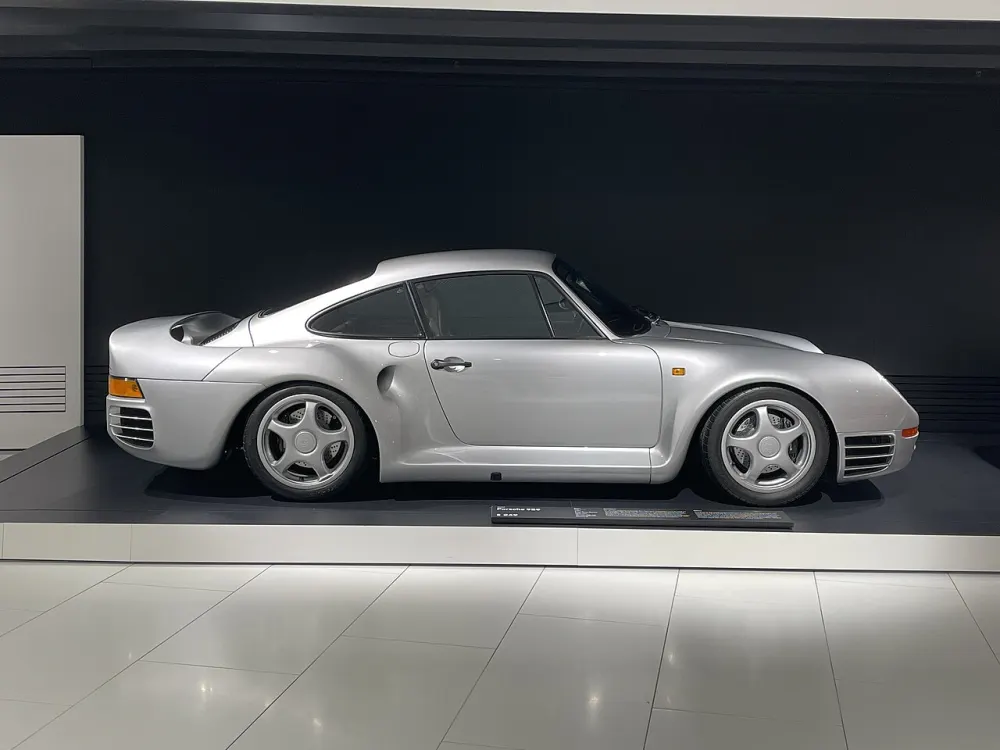
  25. A silver Porsche 959 seen side-on in the Porsche Museum in Stuttgart
    Photo: Rouk40130 · Wikimedia Commons · CC BY 4.0
    New model

    Porsche 959 shown at the Frankfurt IAA

    The 959 premiered at the 1985 IAA as a showcase of everything Porsche could do: twin turbos, electronically controlled all-wheel drive, adaptive suspension and a slippery body with no lift at speed.

  26. 1986

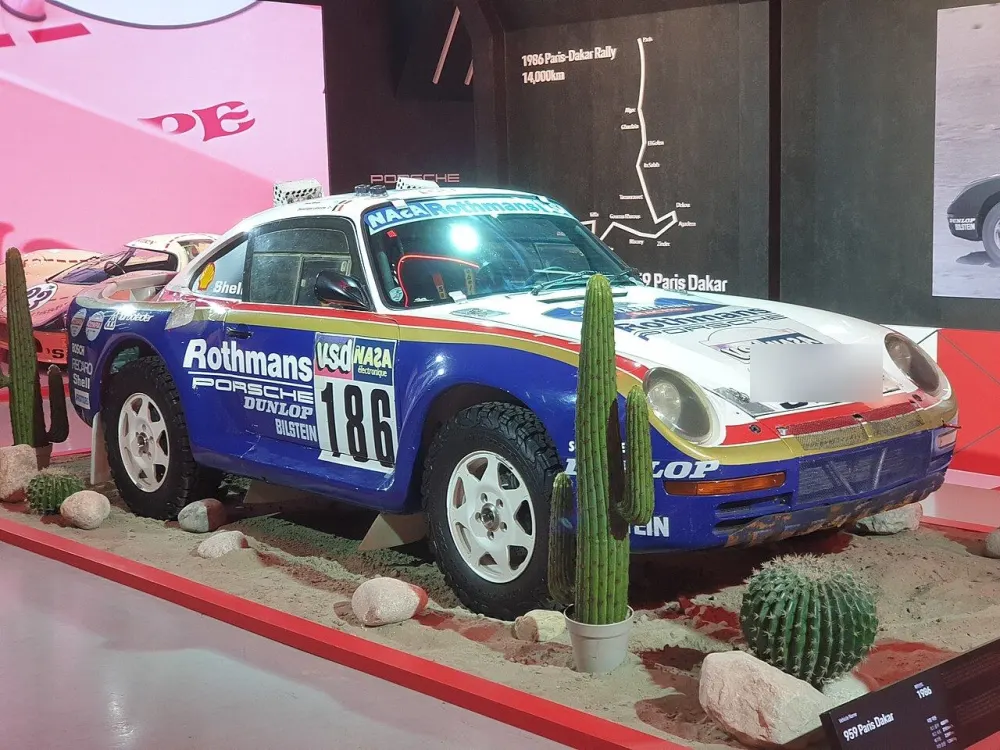
    Rothmans Porsche 959 Paris–Dakar rally car with number 186, displayed on a desert-themed stand at an exhibition in Seoul
    Photo: Damian B Oh · Wikimedia Commons · CC BY-SA 4.0 · Modified: licence plate blurred
    Racing

    959 finishes first and second on the Paris–Dakar

    Before any 959 reaches a customer, René Metge and Dominique Lemoyne win the Paris–Dakar in one, with Jacky Ickx and Claude Brasseur second. A third 959, running as a fast service car, finishes sixth.

  27. Technology

    PDK dual-clutch gearbox wins its first race at Monza

    Hans-Joachim Stuck and Derek Bell win at Monza in a 962 C fitted with the PDK dual-clutch gearbox, which shifts without cutting drive. The pair go on to take the 1986 world sports-prototype title.

  28. 1987

    Racing

    962 C completes seven Le Mans wins in a row

    Hans-Joachim Stuck, Derek Bell and Al Holbert win Le Mans in a works 962 C, Porsche’s seventh consecutive victory there and the twelfth overall.

  29. 1988

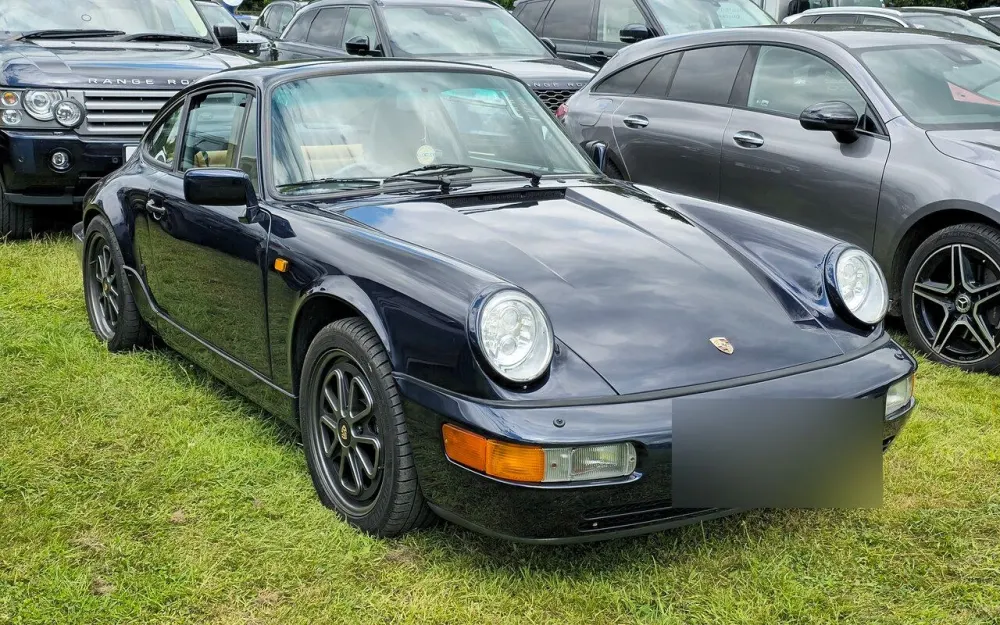
    A dark blue 964-generation 911 Carrera 4 on grass at a car show
    Photo: Calreyn88 · Wikimedia Commons · CC BY-SA 4.0 · Modified: licence plate blurred
    New model

    911 Carrera 4 (964) brings all-wheel drive to the 911

    The third-generation 911, the 964, launched in 1988 as the Carrera 4 with all-wheel drive developed from the 959. About 85 per cent of its parts were new, including power steering, ABS and coil-spring suspension.

  30. New model

    The last 924 leaves the line

    Production of the 924 ended in August 1988 with the 924 S. More than 150,000 had been built, making it the car that brought many buyers to Porsche for the first time.

Crisis and rebirth

Falling sales nearly break the company. The Boxster and a water-cooled 911 save it.

  1. 1989

    New model

    The G-Series 911 bows out after 16 years

    The second-generation 911 ended in 1989 after a record run that began in 1973; 198,496 were built. Its farewell model was the Carrera Speedster with a chopped windscreen.

  2. 1990

    Technology

    Tiptronic gives the 911 a modern automatic

    From 1990 the 964 Carrera 2 could be ordered with Tiptronic, an automatic that also let drivers change gear by hand without a clutch. It was aimed squarely at the US market.

  3. Racing

    Porsche Carrera Cup starts with 40 identical 911s

    The German Carrera Cup holds its first race at Zolder in Belgium, with 40 identical 911 Carrera 2 cars on the grid. Olaf Manthey wins. The series replaces the 944 Turbo Cup, run since 1986.

  4. 1991

    New model

    Porsche 968: the last of the four-cylinder transaxles

    Launched in 1991, the 968 was the final evolution of the 924/944 line. Its 3.0-litre four with VarioCam made 240 PS and 305 Nm, a record for a naturally aspirated four-cylinder.

  5. Technology

    VarioCam: variable valve timing arrives with the 968

    The 968’s 3.0-litre four-cylinder introduces VarioCam, which shifts the intake-cam timing by changing the tension of the chain between the camshafts. The aim is more torque across the rev range.

  6. 1993

    People

    Wendelin Wiedeking takes charge of a company in crisis

    In 1993 production chief Wendelin Wiedeking became head of Porsche AG. The company was making losses and had sold only about 23,000 cars in 1991/92; he brought in Japanese-style lean production and a slimmer range.

  7. Racing

    Porsche Supercup joins the Formula One calendar

    The new Porsche Supercup races identical 911 (964) Cup cars as a support series at Formula One Grands Prix. In its first season, guest driver Mika Häkkinen wins at Monaco and Budapest.

  8. Design

    Boxster concept steals the Detroit show

    In January 1993 Porsche unveiled the Boxster concept at the Detroit show, a mid-engined roadster whose name joins "boxer" and "roadster". The enthusiastic response convinced the company to build it.

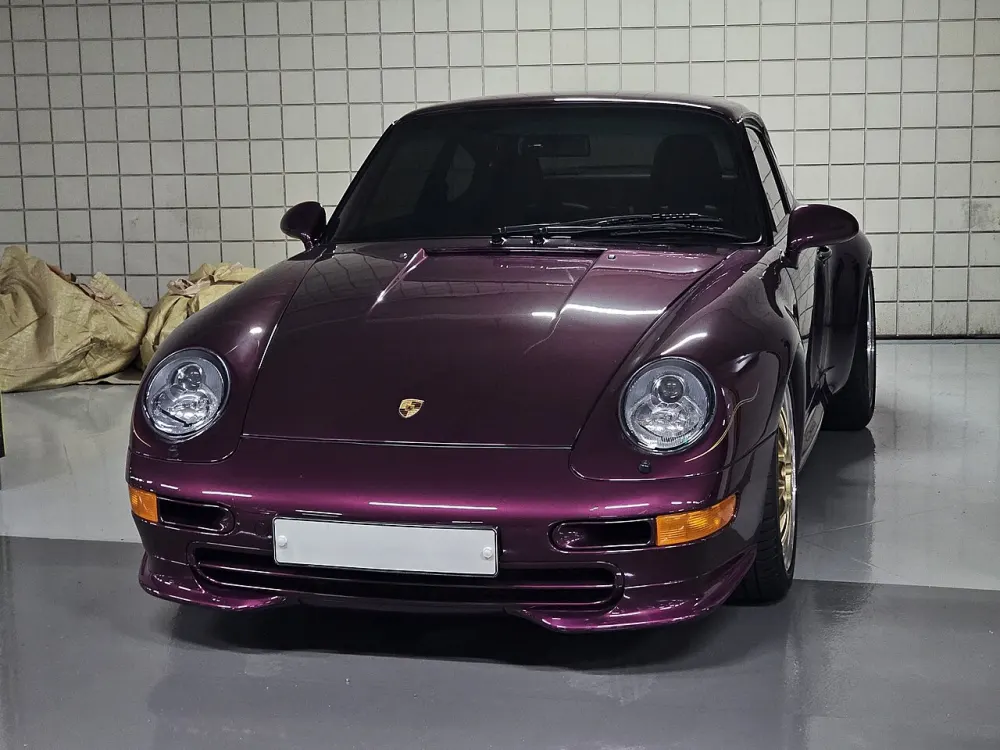
  9. A purple 993-generation 911 Carrera seen head-on, showing its sloping ellipsoid headlights
    Photo: Damian B Oh · Wikimedia Commons · CC BY-SA 4.0
    New model

    The 993: the last air-cooled 911 arrives

    Presented at the 1993 Frankfurt IAA, the fourth-generation 911 had flatter wings, sleek ellipsoid headlights and a new multi-link rear axle. Nobody knew yet that it would be the final air-cooled 911.

  10. 1994

    Racing

    A road-legal 962 wins Le Mans as a GT

    Converted into a road car with Jochen Dauer to fit the new GT rules, the Dauer 962 LM wins Le Mans in the hands of Mauro Baldi, Yannick Dalmas and Hurley Haywood, Porsche’s 13th outright victory there.

  11. 1995

    Version

    993 Turbo: first 911 with twin turbochargers

    In 1995 the 911 Turbo switched to twin turbochargers and all-wheel drive, producing 408 PS. It also introduced hollow-spoke alloy wheels and was hailed for very low emissions thanks to OBD II.

  12. Company

    End of the transaxle era: 928 and 968 retired

    In 1995 Porsche stopped building the 928 and 968, closing two decades of front-engined transaxle cars. The company focused on the 911 and the coming mid-engined Boxster.

  13. 1996

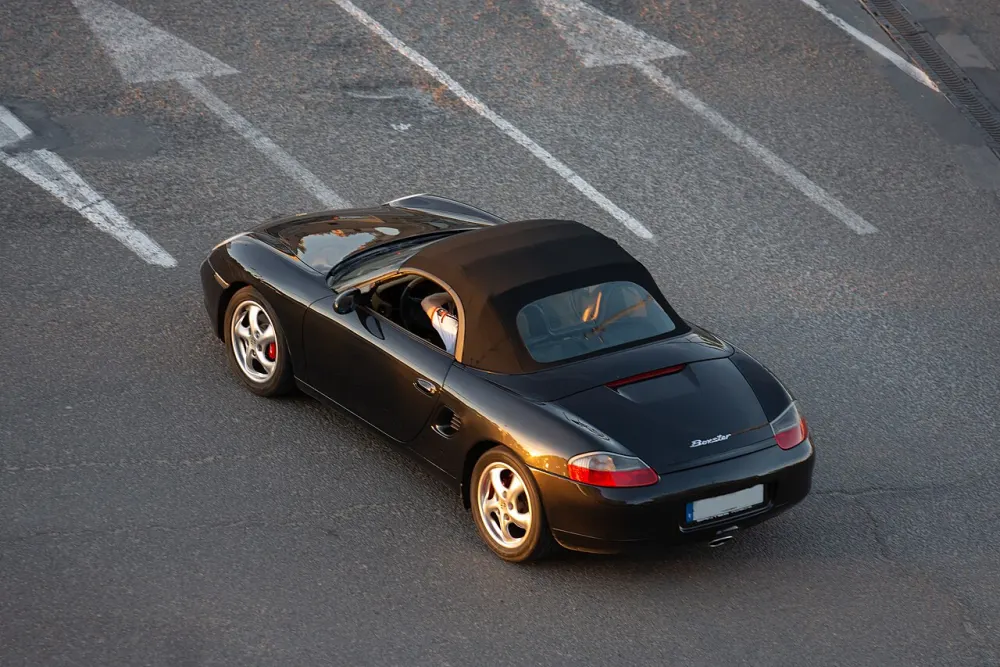
    A black first-generation Boxster (986) with its fabric roof closed, seen from above as it crosses a car park
    Photo: Dorieo · Wikimedia Commons · CC BY-SA 4.0
    New model

    Boxster goes on sale and starts the recovery

    The production Boxster arrived in 1996 with a water-cooled 2.5-litre flat-six mounted in the middle. It shared much with the coming 996 911, and its success helped pull Porsche out of its early-1990s slump.

  14. Racing

    Joest’s TWR-Porsche spyder wins Le Mans

    The Porsche-powered WSC-95 open prototype of Joest Racing, driven by Davy Jones, Manuel Reuter and Alexander Wurz, wins Le Mans. The same car repeats the win in 1997.

  15. Company

    The one-millionth Porsche is built

    In July 1996 Porsche completed its one-millionth car, 48 years after the first 356. It was a police-spec 911, handed over to the Baden-Württemberg autobahn police.

  16. 1997

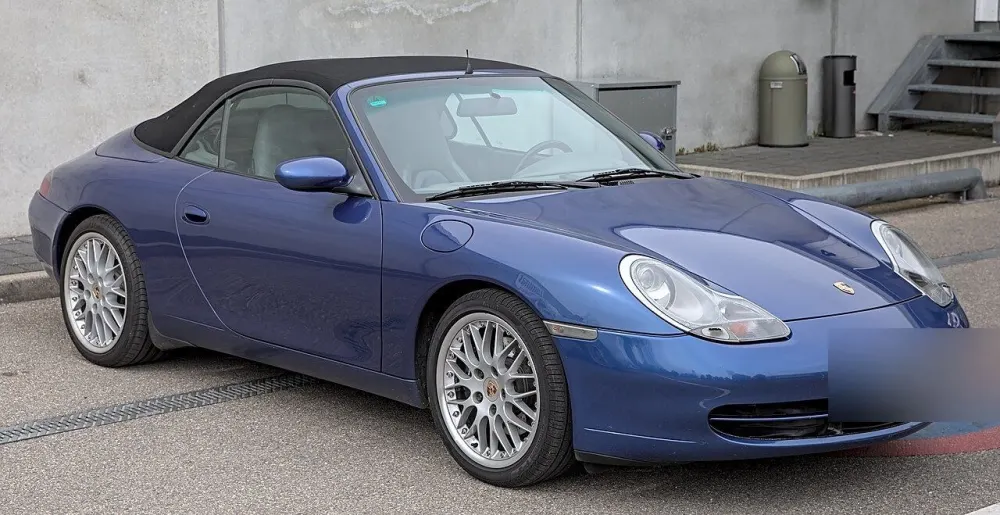
    A blue early 996-generation 911 Carrera Cabriolet with the "fried egg" headlights
    Photo: Alexander-93 · Wikimedia Commons · CC BY-SA 4.0 · Modified: licence plate blurred
    New model

    The 996: the 911 turns to water cooling

    At the 1997 IAA Porsche broke with tradition and showed the 996, the first water-cooled 911. Four-valve heads, needed to meet emissions rules, required water cooling and lifted the base engine to 300 PS.

  17. 1998

    New model

    Last air-cooled 911 leaves Zuffenhausen

    In spring 1998 the final 993 left the line, ending the era of air-cooled 911s that began in 1963. Sources disagree on which car was the very last, but the year is not in doubt.

  18. Company

    Porsche announces a "third model line": an SUV

    In 1998 Porsche confirmed it would build a sport-utility vehicle developed jointly with Volkswagen. A people-carrier had also been considered, but the US sales team pushed for an off-roader.

  19. People

    Ferry Porsche dies at 88

    Ferry Porsche, who had created the first Porsche sports car in 1948 and guided the company for half a century, died on 27 March 1998 in Zell am See, Austria.

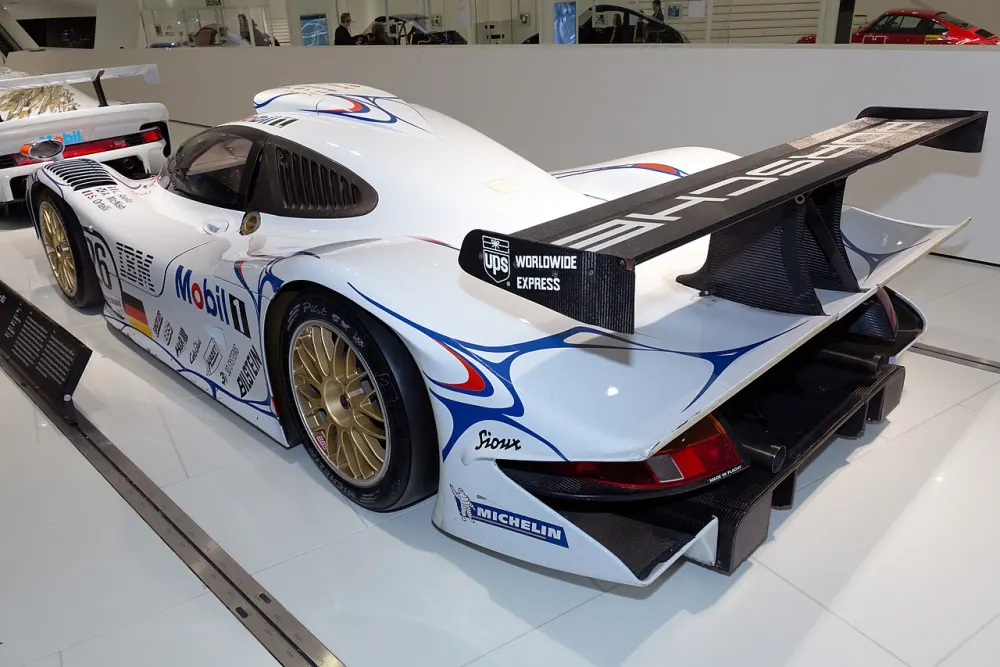
  20. Rear view of the white No. 26 Porsche 911 GT1-98 with its large carbon rear wing, at the Porsche Museum
    Photo: Morio · Wikimedia Commons · CC BY-SA 3.0
    Racing

    911 GT1-98 wins Le Mans in a one-two

    In Porsche’s 50th-anniversary year, the carbon-chassis 911 GT1-98 of Laurent Aiello, Allan McNish and Stéphane Ortelli leads a works one-two at Le Mans. It is Porsche’s 16th overall win, and its last for 17 years.

  21. 1999

    Version

    First 911 GT3 premieres in Geneva

    The 996 GT3 debuted at the 1999 Geneva show: a lightweight, track-focused 911 with an engine derived from the GT1 racer. Walter Röhrl helped develop it and called it a racing car for the road.

  22. 2000

    Version

    996 Turbo arrives with a GT1-derived engine

    The water-cooled 911 Turbo of 2000 used a twin-turbo 3.6-litre engine with roots in the Le Mans-winning GT1 racer, plus all-wheel drive and 420 PS.

  23. Design

    Carrera GT concept unveiled in Paris

    At the Paris Motor Show in September 2000 Porsche showed the Carrera GT, an open mid-engined supercar study powered by a V10 originally developed for a Le Mans prototype that never raced.

  24. 2001

    Technology

    Ceramic composite brakes (PCCB) arrive on the 911 GT2

    The 996-generation 911 GT2 is the first Porsche fitted with Porsche Ceramic Composite Brakes. The discs are about half the weight of cast-iron ones, cutting unsprung mass, and are built to last far longer.

The modern range

An SUV, a four-door, a hypercar and a new plant: Porsche becomes a full-range carmaker.

  1. 2002

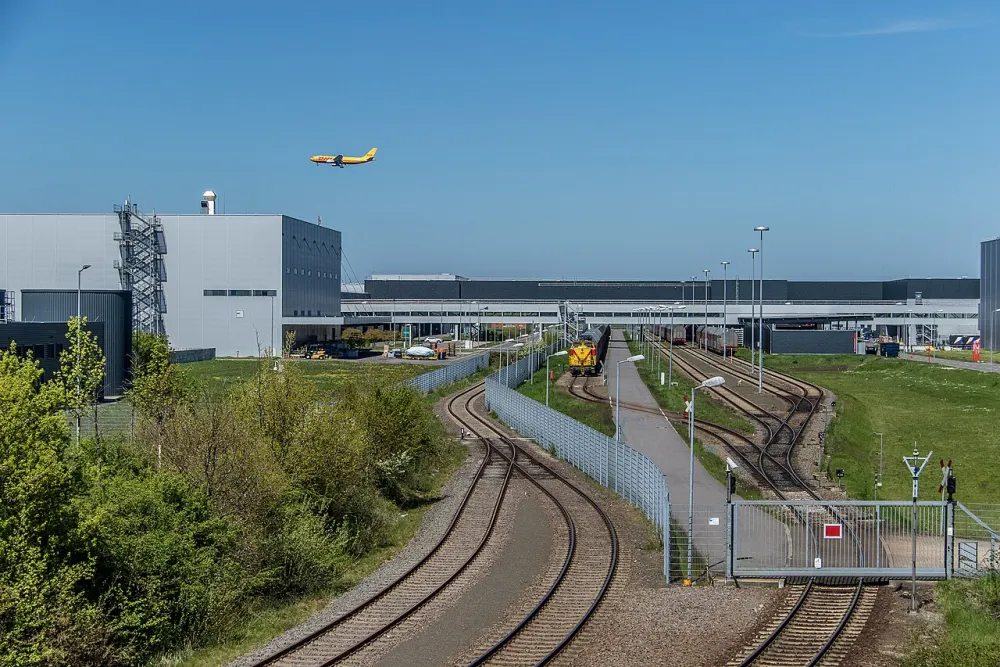
    The Porsche plant in Leipzig with its factory halls and rail sidings, in April 2023
    Photo: Ingbife · Wikimedia Commons · CC BY-SA 4.0
    Company

    Leipzig plant opens as Porsche's second factory

    Porsche celebrated the opening of its Leipzig plant on 20 August 2002, the day the first Cayenne rolled off the line. The decision to build there was taken in 1999.

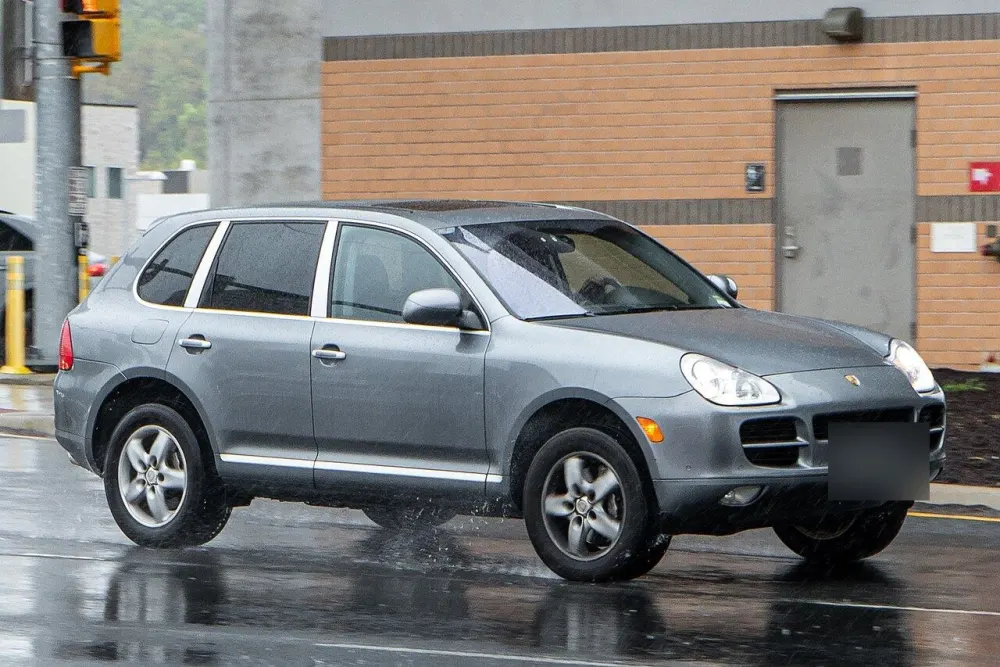
  2. A grey first-generation Porsche Cayenne S (955) driving on a wet street
    Photo: OWS Photography · Wikimedia Commons · CC BY 4.0 · Modified: licence plate blurred
    New model

    Cayenne premieres in Paris: Porsche's third model line

    The Cayenne, Porsche's first five-seater and first SUV, premiered at the Paris Motor Show in 2002. Many fans were sceptical, but it became one of the pillars of the company's growth.

  3. 2003

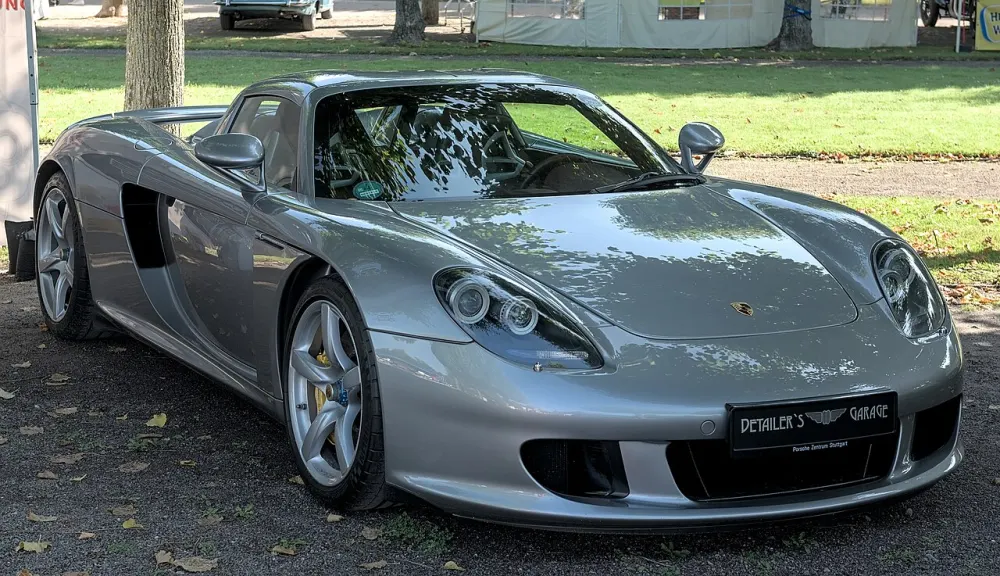
    A silver Porsche Carrera GT parked on gravel under trees at a classic car gala
    Photo: Alexander Migl · Wikimedia Commons · CC BY-SA 4.0
    New model

    Carrera GT enters production with a 612 PS V10

    Production of the Carrera GT began in autumn 2003. Its 5.7-litre naturally aspirated V10 produced 612 PS, and it used a carbon-fibre monocoque and a ceramic clutch taken from motorsport.

  4. 2004

    New model

    997 generation brings back round headlights

    In July 2004 Porsche presented the sixth-generation 911 Carrera and Carrera S. The 997 returned to classic round headlights and introduced PASM adaptive dampers.

  5. 2005

    Company

    Porsche starts buying into Volkswagen

    In 2005 Porsche took a stake of almost 19 per cent in Volkswagen, its long-time partner and much bigger neighbour. It was the opening move of a takeover attempt that would dominate the next four years.

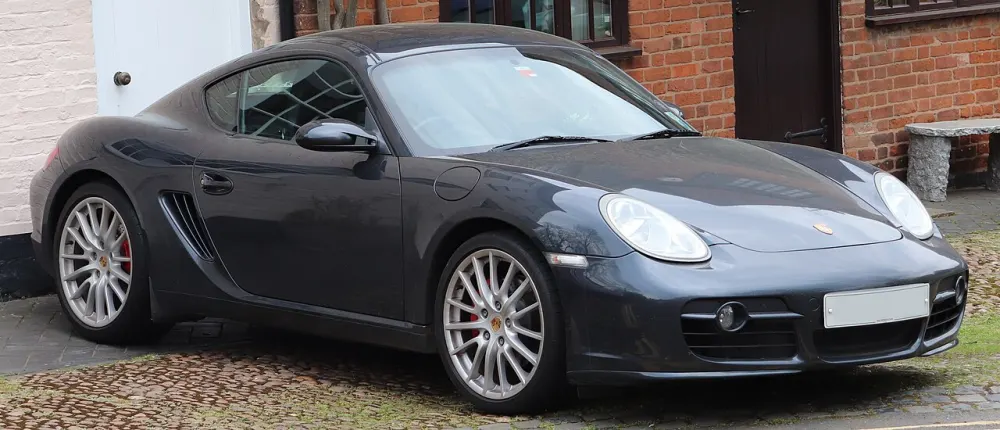
  6. A dark grey first-generation Cayman S (987) parked on a cobbled street in front of a brick house
    Photo: Vauxford · Wikimedia Commons · CC BY-SA 4.0
    New model

    Cayman S premieres: the Boxster gets a roof

    At the 2005 IAA Porsche unveiled the Cayman S, a mid-engined coupé based on the Boxster with its own 3.4-litre flat-six. It quickly became a model line of its own.

  7. Racing

    RS Spyder wins its class on debut at Laguna Seca

    Porsche returns to prototype racing with the LMP2 RS Spyder in the American Le Mans Series. On its first outing at Laguna Seca, the Penske-run car of Sascha Maassen and Lucas Luhr wins its class, finishing fifth overall.

  8. 2006

    Racing

    RS Spyder starts a run of three ALMS class titles

    In its first full season, the Penske-run RS Spyder wins the LMP2 championship of the American Le Mans Series. It repeats the feat in 2007 and 2008, with Timo Bernhard among its title-winning drivers.

  9. Technology

    997 Turbo: first petrol car with variable turbine geometry

    Shown at Geneva in 2006, the 997 Turbo was the first series petrol car with variable-turbine-geometry turbochargers, a technology previously limited to diesels by exhaust temperatures. It produced 480 PS.

  10. 2008

    Technology

    PDK dual-clutch gearbox and direct injection for the 911

    The updated 997 of 2008 brought direct-injection engines and the PDK dual-clutch transmission, which shifts without interrupting drive. Porsche had first raced the PDK idea in the 1980s.

  11. 2009

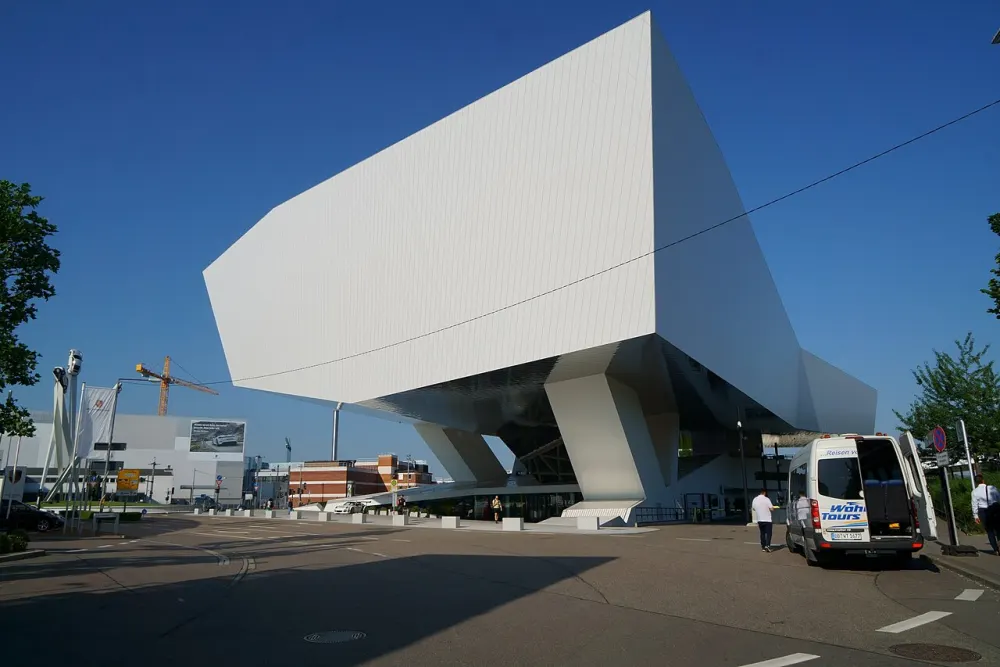
    The white, angular Porsche Museum building at Porscheplatz in Stuttgart-Zuffenhausen, raised on slanted supports
    Photo: Giftzwerg 88 · Wikimedia Commons · CC BY-SA 3.0
    Company

    New Porsche Museum opens in Zuffenhausen

    On 31 January 2009 the new Porsche Museum opened to the public at Porscheplatz in Stuttgart-Zuffenhausen. The striking building appears to float on three concrete cores and displays more than 80 exhibits.

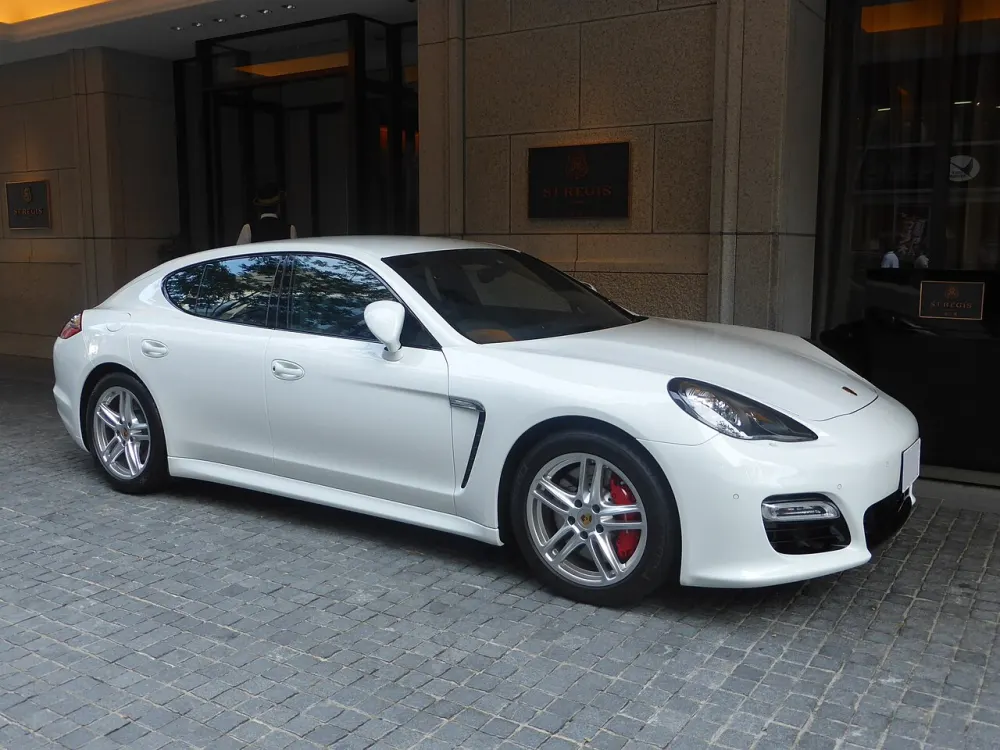
  12. A white first-generation Porsche Panamera (970) parked in front of a hotel entrance
    Photo: Tokumeigakarinoaoshima · Wikimedia Commons · CC0
    New model

    Panamera premieres in Shanghai: the four-door Porsche

    Porsche revealed the Panamera in April 2009 on the 94th floor of the Shanghai World Financial Center. The four-door, four-seat Gran Turismo opened a new segment for the brand and was built in Leipzig.

  13. Company

    Takeover bid collapses; Wiedeking steps down

    Porsche's attempt to take over Volkswagen ended with the hunter becoming the hunted. Heavily indebted, Porsche agreed to merge into VW, and CEO Wendelin Wiedeking resigned with immediate effect on 23 July 2009.

  14. 2010

    Design

    918 Spyder concept: a plug-in hybrid supercar

    At the 2010 Geneva show Porsche revealed the 918 Spyder concept, combining a V8 with electric motors in a plug-in hybrid supercar. The response was so strong that production was confirmed that July.

  15. 2011

    New model

    The 991 generation: a longer, lighter 911

    Unveiled at the 2011 IAA, the seventh-generation 911 had a 10 cm longer wheelbase and a new aluminium-and-steel body that saved weight. It brought the world's first seven-speed manual gearbox.

  16. 2012

    Company

    Volkswagen takes full ownership of Porsche AG

    On 1 August 2012 Volkswagen took over the remaining 50.1 per cent of the Porsche car business from Porsche SE, two years earlier than first agreed in 2009.

  17. 2013

    Technology

    Rear-axle steering arrives in the 911

    The 991-generation 911 GT3 and 911 Turbo introduce active rear-axle steering. At low speed the rear wheels turn against the fronts for agility; at higher speed they turn with them for stability.

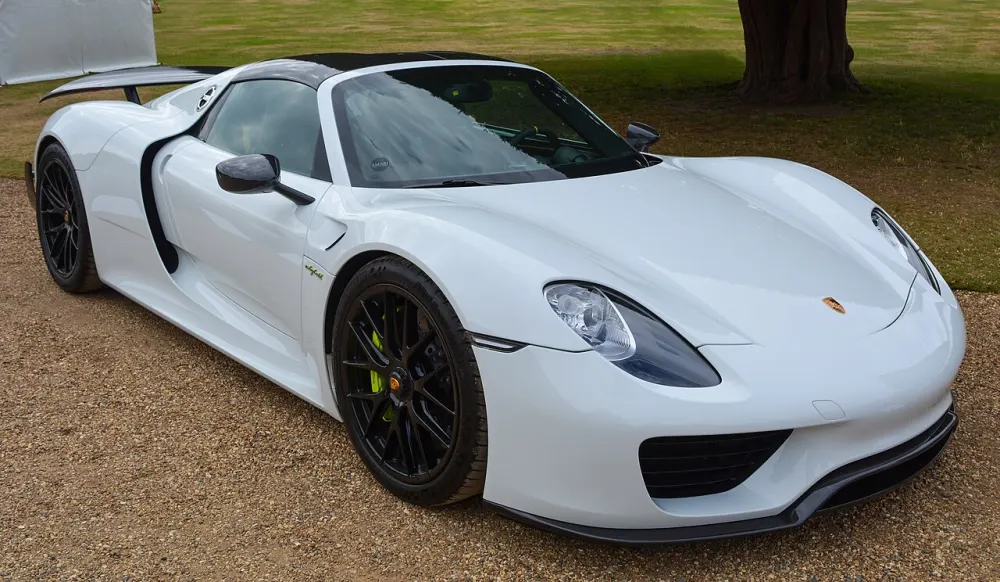
  18. A white Porsche 918 Spyder with its roof panels in place, parked on gravel at a concours
    Photo: Chelsea Jay · Wikimedia Commons · CC BY-SA 4.0
    New model

    918 Spyder premieres at the IAA and laps the Ring in 6:57

    The production 918 Spyder debuted at the 2013 IAA. Its plug-in hybrid drive combined a V8 with two electric motors for 887 PS, and it lapped the Nürburgring Nordschleife in 6:57 minutes.

  19. 2014

    A black first-generation Porsche Macan (95B, later facelift) seen from above as it drives along a street
    Photo: OWS Photography · Wikimedia Commons · CC BY 4.0 · Modified: driver blurred
    New model

    Macan compact SUV goes on sale

    Unveiled at the Los Angeles show in November 2013, the Macan went on sale in spring 2014 as the Macan S and Macan Turbo. It was built in Leipzig and quickly became one of Porsche's best-sellers.

  20. Racing

    919 Hybrid brings Porsche back to the top class at Le Mans

    Sixteen years after its last overall win, Porsche returns to the LMP1 class with the 919 Hybrid, powered by a 2-litre turbo V4 and two energy-recovery systems. It wins the 2014 season finale at São Paulo.

  21. Technology

    Cayenne S E-Hybrid: first plug-in in the premium SUV class

    With the 2014 Cayenne update came the S E-Hybrid, the first plug-in hybrid in the premium SUV segment. Together with the Panamera S E-Hybrid and the 918 Spyder, Porsche offered three plug-in models.

Electric and beyond

Hybrid Le Mans winners, an 800-volt electric sports car and a stock-market listing open the next chapter.

  1. 2015

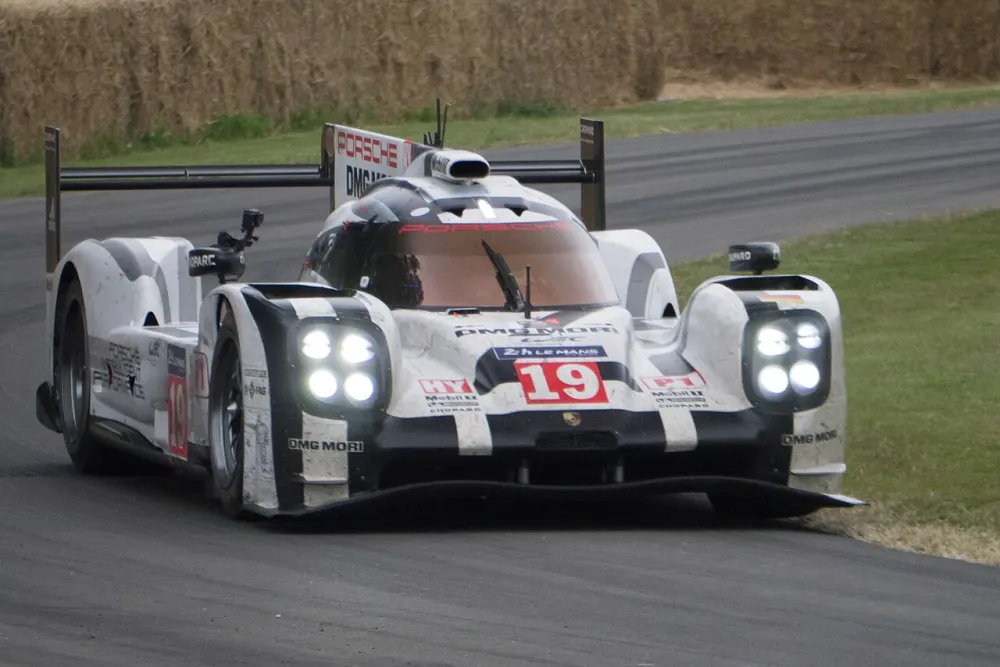
    The No. 19 Porsche 919 Hybrid, still dirty from racing, driven at the Goodwood Festival of Speed
    Photo: Edvvc from London, UK · Wikimedia Commons · CC BY 2.0
    Racing

    919 Hybrid wins Le Mans: Porsche’s 17th overall victory

    Exactly 45 years after the first win, Nico Hülkenberg, Earl Bamber and Nick Tandy win Le Mans in the 919 Hybrid, with a sister car second. Neither Hülkenberg nor Bamber had raced at Le Mans before.

  2. Close-up of the front wing, air outlet and wheel of the Mission E concept car on display in Berlin in 2018
    Photo: Matti Blume · Wikimedia Commons · CC BY-SA 4.0
    Design

    Mission E concept points to an electric future

    At the 2015 IAA Porsche showed the Mission E, a four-door, four-seat electric sports car study with an 800-volt system, over 600 PS and a claimed 80 per cent charge in about 15 minutes.

  3. People

    Oliver Blume becomes Porsche CEO

    When Matthias Müller left Porsche to lead Volkswagen after the diesel scandal, production chief Oliver Blume took over as head of Porsche AG from 1 October 2015.

  4. 2016

    New model

    718 Boxster and Cayman switch to turbo flat-fours

    For the 2016 model change the mid-engined pair were renamed 718 Boxster and 718 Cayman and given turbocharged four-cylinder boxers of 2.0 and 2.5 litres, a nod to the 718 racers of the 1950s and 60s.

  5. Version

    911 R revives the manual purist 911

    Shown at Geneva in 2016, the 911 R combined the GT3 RS engine with a six-speed manual and no fixed rear wing. Limited to 991 cars, it was a response to buyers asking for a pure driver's 911.

  6. New model

    Second-generation Panamera revealed in Berlin

    In June 2016 Porsche revealed the all-new Panamera, built on the Group's MSB platform with a sleeker roofline and new twin-turbo engines. It was produced entirely in Leipzig.

  7. Racing

    919 Hybrid wins Le Mans for a second year running

    Romain Dumas, Neel Jani and Marc Lieb win Le Mans in the 919 Hybrid, Porsche’s 18th overall victory. The trio also become world endurance champions that season.

  8. 2017

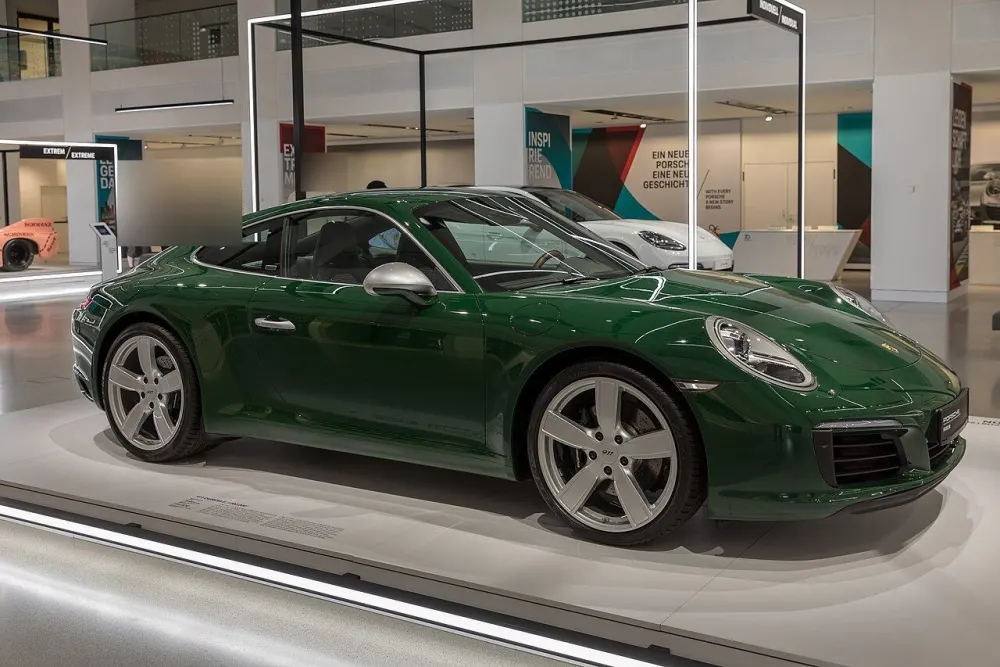
    The one-millionth 911, an Irish Green Carrera S, on display at a Porsche exhibition in Berlin in 2018
    Photo: Matti Blume · Wikimedia Commons · CC BY-SA 4.0 · Modified: background faces blurred
    Company

    The one-millionth 911 rolls off the line

    On 11 May 2017 the one-millionth 911 left the Zuffenhausen line, 54 years after production started. It was a Carrera S in Irish Green with details inspired by the original 1963 911, and Porsche kept it.

  9. Racing

    From 56th to first: the 919’s third Le Mans win in a row

    After an hour-long repair leaves them 18 laps down, Earl Bamber, Timo Bernhard and Brendon Hartley charge from 56th place to win Le Mans. It is Porsche’s 19th overall win and the 919’s third in a row.

  10. New model

    Third-generation Cayenne revealed in Zuffenhausen

    The third Cayenne made its debut in 2017 at Zuffenhausen. Lighter and more technical, it brought rear-axle steering and mixed tyre sizes to the SUV for the first time.

  11. 2018

    Design

    Mission E Cross Turismo concept shown in Geneva

    In March 2018 Porsche showed the Mission E Cross Turismo at Geneva, an electric crossover estate with off-road touches. That autumn the board approved it for series production as the Taycan Cross Turismo.

  12. Company

    The Mission E gets a name: Taycan

    In June 2018, as Porsche marked 70 years of its sports cars, the production Mission E was named Taycan. Porsche says the name can be read as "lively young horse", a link to the horse in its crest.

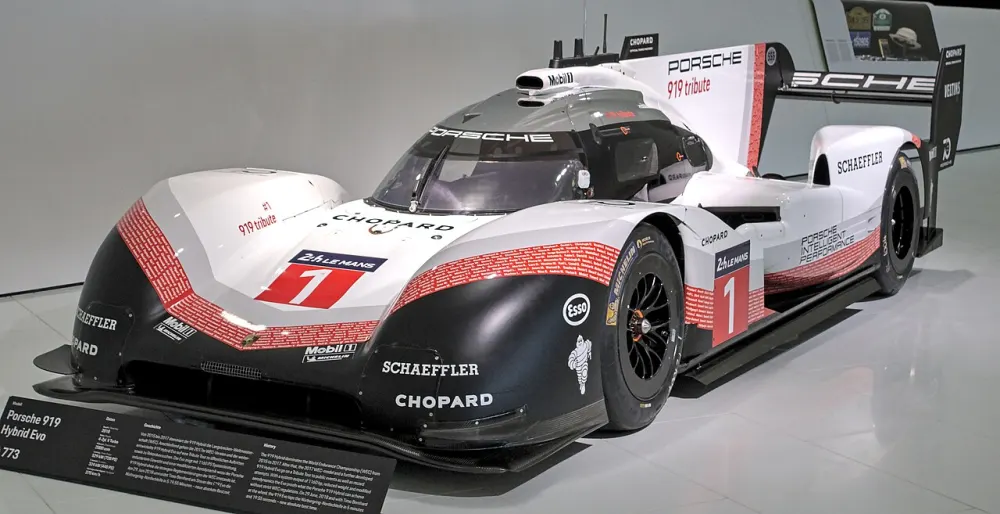
  13. Porsche 919 Hybrid Evo in “919 tribute” livery with a large rear wing, displayed at the Porsche Museum
    Photo: Alexander Migl · Wikimedia Commons · CC BY-SA 4.0
    Racing

    919 Hybrid Evo laps the Nordschleife in 5:19.55

    Freed from racing rules, the 919 Hybrid Evo lets Timo Bernhard lap the Nürburgring Nordschleife in 5:19.55, beating Stefan Bellof’s 1983 record by 51.58 seconds at an average of 233.8 km/h.

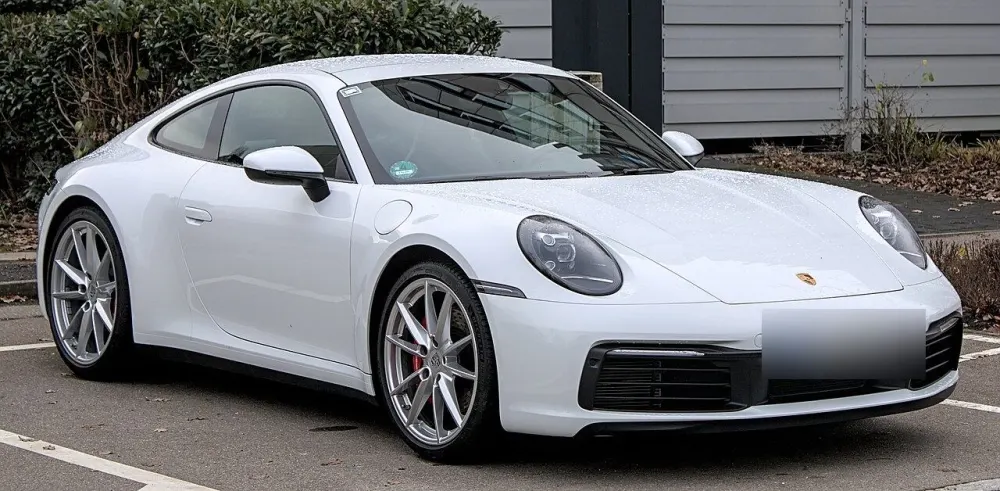
  14. A white 992-generation 911 Carrera S parked in a car park
    Photo: Alexander Migl · Wikimedia Commons · CC BY-SA 4.0 · Modified: licence plate blurred
    New model

    Eighth-generation 911 (992) premieres in Los Angeles

    Porsche unveiled the 992 at the end of November 2018 around the LA Auto Show. All models now shared the wide body, and it brought an eight-speed PDK and a Wet mode that detects water on the road.

  15. 2019

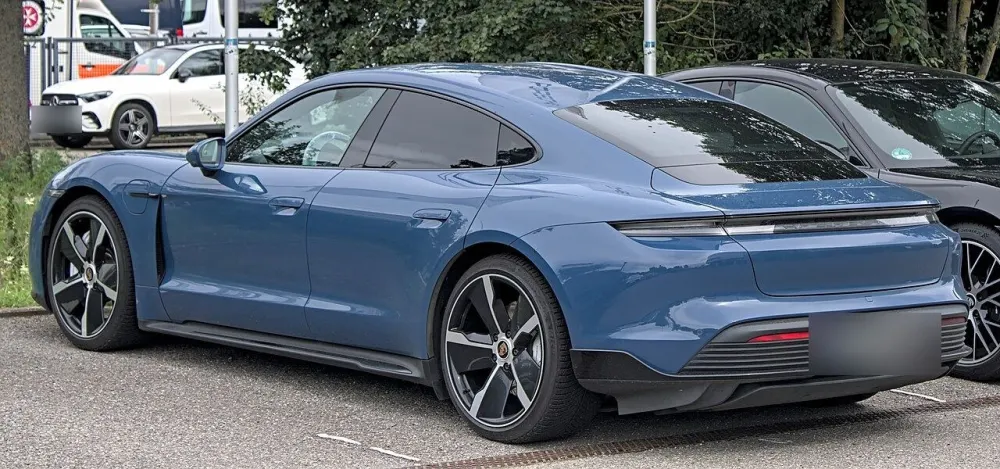
    A blue Porsche Taycan seen from the rear three-quarter with its full-width light bar
    Photo: Alexander-93 · Wikimedia Commons · CC BY-SA 4.0 · Modified: licence plate blurred
    New model

    Taycan, Porsche's first electric car, premieres on three continents

    On 4 September 2019 Porsche unveiled the Taycan simultaneously in North America, Europe and China under the slogan "Soul, electrified". It used an 800-volt system and a two-speed gearbox on the rear axle.

  16. Racing

    Porsche enters Formula E and scores a podium first time out

    Porsche makes its Formula E debut at the Diriyah E-Prix in Saudi Arabia with the 99X Electric. André Lotterer finishes second in the opening race, a strong start for the fully electric works programme.

  17. 2021

    Version

    Taycan Cross Turismo adds an electric all-rounder

    In March 2021 the Taycan Cross Turismo premiered as the production version of the 2018 concept: a raised electric estate with all-wheel drive and extra rear headroom.

  18. 2022

    Racing

    Wehrlein leads a one-two for Porsche’s first Formula E win

    From pole position, Pascal Wehrlein wins the Mexico City E-Prix in the 99X Electric with teammate André Lotterer second: Porsche’s first Formula E victory.

  19. Company

    Porsche AG returns to the stock market

    On 29 September 2022 Porsche AG's preferred shares began trading in Frankfurt under the symbol P911 at an offer price of 82.50 euros. By market value it was Europe's largest IPO.

  20. Version

    911 Dakar: an off-road 911 for the road

    Unveiled at the 2022 LA Auto Show, the 911 Dakar raised the ride height and added all-terrain tyres, a tribute to the 911 that won the 1984 Paris-Dakar. It was limited to 2,500 cars.

  21. 2023

    Company

    75 years of Porsche sports cars and the Vision 357

    In 2023 Porsche celebrated 75 years since the 356 "No. 1" and 60 years of the 911. The Vision 357 design study, inspired by the 356, opened the anniversary year.

  22. 2024

    Version

    Taycan update: more power, range and faster charging

    In 2024 Porsche gave the Taycan an extensive update with more power, longer range, quicker acceleration and faster charging. A Taycan Turbo GT topped the range.

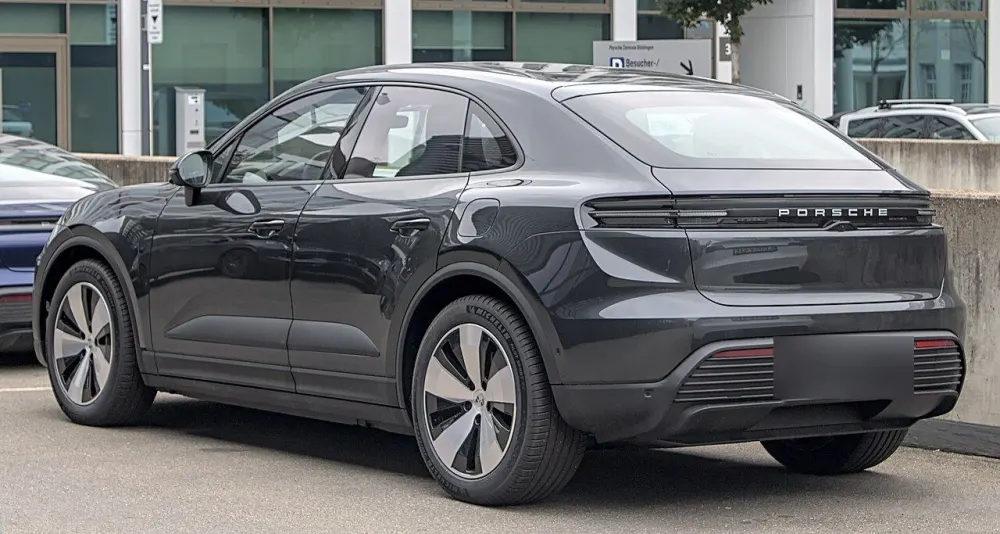
  23. A dark grey all-electric Porsche Macan seen from the rear three-quarter in a car park
    Photo: Alexander-93 · Wikimedia Commons · CC BY-SA 4.0 · Modified: licence plate blurred
    New model

    The all-electric Macan premieres in Singapore

    On 25 January 2024 Porsche unveiled the second-generation Macan in Singapore, its first all-electric SUV. Built on the new PPE platform with 800-volt technology, it launched as the Macan 4 and Macan Turbo.

  24. Racing

    963 hybrid prototype wins the 24 Hours of Daytona

    After a 32-minute final duel with a Cadillac, Felipe Nasr brings the Porsche Penske 963 he shares with Dane Cameron, Matt Campbell and Josef Newgarden home first. It is Porsche’s first overall Daytona win since 2003 and its 19th there.

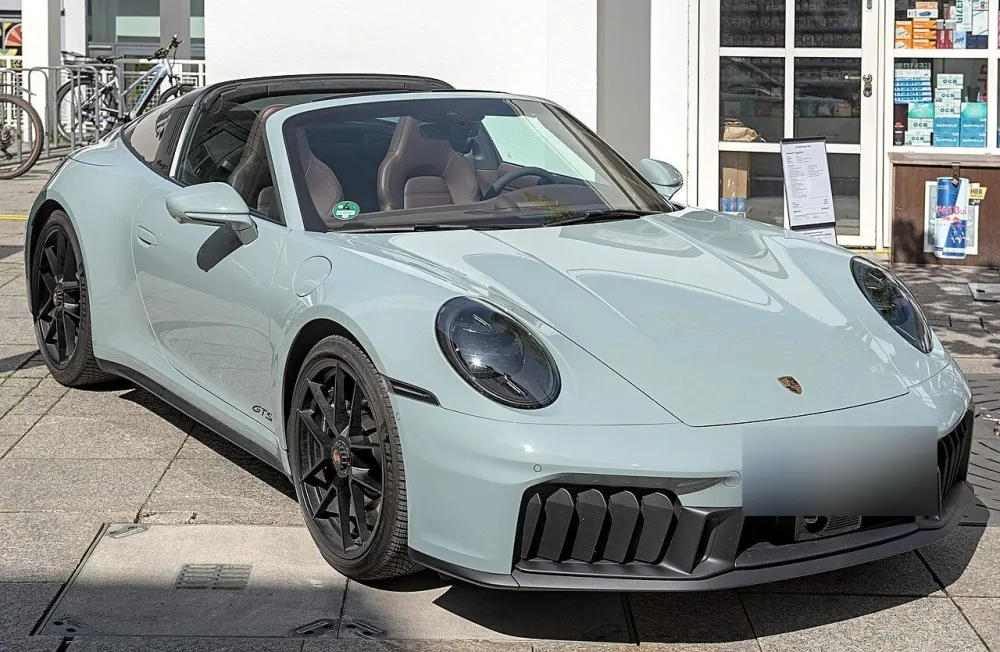
  25. A pale grey-green 2025 911 Carrera GTS Targa, the updated 992 with T-Hybrid drive, showing its new vertical-slat front air intakes
    Photo: Alexander Migl · Wikimedia Commons · CC BY-SA 4.0 · Modified: licence plate blurred
    Technology

    911 Carrera GTS T-Hybrid: the first hybrid 911

    On 28 May 2024 Porsche revealed the updated 992 with the first road-legal hybrid 911. The GTS T-Hybrid pairs a 3.6-litre flat-six, an electric turbocharger and a motor in the gearbox for 541 PS in total.
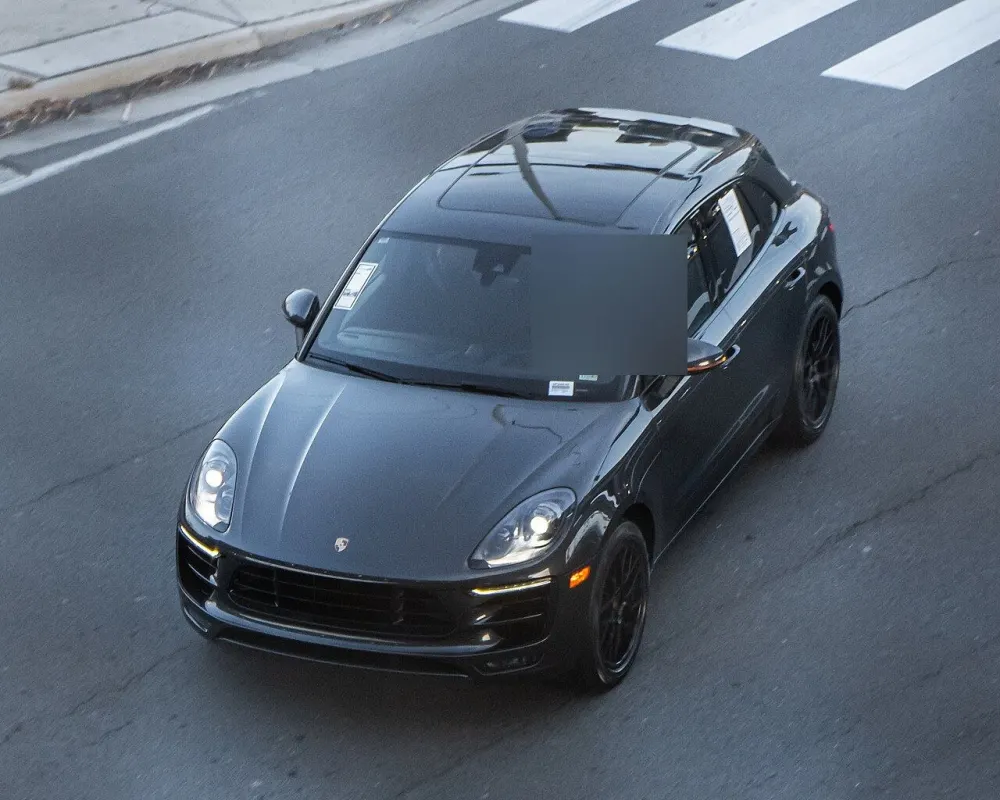
  26. Racing
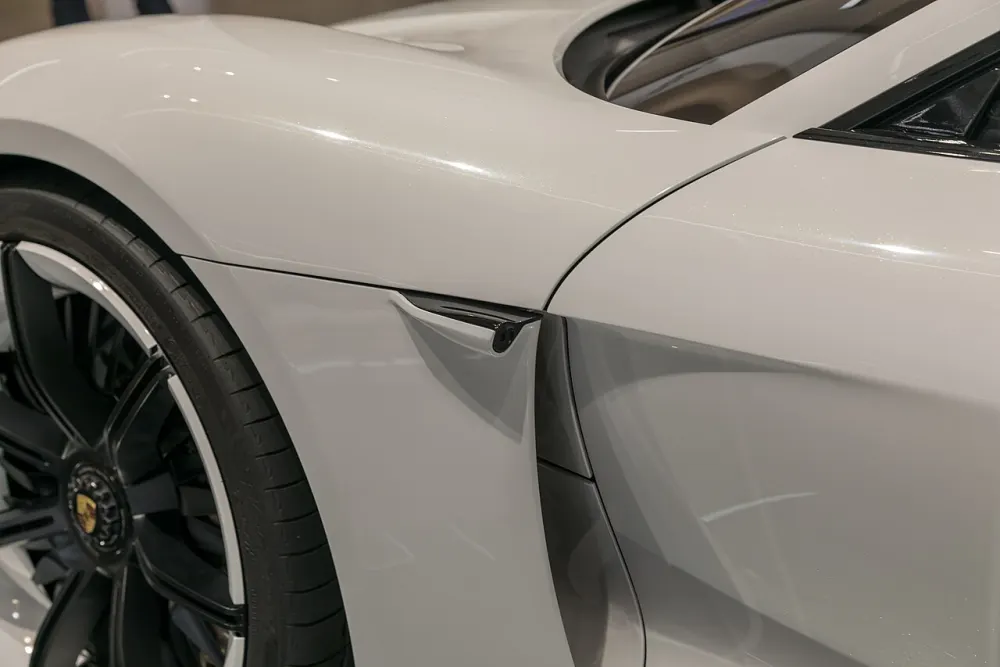
    Pascal Wehrlein becomes Formula E world champion

    At the London season finale, Pascal Wehrlein beats the Jaguar pair of Mitch Evans and Nick Cassidy to the Season 10 Formula E drivers’ title, Porsche’s first world title in the series.

  27. Racing

    Estre, Lotterer and Vanthoor win the WEC drivers’ title in the 963

    Finishing eleventh at the Bahrain 8 Hours is enough: Kévin Estre, André Lotterer and Laurens Vanthoor clinch the 2024 World Endurance Championship drivers’ title in their Porsche Penske 963. Porsche ends second among manufacturers.

  28. 2025

    New model

    Cayenne Electric premieres online, then in Dubai

    Porsche revealed the Cayenne Electric, its second all-electric SUV, in a digital world premiere on 19 November 2025, with a public debut at Icons of Porsche in Dubai days later. It sits alongside the petrol and hybrid Cayenne.

  29. 2026

    People

    Michael Leiters becomes Porsche CEO

    On 1 January 2026 Michael Leiters, former CEO of McLaren Automotive and once a Porsche and Ferrari engineer, succeeded Oliver Blume at the head of Porsche AG. Blume continues to lead the Volkswagen Group.

  30. Racing

    Wehrlein wins a second Formula E title in London

    Pascal Wehrlein clinches his second Formula E drivers’ championship at the London double-header, after winning the Saturday race. He joins Jean-Éric Vergne as the series’ only two-time champion.

Every model, at a glance

Production years of each road-car generation. Tap a bar to see its notable versions.

356

550 & Spyder

911

912

914

924 · 944 · 968 · 928

959

Boxster & Cayman

Carrera GT & 918

Cayenne

Panamera

Macan

Taycan

Think you know the story now?

Today’s daily has ten questions on these cars. Same for everyone, two minutes.