Motorsport
The Bentley Boys and Le Mans: who they were and what they won
The Bentley Boys were the rich amateurs, journalists and engineers who raced for W.O. Bentley in the 1920s. They won Le Mans five times between 1924 and 1930, four of them in a row.
By the My Hangar editorsPublished 6 min read
Key takeaways
- The Bentley Boys were the mix of wealthy amateurs, journalists and company staff who raced Bentleys in the 1920s; there was never a formal membership list.
- Bentley won the 24 Hours of Le Mans in 1924, 1927, 1928, 1929 and 1930, five of the race's first eight editions.
- Woolf Barnato started Le Mans three times and won all three, in 1928, 1929 and 1930, each with a different co-driver.
- The supercharged Blower Bentley never won Le Mans: all the wins of 1929 and 1930 went to the unsupercharged Speed Six.
- Bentley quit racing after 1930 and did not win Le Mans again until the Speed 8 in 2003.
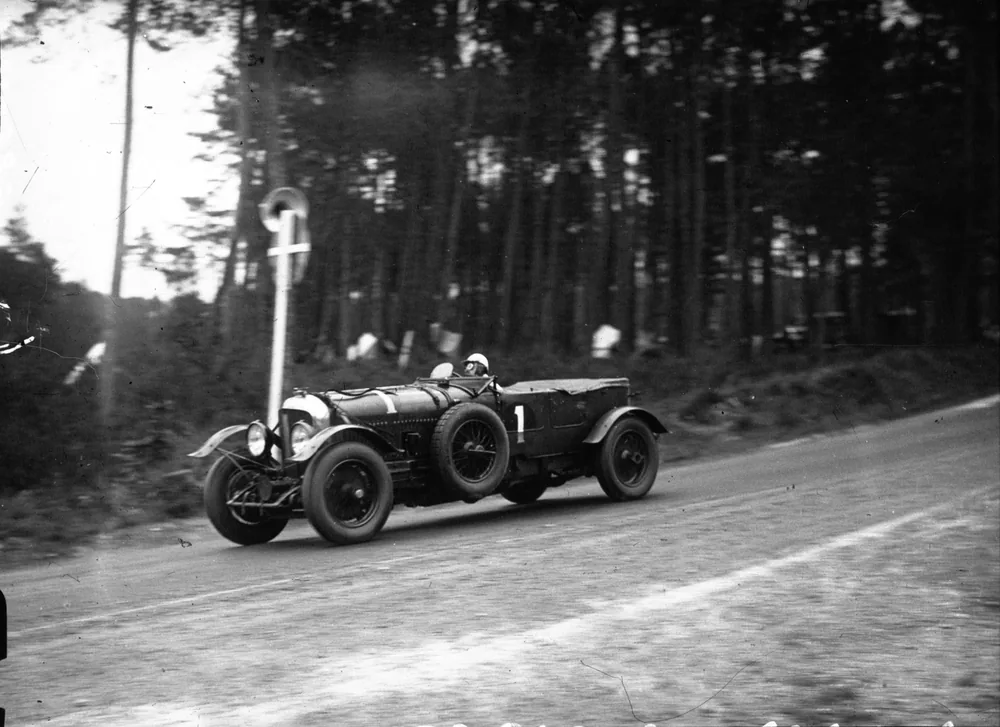
The Bentley Boys were the wealthy amateurs, journalists, engineers and adventurers who raced for W.O. Bentley's company in the 1920s. They won the 24 Hours of Le Mans five times: in 1924, then four years running from 1927 to 1930. That is five of the race's first eight editions. Bentley's only later win came 73 years on, in 2003.
Who were the Bentley Boys?
They were a loose group of drivers, not a formal team with a membership list. Published line-ups vary, and the longer ones add names such as Dale Bourne or Clive Gallop, but the drivers below appear in most accounts.
What set them apart was how little they had in common beyond money, nerve or both. Some paid their own way. Others were on the payroll. You can meet the marque's wider story in our Bentley timeline.
| Driver | Away from the track | Le Mans with Bentley |
|---|---|---|
| Woolf Barnato | Diamond heir, company chairman | Won 1928, 1929, 1930 |
| Sir Henry "Tim" Birkin | Family lace money | Won 1929 |
| Dr Dudley Benjafield | Bacteriologist at St George's Hospital | Won 1927 |
| Sammy Davis | Sports editor of The Autocar | Won 1927 |
| John Duff | Car dealer | 4th 1923, won 1924 |
| Frank Clement | Ran Bentley's experimental and racing shops | Won 1924, 2nd 1930 |
| Bernard Rubin | Australian-born, family pearling fortune | Won 1928 |
| Glen Kidston | Former submarine officer, aviator | 2nd 1929, won 1930 |
| George Duller | Champion jockey | Crashed out 1927 |
| Baron André d'Erlanger | International banker | 3rd 1929 |
| Jack Dunfee | Racing driver | 2nd 1929 |
Kidston shows the appetite for risk. He was the only survivor of an airliner crash in 1929, on a flight from Croydon to Amsterdam, the same year he finished second at Le Mans, and died in 1931 when his light aircraft broke up over Africa.
What did the Bentley Boys win at Le Mans?
Five overall victories, with three different models. The table lists each winning crew; the 1929 race was the high point, with Bentleys in the first four places.
| Year | Car | Winning drivers | Laps | Distance |
|---|---|---|---|---|
| 1924 | 3 Litre | John Duff, Frank Clement | 120 | 2,077.34 km |
| 1927 | 3 Litre, "Old Number 7" | Dudley Benjafield, Sammy Davis | 137 | 2,369.81 km |
| 1928 | 4½ Litre, "Old Mother Gun" | Woolf Barnato, Bernard Rubin | 155 | 2,669.27 km |
| 1929 | Speed Six | Woolf Barnato, Tim Birkin | 174 | 2,843.83 km |
| 1930 | Speed Six | Woolf Barnato, Glen Kidston | 179 | 2,930.66 km |
The first attempt came a year before the first win. In 1923, at the first Le Mans, Duff and Clement finished fourth in a 3 Litre despite a stone holing the fuel tank about 5 km from the pits. Accounts differ on who went back on foot for help: Motor Sport says Duff, the Wikipedia race report Clement.
What happened at White House in 1927?
A pile-up at the White House (Maison Blanche) curves took out two of the three works Bentleys, and the third went on to win.
A French car spun and blocked the road. Leslie Callingham's 4½ Litre left the road at over 70 mph and George Duller's 3 Litre piled in behind it. Goodwood and the Wikipedia race report both count eight cars in the smash.
Davis, in Benjafield's older 3 Litre, struck the wreckage more lightly and limped back to the pits. The car had a twisted chassis, lashed-up bodywork and one working headlight. It carried No. 3 that day, though it is remembered as Old Number 7. When the leading Aries broke down in the closing stages, the Bentley took over and won by 20 laps from a Salmson.
How did Woolf Barnato shape the team?
He paid for it and won with it. Barnato, heir to the Kimberley diamond fortune, financed the company in May 1926, became chairman and took control. He then started Le Mans three times and won all three.
His first win, in 1928, came in the 4½ Litre prototype that had been damaged at White House the year before. Rubin and he beat the Stutz of Robert Bloch and Édouard Brisson by just 13 km, and they finished with the radiator running dry.
The next two wins came in the Speed Six, a 6,597 cc straight-six that made about 200 bhp in racing form. W.O. Bentley's preferred route to speed was more capacity, and the result in 1929 was first to fourth, with 4½ Litres behind the winner. In March 1930 Barnato also won a £100 bet by beating the Blue Train from Cannes: he reached London before it reached Calais.
Did the Blower Bentley ever win Le Mans?
No. The supercharged 4½ Litre, Birkin's project, never won the race. Its big chance was 1930, when none of the team cars reached the finish.
Birkin fitted a Roots-type supercharger ahead of the radiator, against the wishes of W.O. Bentley, and persuaded the company to build the cars needed for Le Mans eligibility. In total 54 were made. The four racing cars were funded by the heiress Dorothy Paget.
In 1930 she entered three. One did not start, and the Birkin and Benjafield cars both retired with engine failure, though sources disagree on the exact cause. Motor Sport credits Birkin's pace with overstretching the main rival, Rudolf Caracciola's Mercedes-Benz SSK, which stopped at 1.30am with a loose dynamo wire. Barnato and Kidston won ahead of Clement and Dick Watney.
Birkin won Le Mans once more, in 1931, sharing an Alfa Romeo with Earl Howe. He died in London in June 1933, after the Tripoli Grand Prix, where he had burned his arm on an exhaust pipe. Blood poisoning or malaria, or both, are the usual explanations.
Why did the Bentley Boys stop racing?
The company withdrew after the 1930 race, and in 1931 its money ran out. A receiver was appointed that July and the firm passed to Rolls-Royce, a story told in Bentley and Rolls-Royce: why they shared cars.
The sixth win arrived in 2003, when Rinaldo Capello, Tom Kristensen and Guy Smith led home a Bentley Speed 8 one-two on 377 laps, ahead of Johnny Herbert, David Brabham and Mark Blundell. To test your own knowledge of the era, try the My Hangar Bentley quiz.
FAQ
How many times did the Bentley Boys win Le Mans?
Five: 1924, 1927, 1928, 1929 and 1930. The sixth Bentley victory, in 2003, came from a modern factory team and not from the original group.
Which Bentley Boy won Le Mans the most?
Woolf Barnato, with three wins from three starts in 1928, 1929 and 1930. Tim Birkin also won twice, but his second win, in 1931, came in an Alfa Romeo.
What was Old Number 7?
The 3 Litre that won Le Mans in 1927 for Dudley Benjafield and Sammy Davis after surviving the White House crash. It raced that year with the number 3.
Which Bentley Boy was a doctor?
Dudley Benjafield, a bacteriologist at St George's Hospital in London, who began racing at Brooklands in 1924 and first drove at Le Mans in 1925.
Sources
- Green party, Motor Sport Magazine (February 2007)
- The name behind the race: Benjafield and Davis, Goodwood Road & Racing
- The Bentley Boys, Maison Blanche
- Le Mans 24 Hours 1929 results, Racing Sports Cars
- Le Mans 24 Hours 1930 results, Racing Sports Cars
- Tim Birkin, 8W Forix Autosport
- 1929 Team Blower UU 5872, Bentley heritage collection
- 1927 24 Hours of Le Mans, Wikipedia
- 1923 24 Hours of Le Mans, Wikipedia
- Glen Kidston, Wikipedia
- Blue Train Races, Wikipedia
Every figure here was checked against at least two independent sources, listed at the end.