History
Bentley and Rolls-Royce: why they shared cars for decades and how they split
Rolls-Royce bought Bentley in 1931 for about £125,000, and the two shared cars until a 1998 sale gave Volkswagen Bentley and BMW the Rolls-Royce name, effective 1 January 2003.
By the My Hangar editorsPublished 6 min read
Key takeaways
- Rolls-Royce bought Bentley in 1931 for about £125,000, bidding through a front called the British Central Equitable Trust.
- From the 1946 Mark VI to the 1998 Arnage, most Bentleys shared a chassis and body with a Rolls-Royce, often differing only in grille and badges.
- Bentleys were under 5% of Crewe's output before the 1982 Mulsanne Turbo, which began a recovery to parity with Rolls-Royce by 1991.
- In 1998 Volkswagen paid £430m for the car business, but BMW paid Rolls-Royce plc £40m for the name.
- From 1 January 2003 only BMW could build cars called Rolls-Royce, while Volkswagen kept Bentley and the Crewe factory.
Bentley and Rolls-Royce shared cars because Rolls-Royce bought Bentley in 1931, for about £125,000, after a receiver was called in. From the 1930s to the 1998 Arnage, Bentleys drew on Rolls-Royce engines, chassis and bodies. The split came from a 1998 sale that took effect on 1 January 2003: Volkswagen kept Bentley, and BMW took Rolls-Royce.
Why did Rolls-Royce buy Bentley in 1931?
Because Bentley was in receivership and Rolls-Royce wanted it, without being seen to bid. The Depression had cut demand for expensive cars, and in July 1931 two mortgage payments fell due that neither the company nor its guarantor, Woolf Barnato, could meet. A receiver was appointed on 10 July.
Napier offered to buy the firm, but a sealed bid from the British Central Equitable Trust won. Sources put it at £125,000 or, more precisely, £125,275. The Trust turned out to be a front for Rolls-Royce. Barnato received about £42,000 for his shares.
The buyer formed Bentley Motors (1931) Ltd and closed Cricklewood. W.O. Bentley came with the deal, unwillingly, and stayed until he left for Lagonda in April 1935. His racing years are told in The Bentley Boys and Le Mans.
What was a Derby Bentley?
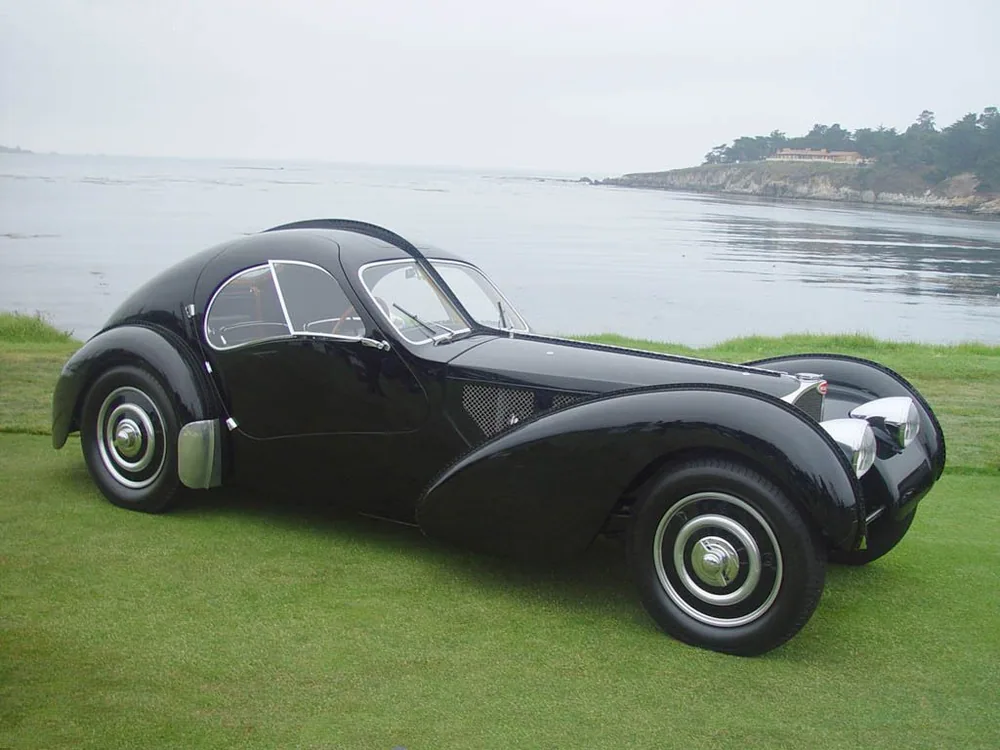
A Derby Bentley is one of the cars Rolls-Royce built at its Derby works from 1933 to 1939. These were the first Rolls-Royce-era Bentleys, and they were related to Rolls-Royces without being copies.
The 3½ Litre of 1933 used an engine developed from the straight-six of the Rolls-Royce 20/25, with higher compression, a sportier camshaft and two SU carburettors. It was sold as "the silent sports car". A 4¼ Litre followed in 1936, and about 2,411 cars of the two types were made.
When did Bentleys become rebadged Rolls-Royces?
After the Second World War, at Crewe. Rolls-Royce had started building the Pyms Lane plant in 1938 to make Merlin aero engines, and it moved car production there in 1946 because Derby was needed for jet engines.
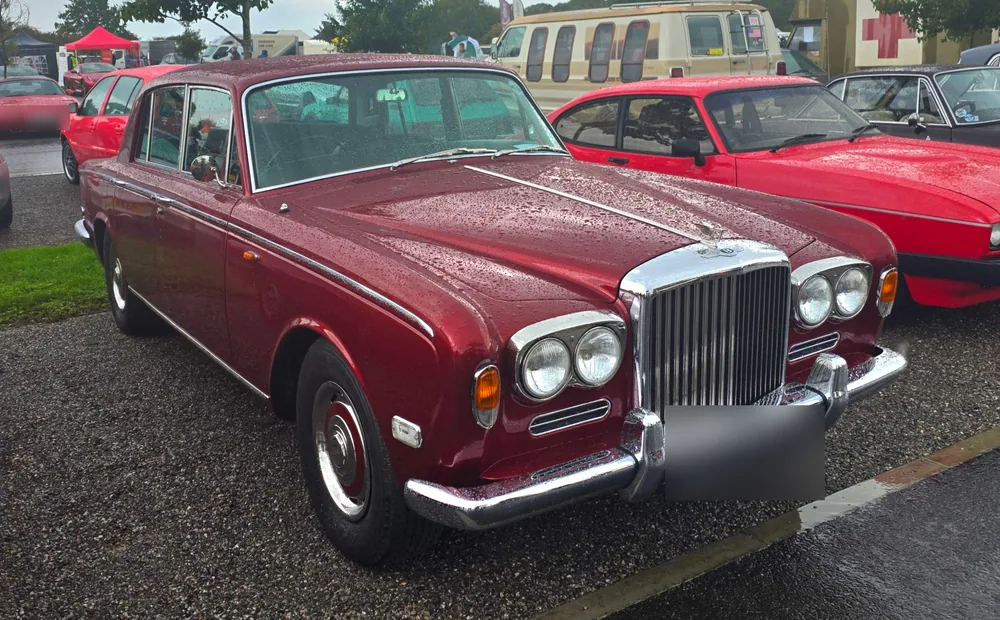
The first Crewe car, the 1946 Mark VI, was also the first Bentley with a standard pressed-steel body. From 1949 that same chassis and body appeared on the Rolls-Royce Silver Dawn. By the 1955 S1 and Silver Cloud, the two were nearly identical apart from grille shape and badges. When the T series arrived in 1965 as a Bentley version of the Silver Shadow, its list price before tax in October 1966 was just £50 lower than the Rolls-Royce's.
| Bentley | Launched | Rolls-Royce counterpart | What they shared |
|---|---|---|---|
| 3½ Litre | 1933 | 20/25 | Developed engine |
| Mark VI | 1946 | Silver Dawn (1949) | Chassis and body |
| R Type | 1952 | Silver Dawn | Chassis and body |
| S1 | 1955 | Silver Cloud | Nearly all but grille and badges |
| S2 | 1959 | Silver Cloud II | 6.2-litre V8 |
| T series | 1965 | Silver Shadow | Nearly all but grille and badges |
| Mulsanne | 1980 | Silver Spirit | The underlying car |
| Arnage | 1998 | Silver Seraph | Platform and body shell |
The Continental was the exception, as our Bentley Continental history explains.
Who owned Rolls-Royce and Bentley after 1971?
First the state, then the stock market, then Vickers. The original Rolls-Royce Limited collapsed in 1971, partly because of the cost of the RB211 jet engine, and was nationalised. In 1973 the car division was split off as Rolls-Royce Motors, which was listed as a public company after a sale by tender failed. Vickers bought it in 1980.
By then Bentley was the minor badge. Before the Mulsanne Turbo, under 5% of the cars built at Crewe were Bentleys.
How did the Turbo revive Bentley?
By giving it a reason to exist apart from Rolls-Royce. The Mulsanne of 1980 began as a rebadged Silver Spirit, but in March 1982 a single Garrett turbocharger at Geneva turned it into the Mulsanne Turbo, with roughly 300 bhp, 0–60 mph in about seven seconds and a top speed limited to 135 mph. It cost £58,613, or £6,500 more than the standard car.
The Eight of 1984 and the Turbo R of 1985, with suspension to match the power, kept it going. The Bentley share reached 40% in 1986 and parity with Rolls-Royce by 1991, the year the Continental R brought Bentley its own body again.
How did Bentley and Rolls-Royce split?
They split because the name and the factory turned out to belong to different owners. Vickers announced the sale in October 1997, and BMW, already the engine supplier to both marques, looked the likely buyer. It offered £340m, but Volkswagen won with £430m.
Volkswagen got Crewe, the designs, the Spirit of Ecstasy and the grille shape. It did not get the Rolls-Royce name and logo, which belonged to the separate aero-engine company Rolls-Royce plc. BMW licensed them for £40m, and it could also end engine supply with 12 months' notice. Volkswagen, for its part, reportedly wanted Bentley most, as it outsold Rolls-Royce by about two to one.
The compromise was announced on 28 July 1998. Volkswagen could use the Rolls-Royce name until the end of 2002, and from 1 January 2003 only BMW could call a car a Rolls-Royce. Crewe built the Silver Seraph, with its BMW V12, until 2002. BMW opened its own plant at Goodwood, Sussex, and the old factory became Bentley's alone.
The Arnage, meanwhile, had launched in 1998 with a BMW-based V8. Volkswagen switched it to the old 6¾-litre V8 with the Red Label in 1999, and BMW-engined cars tailed off with just seven Green Labels and 52 Birkins.
What happened to Bentley after the split?
It became a Volkswagen Group brand with Crewe as its only home. The first all-new car of that era was the 2003 Continental GT, on a platform shared with other Volkswagen Group cars. By 2021, its 75th year at Crewe, Bentley had built 197,086 cars there, 97% of its total output. The two marques now have no shared cars or owners. See how the eras line up in our Bentley timeline, or test yourself in the My Hangar Bentley quiz.
FAQ
Does Rolls-Royce still own Bentley?
No. Bentley has belonged to the Volkswagen Group since 1998, and Rolls-Royce Motor Cars has been a BMW company since 1 January 2003. They are separate competitors.
When did Rolls-Royce buy Bentley?
In 1931, after Bentley went into receivership on 10 July that year. It bought the firm through the British Central Equitable Trust for about £125,000.
Why did BMW get Rolls-Royce and Volkswagen get Bentley?
Volkswagen outbid BMW for the car business in 1998, but the Rolls-Royce name belonged to the aero-engine maker Rolls-Royce plc, which licensed it to BMW for £40m. The two carmakers agreed that BMW would take over the name from 2003.
Which Bentley is the same as a Silver Shadow?
The T series, launched in 1965. It was a Bentley version of the Silver Shadow, and its most visible difference was the rounder Bentley grille.
Sources
- Bentley, Wikipedia
- The sale of Rolls-Royce Motor Cars and Bentley Motors, Flying Spares
- Rolls-Royce name goes to BMW, UPI (29 July 1998)
- Birth of an icon: 1982 Bentley Turbo, Evo
- Sporting class: the history of Bentley, Motoring Research
- Bentley Motors, Grace's Guide
- Crewe history, Bentley Drivers Club
- Bentley celebrates 75 years of manufacturing cars in Crewe, Automotive World
- Bentley Arnage, Wikipedia
Every figure here was checked against at least two independent sources, listed at the end.