Engineering
Electric Porsche history: from the 1900 Lohner-Porsche to the Taycan and Cayenne Electric
Ferdinand Porsche showed a hub-motor electric car in Paris on 14 April 1900. Porsche's first electric production car, the 800-volt Taycan, premiered on 4 September 2019; the Macan and Cayenne followed.
By the My Hangar editorsPublished 6 min read
Key takeaways
- The Lohner-Porsche electric car, with motors in its front wheel hubs, premiered at the Paris Exposition on 14 April 1900, when Ferdinand Porsche was 24.
- Porsche describes the 1900 Semper Vivus, which added petrol engines driving generators, as the world's first functional hybrid car.
- The 918 Spyder plug-in hybrid combined a V8 with two electric motors for 887 PS; 918 were built from 2013 to 2015.
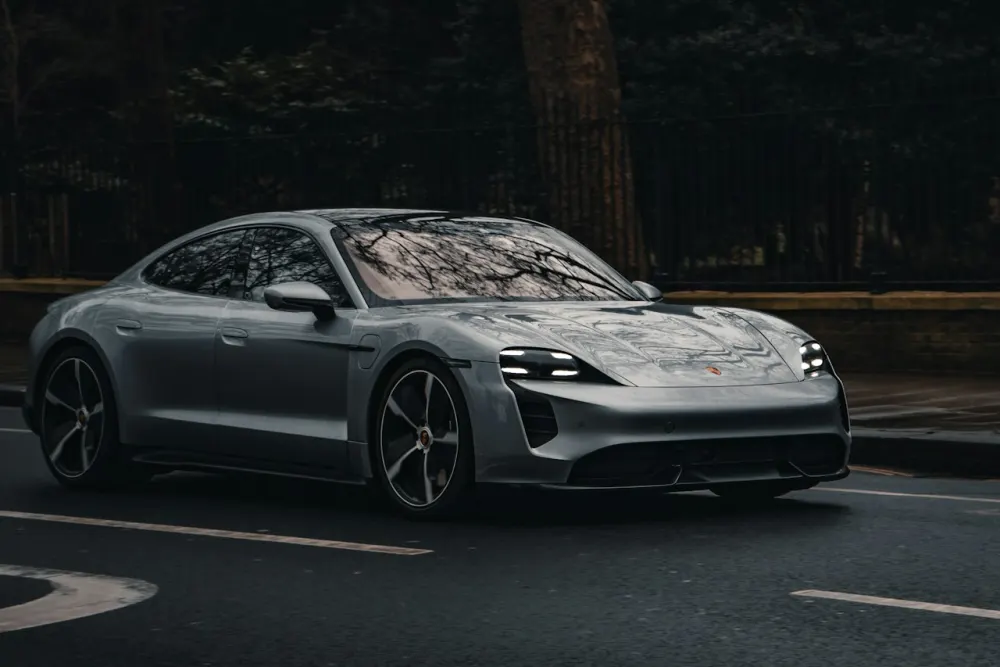
- The Taycan, Porsche's first all-electric production car and the first production car with an 800-volt system, premiered on 4 September 2019.
- The electric Macan premiered on 25 January 2024 and the Cayenne Electric on 19 November 2025; Cayenne Electric deliveries began at the end of June 2026.
Porsche's electric history starts in 1900, when the Lohner-Porsche hub-motor car premiered in Paris on 14 April. More than a century later came the 918 Spyder plug-in hybrid (2013), the Mission E concept (2015) and the Taycan, Porsche's first all-electric production car, revealed on 4 September 2019 with an 800-volt system. The electric Macan followed in January 2024, the Cayenne Electric in November 2025.
Was the first Porsche-designed car electric?
Yes. At 24, Ferdinand Porsche developed an electric car for the Viennese coachbuilder Jacob Lohner & Co. in about ten weeks, and the "System Lohner-Porsche" premiered at the Paris Exposition on 14 April 1900, in its Palace of Electricity.
Its electric motors sat inside the front wheel hubs, so there was no gearbox or drive shaft. Each hub motor gave 2.5 PS, and the lead-acid battery gave a range of about 50 km, according to Porsche and Volkswagen Group histories.
The system was modular. Porsche says around 300 vehicles were built on it, including 40 for the Vienna fire brigade. The same year he built the "La Toujours Contente" racing car, with a hub motor in each of its four wheels, which Porsche calls the world's first all-wheel-drive vehicle.
What was the Semper Vivus hybrid?
It was Porsche's answer to heavy batteries and almost non-existent charging. The 1900 Semper Vivus ("always alive") added petrol engines that drove generators feeding the hub motors.
Porsche and the Volkswagen Group both describe it as the world's first functional hybrid car. An improved series version, the Lohner-Porsche "Mixte", followed in 1901.
How did Porsche return to electric drive?
Through hybrids, more than a century later. The Cayenne S Hybrid of 2010 was Porsche's first series-production hybrid, and the Cayenne S E-Hybrid of 2014 brought a plug-in system to the premium SUV class.
The showcase was the 918 Spyder. Shown as a concept at the Geneva Motor Show in March 2010, it was confirmed for production that July and premiered in production form at the IAA in September 2013.
| 918 Spyder | Figure (Porsche) |
|---|---|
| Drive | 4.6-litre V8 plus two electric motors (plug-in hybrid) |
| System output | 887 PS (652 kW) |
| Front axle | Driven by an electric motor only |
| Nordschleife lap | 6:57 minutes (2013) |
| Production | 918 cars, ended in June 2015 |
What was the Porsche Mission E?
The Mission E was the concept that became the Taycan. Porsche unveiled it at the Frankfurt IAA in September 2015: a four-door, four-seat electric sports car with more than 600 PS (440 kW), a range of over 500 km and the first 800-volt drive system.
Porsche claimed the 800-volt technology would charge the battery to about 80 per cent in around 15 minutes. On 4 December 2015 the supervisory board approved it for development to series production at Zuffenhausen, and in June 2018 the production car was named Taycan, which Porsche says can be read as "lively young horse".
When did the Porsche Taycan come out, and what makes it different?
The Taycan premiered on 4 September 2019, simultaneously at Niagara Falls, near Berlin and near Fuzhou in China. It was Porsche's first all-electric production car and, by Porsche's account, the first production car with an 800-volt system instead of the usual 400 volts.
Higher voltage means more charging power through the same cable. Porsche quoted a peak of 270 kW and 5 to 80 per cent charge in 22.5 minutes under ideal conditions. The Taycan also has a two-speed gearbox on the rear axle, unusual for an electric car.
| Taycan at launch (2019) | Taycan Turbo S | Taycan Turbo |
|---|---|---|
| Peak output (overboost) | 560 kW (761 PS) | 500 kW (680 PS) |
| 0–100 km/h | 2.8 s | 3.2 s |
| WLTP range | up to 412 km | up to 450 km |
| Battery (gross) | 93.4 kWh | 93.4 kWh |
It is built at Zuffenhausen. The Taycan Cross Turismo arrived in March 2021, and an extensive update in 2024 brought more power, range and faster charging. Porsche delivered 16,339 Taycans in 2025, 22 per cent fewer than the year before.
When did the electric Macan and Cayenne arrive?
The electric Macan premiered in Singapore on 25 January 2024; the Cayenne Electric had its digital world premiere on 19 November 2025, and customer deliveries began at the end of June 2026.
Macan Electric
The second-generation Macan is all-electric and uses the Premium Platform Electric (PPE), developed with Audi, with 800-volt technology and a 100 kWh battery. It launched as the Macan 4 and Macan Turbo, the latter with up to 470 kW (639 PS), and is built in Leipzig. In 2025, 45,367 of Porsche's 84,328 Macan deliveries were electric. Porsche says production of the combustion-engined Macan, still sold outside the EU, runs until the end of July 2026.
Cayenne Electric
The Cayenne Electric was shown to the public at the Icons of Porsche festival in Dubai on 22 and 23 November 2025, and is built in Bratislava on the same line as the combustion and plug-in hybrid Cayenne, which stay on sale. It has a 113 kWh, 800-volt battery and charges at up to 400 kW, 10 to 80 per cent in under 16 minutes. The Cayenne Turbo Electric reaches up to 850 kW (1,156 PS) with launch control, making it the most powerful Porsche production car. It is also the first Porsche offered with inductive charging, at up to 11 kW.
| Model | Premiere | Platform / voltage | Peak output (Porsche) |
|---|---|---|---|
| Taycan | 4 September 2019 | Porsche-developed, 800 V | 560 kW (761 PS), Turbo S at launch |
| Macan Electric | 25 January 2024 | PPE, 800 V | 470 kW (639 PS), Macan Turbo |
| Cayenne Electric | 19 November 2025 | 800 V, 113 kWh | 850 kW (1,156 PS), Cayenne Turbo Electric |
The pace has slowed. In September 2025 Porsche said the planned SUV above the Cayenne would launch with combustion and plug-in hybrid engines only, and that some fully electric models would come later than planned. In 2025, 22.2 per cent of Porsche deliveries were fully electric.
From hub motors in 1900 to 800 volts today, follow the dates on the Porsche origins timeline, compare the SUV story in how the Boxster and Cayenne saved Porsche and test yourself in the Porsche quiz.
FAQ
What was the first electric Porsche?
The first Porsche-designed electric car was the Lohner-Porsche, premiered in Paris on 14 April 1900. The first all-electric production car sold under the Porsche brand is the Taycan, revealed on 4 September 2019.
Why does the Taycan use 800 volts?
Doubling the usual 400 volts lets the car take more charging power without raising the current, which keeps heat and cable weight down. At launch, Porsche quoted up to 270 kW and 5 to 80 per cent in 22.5 minutes under ideal conditions.
Is the 918 Spyder electric?
The 918 Spyder is a plug-in hybrid. It combines a 4.6-litre V8 with two electric motors for 887 PS, and its front wheels are driven by an electric motor alone.
Is the Porsche Macan only electric now?
The second-generation Macan, revealed in January 2024, is electric only. Porsche says the older combustion-engined Macan, sold outside the EU, stays in production until the end of July 2026.
When can you buy the Porsche Cayenne Electric?
Porsche revealed it on 19 November 2025 and began customer deliveries at the end of June 2026. The combustion and plug-in hybrid Cayennes remain on sale alongside it.
Sources
- Ahead of his time: electric wheel-hub motor from 1900, Porsche Newsroom
- The history of Porsche, Volkswagen Group
- Porsche 918 Spyder, Porsche Newsroom (Porsche Museum press kit)
- World premiere for Porsche Mission E, Porsche Newsroom
- World premiere of the Porsche Taycan, Porsche Newsroom
- The new all-electric Porsche Macan, Porsche Newsroom (press kit)
- First digitally, then in Dubai: double premiere for the Cayenne Electric, Porsche Newsroom
- Porsche delivers 122,306 sports cars in the first half of 2026, Porsche Newsroom
Every figure here was checked against at least two independent sources, listed at the end.