Engineering
Air-cooled vs water-cooled Porsche 911: why the 996 broke with tradition
The 993, built until 1998, was the last air-cooled 911. The 996 of 1997 switched to water cooling because the four-valve heads needed for emissions rules and more power could not be air-cooled reliably.
By the My Hangar editorsPublished 6 min read
Key takeaways
- The 993 was the last air-cooled Porsche 911; Porsche built 68,881 of them up to the 1998 financial year.
- The 996, shown at the 1997 Frankfurt IAA, was the first water-cooled 911, with a 3.4-litre four-valve flat-six of 300 PS.
- Porsche says new exhaust rules required four-valve cylinder heads, and air-cooled four-valve boxers suffered from hotspots it could not control.
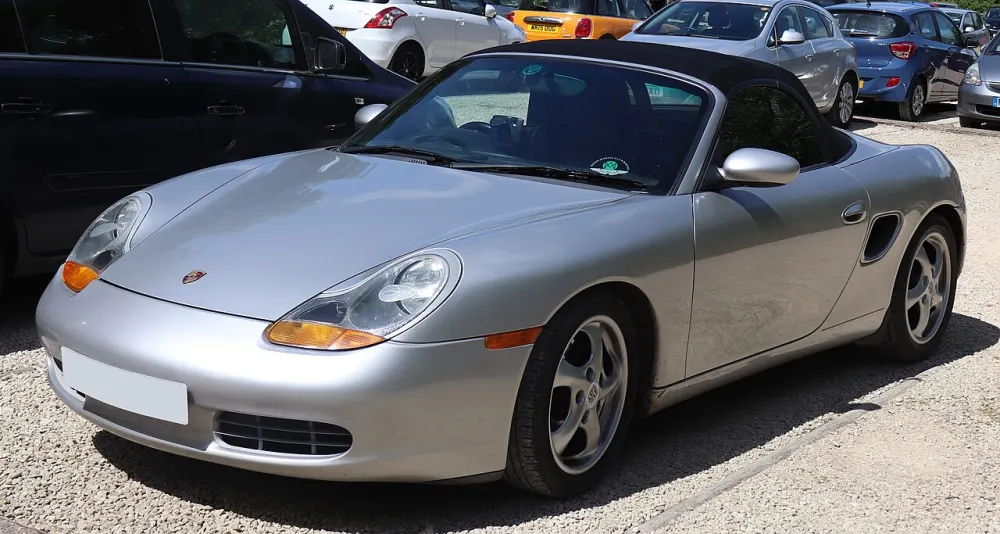
- The 996 and the 986 Boxster were identical from the front to the B-pillars, a parts-sharing plan meant to cut costs.
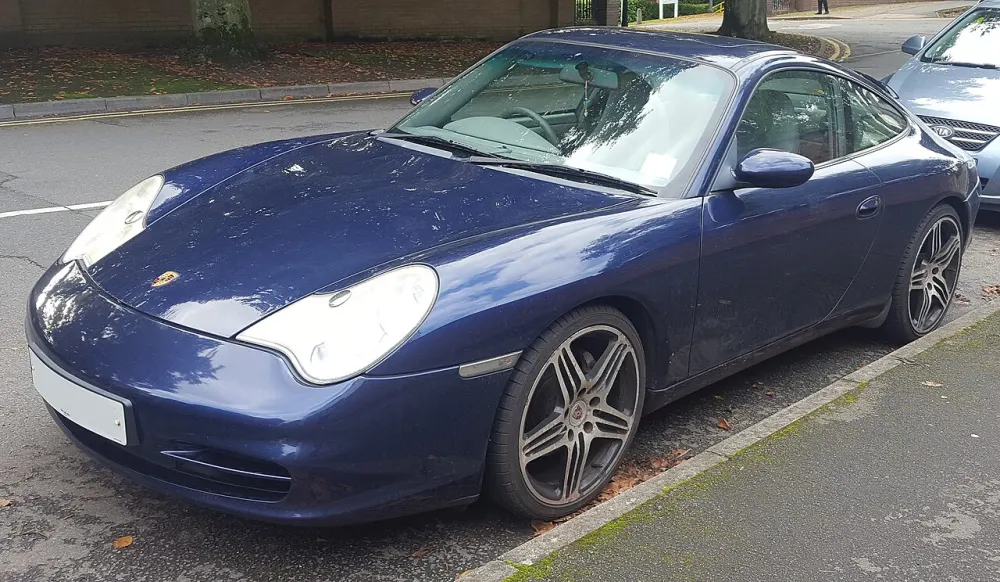
- The teardrop headlights with integrated indicators earned the nickname "fried eggs"; Porsche fitted the regular 996 with Turbo-style headlights from 2002.
The last air-cooled Porsche 911 was the 993, built until 1998. Its successor, the 996, presented at the Frankfurt IAA in 1997, was the first water-cooled 911. Porsche says the four-valve cylinder heads needed to meet new exhaust rules required water cooling. The new 3.4-litre flat-six made 300 PS, and every 911 built since has been water-cooled.
Which was the last air-cooled Porsche 911?
The 993, the fourth 911 generation. It was unveiled at the IAA in autumn 1993 and built until 1998. Porsche says it produced 68,881 of them up to the 1998 financial year, closing an air-cooled era that had begun with the 901 in 1963.
At the time few people knew it would be the last. The 993's 3.6-litre engine started at 272 PS and grew to 285 PS from 1995, with up to 450 PS in the 1998 911 Turbo S. In 1995 the 993 Turbo also became the first 911 with twin turbochargers, and Porsche describes its engine as the lowest-emission series-production engine of its day.
Which 993 was the very last is disputed. A Carrera 4S completed on 31 March 1998 is usually named as the last car off the line, but, as Hagerty reports, a special-order Turbo nicknamed "The Last Waltz" stayed at the factory for another six months, so it was the last to leave Zuffenhausen. The year, 1998, is not in doubt.
Why did Porsche switch the 911 to water cooling?
To pass emissions and noise rules while making more power. That needed four valves per cylinder, and Porsche could not make four-valve heads work reliably with air cooling.
August Achleitner, who led the 996's overall vehicle concept, explained it in Porsche's 25th-anniversary history of the car: "the air-cooled two-valve-per-cylinder designs were at the end of the road technologically in terms of emissions and power." He added: "air-cooled four-valve boxers didn't work due to various hotspots that we couldn't get a handle on."
Water cooling controls engine temperatures more precisely, which Porsche says improved efficiency and durability. Porsche also says the change helped the 911 meet increasingly strict noise regulations. The result was the 996's 3.4-litre four-valve engine with 300 PS, against 272 PS for the first 993 from a larger 3.6 litres.
Money mattered too. In the early 1990s Porsche was in crisis, and the 911 had to carry the company almost alone while the front-engined transaxle cars were phased out.
How much did the 996 share with the Boxster?
Everything from the front bumper to the B-pillars. The 996 and the 986-generation Boxster had identical front ends, and their interiors were the same up to the B-pillars.
Achleitner said Porsche "needed a car in a lower price segment, to help generate a higher volume of sales", which led to the idea of the two cars sharing parts. The Boxster arrived in 1996, a year before the 996, and the programme was planned around selling at least 30,000 units of the two cars with a good return on investment. Chief designer Harm Lagaaij knew the two cars could be confused, but said: "The pressure and the imperative of saving the company was the top priority."
The sharing went deeper than the styling. Achleitner explained that the 996's transmission tunnel was made big enough for an all-wheel-drive system from the start, and because of the parts-sharing plan the Boxster got the same tunnel, even though it was never offered with all-wheel drive. The plan worked: Porsche says more than 30,000 996s were sold every year.
The 996 was not just a Boxster with the engine moved back. Porsche says it was 18.5 cm longer, 3 cm wider and about 50 kg lighter than the 993, thanks to high-strength steel and new production methods. The range also grew fast: a Cabriolet with a fully electric roof in April 1998, the Carrera 4 about six months later, and the 420 PS 911 Turbo from January 2000.
Why are the 996 headlights called "fried eggs"?
Because of their shape. The teardrop units combined the headlights and the amber indicators in a single housing, and to many eyes the result looked like a fried egg.
Lagaaij was proud of the engineering: five functions in one module that was cheap and could be fitted in minutes on the assembly line. The press disliked them within months, and many owners objected to a 911 that looked like the cheaper Boxster. For the 2002 model update Porsche gave the regular 996 the headlights of the 911 Turbo, rounded off at the bottom, to set it apart from the Boxster more clearly. The same 2002 update raised the Carrera's displacement to 3,596 cc and its output to 320 PS. The 997 of 2004 then returned to oval clear-glass headlights, closer to the classic 911 look.
Air-cooled 993 vs water-cooled 996: what are the differences?
The table compares the base Carrera coupés of the last air-cooled and the first water-cooled 911.
| 993 Carrera | 996 Carrera | |
|---|---|---|
| Presented | IAA, autumn 1993 | IAA, 1997 |
| Engine | 3.6-litre flat-six, two valves per cylinder | 3.4-litre flat-six, four valves per cylinder |
| Cooling | Air (large cooling fan) | Water |
| Power at launch | 272 PS | 300 PS |
| Headlights | Flat ellipsoid units | Teardrop "fried eggs" |
| Built | 68,881 (1993–1998) | 175,262 (1998–2005) |
The 996's success is in the last row: Porsche built more than two and a half times as many. For the full line-up of codes, see Porsche 911 generations explained.
Are air-cooled 911s worth more than water-cooled ones?
Collectors have generally favoured the air-cooled cars, though we do not quote prices here. The 993 is widely seen as the peak of the air-cooled era, and Porsche itself calls it the pinnacle of its air-cooled six-cylinder engines.
The early 996 Carrera went the other way and long remained one of the most affordable ways into a 911, held back partly by the headlights. The exceptions are the 996 GT3, launched in 1999, and the 996 Turbo of 2000, whose engines were derived from the Le Mans-winning GT1 racer rather than the Boxster-related unit.
How well do you know the transition? Try the My Hangar Porsche quiz, see the 993 and 996 on the Porsche timeline, or read how the Boxster and Cayenne saved Porsche.
FAQ
What was the last air-cooled Porsche 911?
The 993, built from 1993 to 1998. Porsche produced 68,881 of them, and the last cars left Zuffenhausen in 1998.
When did the Porsche 911 become water-cooled?
With the 996 generation, presented at the Frankfurt IAA in 1997 and sold from the 1998 model year. Every 911 since has been water-cooled.
Why did Porsche stop air-cooling the 911?
New exhaust rules required four-valve cylinder heads, and Porsche's air-cooled four-valve engines suffered from hotspots. Water cooling also helped with noise limits, efficiency and power.
Why does the 996 look like a Boxster?
To save money, Porsche developed the 996 and the 986 Boxster together, and the two cars were identical from the front to the B-pillars, headlights included.
Which 996 has different headlights?
The 911 Turbo had its own headlights, rounded at the bottom, from 2000. From the 2002 model update the regular 996 adopted them too.
Sources
- Trailblazer for the future of the 911: 25 years of the 996-generation Porsche 911, Porsche Newsroom
- 5th Generation Porsche 911 (996), 1997–2005, Porsche Newsroom
- 30 years of the 993-generation 911 Carrera: the last of its kind, Porsche Newsroom
- Why the Porsche 911 switched from an air-cooled to a water-cooled engine, Porsche
- The last-ever air-cooled 911 to leave the factory is going to auction, Hagerty
- Headlight design holds down prices for Porsche 996 sports cars, ClassicCars.com Journal
- Egg shortage? Here's a load of 996-generation Porsche 911s with those headlights, Top Gear
- Porsche 911 (996), Wikipedia
Every figure here was checked against at least two independent sources, listed at the end.