History
How the Boxster and Cayenne saved Porsche
Porsche sold about 23,000 cars in 1991/92 and lost money. Lean production, the 1996 Boxster sharing its front half with the 996 911, and the 2002 Cayenne built in Leipzig turned it around.
By the My Hangar editorsPublished 6 min read
Key takeaways
- Porsche delivered only 23,060 cars in the 1991/92 financial year, less than half its mid-1980s volume, and was making heavy losses.
- Wendelin Wiedeking, production chief from 1991 and CEO from 1993, brought in Japanese lean-production consultants who had worked with Toyota.
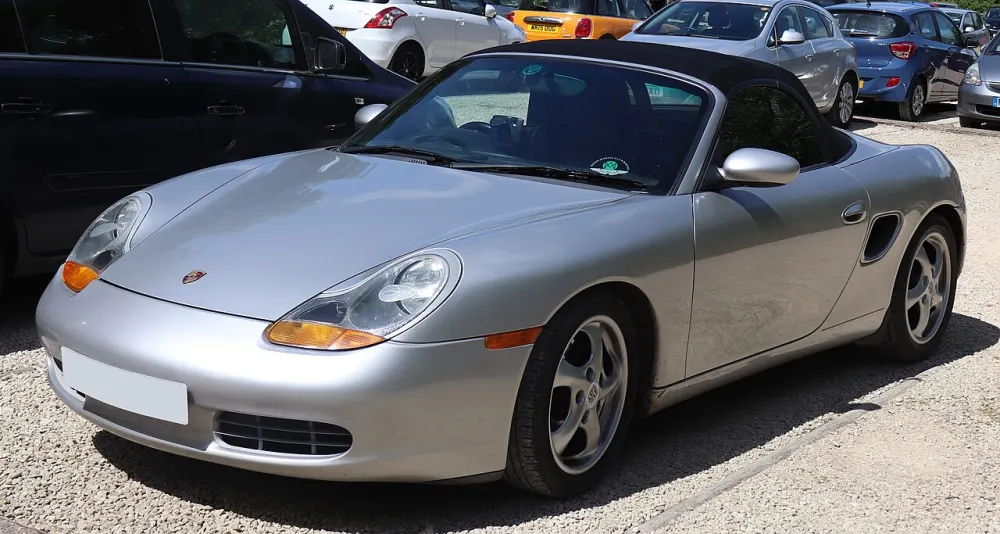
- The Boxster concept appeared in Detroit in January 1993; the production 986 started in August 1996 and 164,874 were built.
- The Boxster and the 996 911 were identical from the front to the B-pillar, which made two new models affordable at once.
- The Cayenne premiered in Paris in September 2002, was built in the new Leipzig plant, and sold 276,652 first-generation cars against a target of 25,000 a year.
The Boxster and Cayenne saved Porsche by turning a niche maker of about 23,000 cars a year (1991/92) into a volume business. After lean-production reforms under Wendelin Wiedeking, the 1996 Boxster shared its front half with the 996 911, and the 2002 Cayenne, co-developed with Volkswagen and built in Leipzig, sold 276,652 first-generation cars. In 2025 SUVs made up nearly 60 per cent of Porsche deliveries.
How bad was Porsche's crisis in the early 1990s?
Bad enough to threaten its independence. Porsche delivered 23,060 cars in the 1991/92 financial year, less than half what it had sold five years earlier, and by the end of 1992 its losses had reached about DM 240 million.
Porsche itself dates the start of the trouble to the sharp fall of the US dollar from 1986, which hurt it in its largest market. The 1987 stock market crash cut US demand further. Auto Bild puts 1993 sales below 15,000 cars, and IndustryWeek gives a low of about 14,000; the exact figure depends on financial versus calendar year.
The range did not help. Beside the 911, Porsche was selling the 928, launched in 1977, and the 968, the last evolution of the 1976 924 (see the transaxle era).
What did Wendelin Wiedeking change?
He rebuilt how Porsche made cars. Wiedeking returned to Porsche in 1991 as head of production and materials management and became chairman of the executive board in 1993, a role he held until July 2009.
He brought in Japanese consultants who had helped Toyota, led by Chihiro Nakao, to introduce lean production at Zuffenhausen. Parts stocks were cut, suppliers were pushed to deliver on time, and the workforce was trained in the new methods. Porsche's Spanish subsidiary, looking back, credits him with sharply cutting the cost per car while raising quality and output.
The second lever was product. Porsche needed cheaper cars in larger numbers, built from shared parts.
How did the Boxster concept come about?
As a quick, deliberate bet on America. The Boxster concept was unveiled at the Detroit show in January 1993, rather than at Geneva that spring, because Porsche did not want to lose time and wanted to target the US, where it was weak and roadsters like the Mazda Miata were selling.
Designer Grant Larson's mid-engined roadster drew on the 550 Spyder and 718 RS 60 of the 1950s. Its name joins "boxer" and "roadster". The reaction was so strong that Porsche told the team to build the production car as close to the concept as possible.
How did the Boxster share parts with the 996 911?
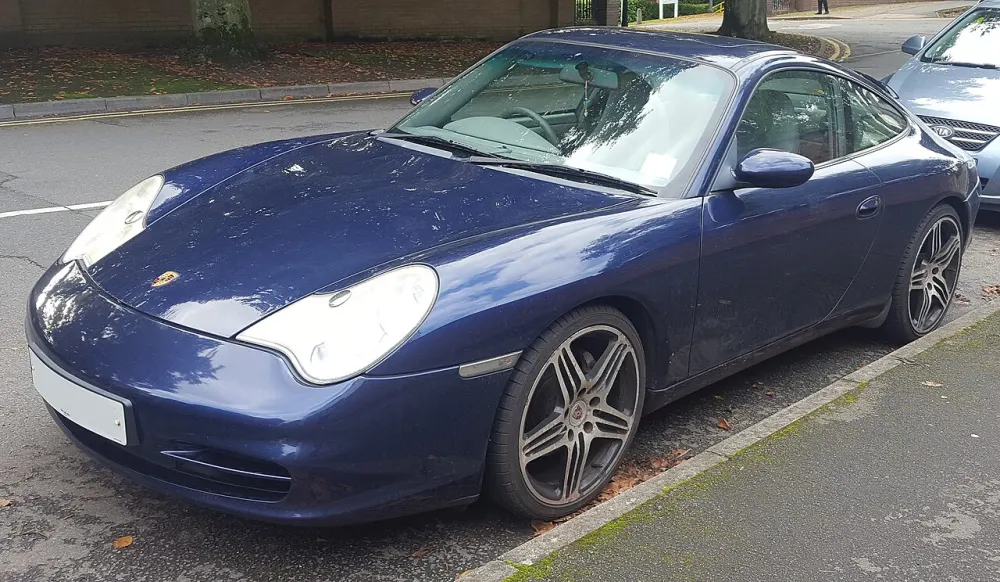
The two cars were designed as one programme. Porsche built the mid-engined Boxster (986) and the rear-engined 996 911 identically from the front to the B-pillar, including the interior up to that point.
Shared headlights, bonnet, front wings, doors and much of the front structure cut development and tooling costs, and both used a new family of water-cooled flat-six engines. Porsche planned to sell at least 30,000 units of the two models combined; in practice, the 996 alone soon exceeded 30,000 a year, and total Porsche sales settled between 50,000 and 60,000.
| Model | Introduced | Engine at launch | Built (Porsche) |
|---|---|---|---|
| Boxster 986 | Series production August 1996 | 2.5-litre water-cooled flat-six, 204 PS | 164,874 |
| 911 (996) | 1997 | 3.4-litre water-cooled flat-six | about 175,000 |
Demand for the Boxster outstripped Zuffenhausen, so from 1997 Valmet Automotive also assembled it under contract in Uusikaupunki, Finland. In Spain, Porsche's subsidiary delivered 223 Boxsters and 147 911s in 1997 alone, after selling only 139 cars in all of 1993.
Why did Porsche build the Cayenne?
To add a third model line with volume and margin. Porsche picked an off-roader over a people carrier on the advice of its US sales organisation, North America being its largest market.
Volkswagen was the partner. The joint "Colorado" project was announced in June 1998; the Cayenne and the VW Touareg share a platform, which Porsche developed at its Hemmingen site while VW contributed high-volume production know-how. The Touareg was built in Bratislava, which also supplied painted Cayenne bodies.
In 1999 Porsche decided to do final assembly in Germany, at a new plant in Leipzig. The first Cayenne left the line there on 20 August 2002, and the car premiered at the Paris Motor Show in September 2002 as the Cayenne S (4.5-litre V8, 340 PS) and Cayenne Turbo (450 PS).
The Cayenne also changed Porsche's industrial map. The first two generations were assembled in Leipzig and later also in Osnabrück; with the third generation of 2017, all Cayenne production moved to Bratislava, freeing Leipzig for the Panamera and the Macan. The second-generation Cayenne S Hybrid of 2010 was Porsche's first series-production hybrid.
What do the numbers show after the Boxster and Cayenne?
They show a different company. Porsche had expected about 25,000 Cayennes a year; the first generation sold 276,652 over eight model years, just under 35,000 a year.
Local markets told the same story. In Spain and Portugal, Porsche Ibérica forecast 400 Cayennes for 2003 and delivered 899, 57 per cent of the brand's registrations there; in 2004 it delivered 1,414. The millionth Cayenne was built in Bratislava in summer 2020.
Porsche's 2025 delivery figures show how far the SUV strategy went:
| Model line (2025) | Deliveries |
|---|---|
| Macan | 84,328 |
| Cayenne | 80,886 |
| 911 | 51,583 |
| Panamera | 27,701 |
| 718 Boxster and Cayman | 18,612 |
| Taycan | 16,339 |
| Total | 279,449 |
Together, Macan and Cayenne made up 59 per cent of the total. The 911, meanwhile, set a delivery record of its own. Wiedeking himself left in 2009 after Porsche's failed bid for Volkswagen, but the model strategy he launched outlasted him.
Explore the turning points on the Porsche origins timeline, read how the Cayenne later went electric in the history of the electric Porsche, and try the Porsche quiz.
FAQ
Did the Boxster really save Porsche?
It was the first big step. Launched in 1996 after a 1991/92 low of 23,060 deliveries, it shared parts with the 996 911 and brought Porsche back to volume; the Cayenne from 2002 then made the recovery permanent.
Who was CEO when Porsche nearly went bust?
Wendelin Wiedeking ran production from 1991 and became chairman of the executive board in 1993. He introduced lean production with Japanese consultants and led Porsche until July 2009.
What does the Boxster share with the 911?
The 986 Boxster and 996 911 were identical from the front to the B-pillar, including headlights, front body and interior up to that point, and both used water-cooled flat-six engines.
Is the Porsche Cayenne a Volkswagen Touareg?
They share a platform developed by Porsche in the joint "Colorado" project with Volkswagen, announced in 1998. The engines, tuning and bodywork differ, and the Cayenne was assembled by Porsche in Leipzig.
When did the Porsche Leipzig plant open?
The first car, a Cayenne, rolled off the Leipzig line on 20 August 2002. Porsche had chosen the site in 1999.
Sources
- 1993: The moment of change, Porsche Newsroom
- The 'third Porsche': 20 years of Cayenne, Porsche Newsroom
- Trailblazer for the future of the 911: 25 years of the 996, Porsche Newsroom
- The Boxster sports car concept, Porsche Newsroom
- Porsche Leipzig celebrates 20 years of production, Porsche Newsroom
- 40 aniversario de Porsche Ibérica: 1994–2004, Porsche Newsroom España
- Back in high gear, IndustryWeek
- Porsche delivers 279,449 sports cars to customers in 2025, Porsche Newsroom
Every figure here was checked against at least two independent sources, listed at the end.