Models
Why a Ferrari is called what it is: how to read Ferrari model names and numbers
Most Ferrari names are engine arithmetic: a 250 has about 250 cc per cylinder, a 308 is a 3.0-litre V8 and an 812 means 800 cv and 12 cylinders. The letters then describe body or purpose.
By the My Hangar editorsPublished 6 min read
Key takeaways
- The oldest Ferrari naming rule uses the capacity of one cylinder in cc, so the 125 S of 1947 was a 1,500 cc V12 and 1,500 divided by 12 gives 125.
- From the Dino onwards a second system appeared in which 308 means 3.0 litres and eight cylinders.
- The 812 Superfast is the odd one out: 8 stands for 800 cv of power and 12 for the cylinders.
- GTB means Gran Turismo Berlinetta, GTO means Gran Turismo Omologato and M means Modificata.
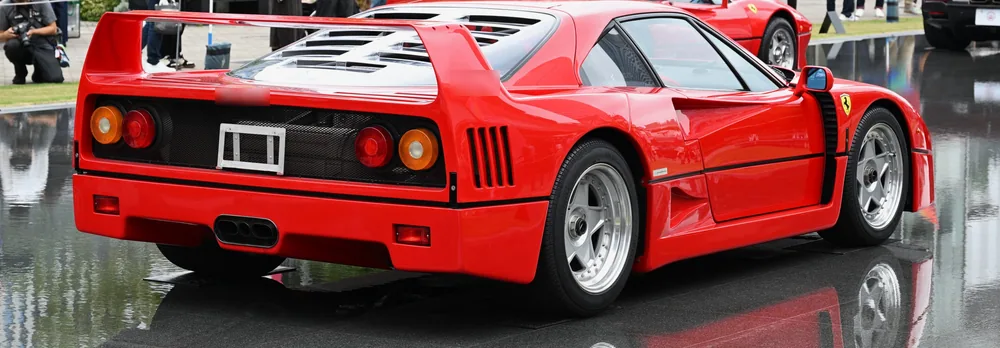
- F40 and F50 mark Ferrari anniversaries rather than any engine figure.
Most Ferrari names are engine arithmetic. In the oldest system the number is the capacity of one cylinder, so a 250 has 12 cylinders of about 250 cc and roughly 3 litres in total. Later codes changed the sum: a 308 is 3.0 litres and eight cylinders. Letters such as GTB, GTO and BB then describe the body or the car's purpose.
What do the numbers in a Ferrari name mean?
Usually the engine, but there is no single rule. ROSSOautomobili's history of the names counts several methods and warns that the pattern changes as soon as you think you have found it.
The first Ferrari sets the template: the 125 S of 1947 had a 1,500 cc V12, and 1,500 divided by 12 is 125. Ferrari's own magazine explains the same trick in reverse, multiplying the name by the cylinders: 275 times 12 gives about 3,300 cc. Here is how the main codes work.
| Name | Engine | How the number works | Method |
|---|---|---|---|
| 125 S | 1,500 cc V12 | 1,500 ÷ 12 = 125 | One cylinder |
| 250 series | About 3.0-litre V12 | About 250 cc × 12 | One cylinder |
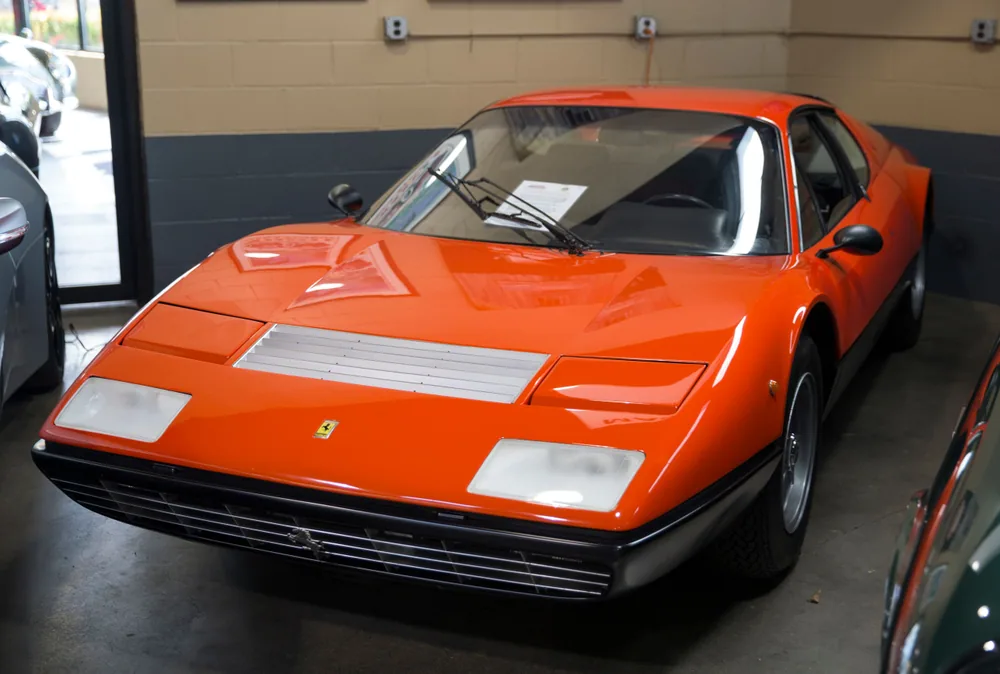
| 365 GT4 BB | 4,390 cc flat-12 | About 365 cc × 12 | One cylinder |
| 456 | 5,473 cc V12 | 5,473 ÷ 12 = 456 | One cylinder |
| Dino 206 GT | 2.0-litre V6 | 2.0 litres, 6 cylinders | Litres + cylinders |
| 308 | 3.0-litre V8 | 3.0 litres, 8 cylinders | Litres + cylinders |
| 512 BB | 5.0-litre flat-12 | 5 litres, 12 cylinders | Litres + cylinders |
| F355 | 3.5-litre V8 | 3.5 litres, 5 valves per cylinder | Litres + valves |
| 360 | 3.6-litre V8 | 3.6 litres | Total capacity |
| 599 | 5,999 cc V12 | 5,999 ÷ 10, decimals dropped | Total capacity |
| 458 | 4.5-litre V8 | 4.5 litres, 8 cylinders | Litres + cylinders |
| 488 | V8 | 488 cc per cylinder | One cylinder |
| 296 | 2.9-litre V6 | 2.9 litres, 6 cylinders | Litres + cylinders |
| 812 | V12 | 800 cv, 12 cylinders | Power + cylinders |
Why do some Ferrari numbers not add up?
Because the system was never strict. Rounding is normal, and Ferrari has returned to old methods whenever it suited a new car.
- The 612 Scaglietti looks like a 6.0-litre V12, yet ROSSOautomobili gives its capacity as 5.8 litres and calls the name a generous rounding.
- The 512 BB broke with the cylinder-capacity rule used by its predecessor, the 365 GT4 BB, even though both are flat-12 berlinettas.
- The 488 went back to the capacity of one cylinder, immediately after the 458 had used litres and cylinders.
- The 812 Superfast ignores capacity altogether. Car and Driver reads the 8 as 800 cavalli vapore, the Italian for horsepower, and the 12 as the cylinder count.
The newest example is the 849 Testarossa. Its 8 is the cylinder count and its 49 comes from the capacity of each cylinder, about 499 cc in a 3,990 cc V8. So the figure still points at the engine, but you have to know the code to read it. You can practise on these in the daily Ferrari quiz.
What do GT, GTB, GTS and GTO stand for?
GT means Gran Turismo, and the letters that follow usually describe the body. A few also describe the mechanical specification or a racing purpose.
- GTB: Gran Turismo Berlinetta, a coupé.
- GTS: the open version, including targa-topped cars such as the Dino 246 GTS. My Car Quest reads the S as Scoperta; SlashGear reads it as sport.
- GTO: Gran Turismo Omologato, a racing car homologated for the GT category, as on the 250 GTO.
- 4 or /4: four overhead camshafts, as on the 275 GTB/4 and the 365 GT4 BB.
- M: Modificata, an updated version of the previous car, as on the 575 M and Portofino M.
- LM and MM: Le Mans and Mille Miglia, the races behind the 250 LM and the 166 MM.
- SWB: short wheelbase, as on the 250 GT SWB.
- P: prototype, usually after the single-cylinder capacity, which is the logic behind the 250 P and the 499P.
The 499P shows how long the old habit has lasted. Its story is in our guide to Ferrari at Le Mans.
Does BB really stand for Brigitte Bardot?
Officially no, BB means Berlinetta Boxer. Ferrari's model page gives that reading, while its magazine tells the other story.
According to a 2020 Ferrari Magazine feature, Leonardo Fioravanti, Angelo Bellei and Sergio Scaglietti nicknamed the prototype after the actress, and the initials stuck through development. Berlinetta Boxer then arrived as the formal explanation. The magazine also points out the weak spot in it: the engine was a 180-degree V12 rather than a true boxer, and Ferrari's own model page agrees that it did not run in true boxer sequence. SlashGear attributes the Bardot account to Fioravanti and hedges it accordingly, so treat it as a good story that sits alongside the official reading.
Which Ferrari names are not numbers at all?
Plenty, and they fall into a few families: anniversaries, people, places and Italian words.
- Anniversaries: the F40 and F50 mark Ferrari's 40th and 50th years; the F50 came two years early, in 1995, ahead of tighter US emissions rules. The full story of the first is in our Ferrari F40 history. SF90 marks 90 years of Scuderia Ferrari.
- People: Dino for Enzo's late son Alfredino, 612 Scaglietti for the coachbuilder and Enzo for the founder.
- Places: 360 Modena, 550 Maranello, 599 GTB Fiorano, 458 Italia, California, Portofino and Roma.
- Italian words: Testa Rossa means redhead, after the red cam covers first used on the 500 TR in 1956. Lusso means luxury, and Purosangue means thoroughbred.
Daytona is a separate case. It is not the real name of any 1960s car: the 365 GTB/4 simply became commonly known by that nickname. You can see where each of these names falls in the history on the Ferrari timeline.
FAQ
What does the 250 in Ferrari 250 mean?
It refers to the capacity of one cylinder: about 250 cc. Multiply by the 12 cylinders and you get an engine of about 3 litres.
Why is the Ferrari F40 called F40?
The F stands for Ferrari and the 40 marks the company's 40th anniversary in 1987. It has nothing to do with the size of the engine.
What does GTB mean on a Ferrari?
GTB stands for Gran Turismo Berlinetta, which is a two-seat fixed-roof coupé. The usual open counterpart is badged GTS or, on newer cars, Spider.
What does 812 mean in Ferrari 812 Superfast?
The 8 refers to 800 cv of power and the 12 to the number of cylinders. Unusually for a Ferrari, the name is built on power output instead of capacity.
Sources
- Ferrari 365 GT4 BB, Ferrari.com
- The 365 GT4 secret, Ferrari Magazine
- Why Ferrari Uses Numbers to Identify Their Cars, ROSSOautomobili
- Ferrari Nomenclature, My Car Quest
- Ferrari's Strange Car-Naming System Explained, SlashGear
- Ferrari 812 Superfast, the Literally Named Supercar, Car and Driver via Yahoo Autos
- Ferrari 849 Testarossa, Wikipedia
- Ferrari 499P: the hypercar for the 24 Hours of Le Mans, 9Colonne
Every figure here was checked against at least two independent sources, listed at the end.