Motorsport
Porsche 956 and 962: how Group C made Porsche unbeatable at Le Mans
The Porsche 956 of 1982 and its longer 962 successor won Le Mans six years running from 1982 to 1987, again in 1994 as the Dauer 962 LM, and set a 6:11.13 Nordschleife lap that stood for 35 years.
By the My Hangar editorsPublished 6 min read
Key takeaways
- The Porsche 956 of 1982 was Porsche's first racing car with an aluminium monocoque and its first ground-effect car.
- The 956 and 962 C won every 24 Hours of Le Mans from 1982 to 1987, and a road-legal Dauer 962 LM won again in 1994.
- Stefan Bellof lapped the Nürburgring Nordschleife in 6:11.13 in a 956 on 28 May 1983, a record that stood for 35 years.
- The 962 was created for the American IMSA series by moving the front axle about 12 cm forward so the driver's feet sat behind it.
- Private teams such as Joest, Kremer, Brun and Richard Lloyd Racing raced 956s and 962s; Joest won Le Mans with the same 956 in 1984 and 1985.
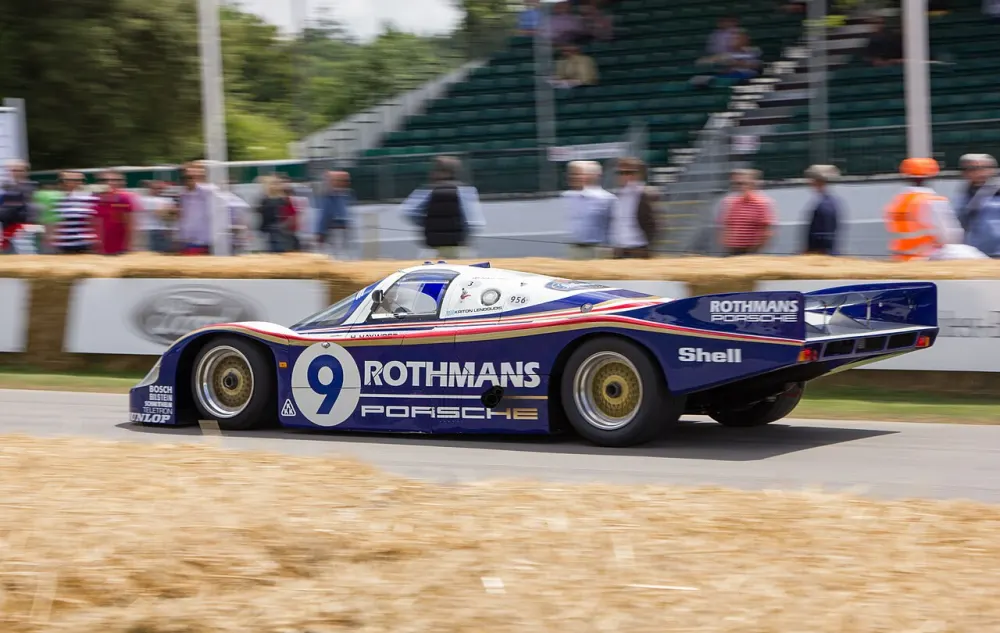
The Porsche 956 (1982) and its successor the 962 were the defining cars of the Group C era. The 956 was Porsche's first racing car with an aluminium monocoque and ground effect, and the 956/962 family won every Le Mans from 1982 to 1987, plus 1994 as the Dauer 962 LM. In a 956, Stefan Bellof lapped the Nordschleife in 6:11.13 in 1983, a record that lasted 35 years.
What was Group C, and why did Porsche build the 956?
Group C was the new top category of sports car racing from 1982. Instead of capping engine size, it limited fuel: a 100-litre tank, a limited number of refuelling stops and, for a 1,000 km race, a maximum of 600 litres for the whole distance. At Le Mans the allocation was 2,600 litres. Minimum weight was 800 kg.
The new rules made Porsche's existing racers obsolete, so it needed a new car. Norbert Singer's team designed the 956 at Weissach, and testing began at Paul Ricard (Le Castellet) in early 1982. Its engine was the twin-turbo 2.65-litre flat-six family that had won Le Mans in the 936/81, rated by Porsche at 620 PS.
Ground effect and the monocoque
The 956 used shaped venturi tunnels under the car to generate downforce, a technique borrowed from Formula One. Its tub was a riveted and bonded aluminium monocoque, a first for a Porsche racing car; earlier cars such as the 936 used tubular space frames. The combination gave cornering speeds no Porsche sports car had reached before.
How many times did the 956 and 962 win Le Mans?
Seven times: every year from 1982 to 1987, plus 1994. The 956 won on its Le Mans debut in 1982, with Jacky Ickx and Derek Bell leading home a one-two-three for the works team.
| Year | Car | Winning drivers | Entrant |
|---|---|---|---|
| 1982 | 956 | Jacky Ickx, Derek Bell | Porsche works (Rothmans) |
| 1983 | 956 | Vern Schuppan, Hurley Haywood, Al Holbert | Rothmans Porsche |
| 1984 | 956 B | Henri Pescarolo, Klaus Ludwig | New-Man Joest Racing |
| 1985 | 956 B | Klaus Ludwig, Paolo Barilla, "John Winter" | New-Man Joest Racing |
| 1986 | 962 C | Derek Bell, Hans-Joachim Stuck, Al Holbert | Rothmans Porsche |
| 1987 | 962 C | Derek Bell, Hans-Joachim Stuck, Al Holbert | Porsche works (Rothmans) |
| 1994 | Dauer 962 LM | Yannick Dalmas, Hurley Haywood, Mauro Baldi | Le Mans Porsche Team |
In 1983 956s filled the first eight places. In 1984 the works team stayed away in a dispute over fuel regulations, and Reinhold Joest's privately entered 956 B won anyway. Joest won again in 1985 with the same chassis, 956-117, beating the returning works cars. "John Winter" was the racing pseudonym of Louis Krages. For the full list of Porsche's 19 overall wins, see every Porsche Le Mans victory.
How fast was Stefan Bellof's 956 lap of the Nordschleife?
6:11.13, set on 28 May 1983 in practice for the Nürburgring 1,000 km, in a Rothmans 956. That is an average of just over 200 km/h around the old circuit, which was slightly shorter than normal that year because of construction work. Bellof was about five seconds faster than his teammate Jochen Mass.
The time stood for 35 years and 31 days, until Timo Bernhard lapped in 5:19.55 in the derestricted 919 Hybrid Evo on 29 June 2018. Bellof won the 1984 World Endurance Championship drivers' title with Porsche. He died after a crash at Spa-Francorchamps on 1 September 1985, driving for the Brun Motorsport customer team.
Why did Porsche create the 962?
For the American IMSA GTP series. IMSA would not accept the 956 because the driver's feet sat ahead of the front axle line. Porsche moved the front axle about 12 cm forward, putting the pedals behind it, and the result was the 962.
The IMSA 962 used a single-turbo, air-cooled flat-six, closer to the 935's engine, and made its debut at the 1984 Daytona 24 Hours, where Mario and Michael Andretti took pole but retired. The world championship version, the 962 C, used the twin-turbo engine and was raced by the works team from 1985. The 956 was retired from world championship racing after 1986.
| 956 | 962 C | |
|---|---|---|
| First raced | Silverstone 6 Hours, 16 May 1982 | 1985 (962 for IMSA: Daytona, 1984) |
| Chassis | Aluminium monocoque | Aluminium monocoque, front axle about 12 cm further forward |
| Engine at launch | 2.65-litre twin-turbo flat-six | Twin-turbo flat-six, 2.8 litres and larger |
| Output | 620 PS (Porsche figure) | Varied by year and engine |
| Le Mans wins | 1982, 1983, 1984, 1985 | 1986, 1987, 1994 (Dauer 962 LM) |
Who raced the 956 and 962 besides the works team?
Porsche sold the cars to private teams, which is why the 956 and 962 won so often. Customer entrants included Joest, Kremer, Obermaier, John Fitzpatrick Racing, Richard Lloyd Racing and Brun Motorsport.
- Joest won Le Mans in 1984 and 1985 with chassis 956-117.
- Brun Motorsport took the 1986 world championship teams' title, beating the works Porsche and Jaguar teams.
- Kremer and Brun went further and built their own versions of the chassis, such as Kremer's 962 CK6.
By Porsche's count, the 956 and 962 together won five consecutive world championship manufacturers' titles, seven overall Le Mans wins, six Daytona 24 Hours, four Sebring 12 Hours, 39 world championship races and 55 IMSA races.
How did a 962 win Le Mans in 1994?
As a road car. For 1994 the ACO opened Le Mans to GT cars based on road-legal models. Jochen Dauer had converted a 962 into a street-legal car, the Dauer 962 Le Mans, which qualified it as a GT. Two racing versions were run with Joest's technical support, entered by the Le Mans Porsche Team.
Yannick Dalmas, Hurley Haywood and Mauro Baldi took the lead with about two hours to go, when the leading Toyota 94C-V hit transmission trouble, and won after 345 laps. It was Porsche's 13th overall win and the last for the 962 design, twelve years after the 956's first.
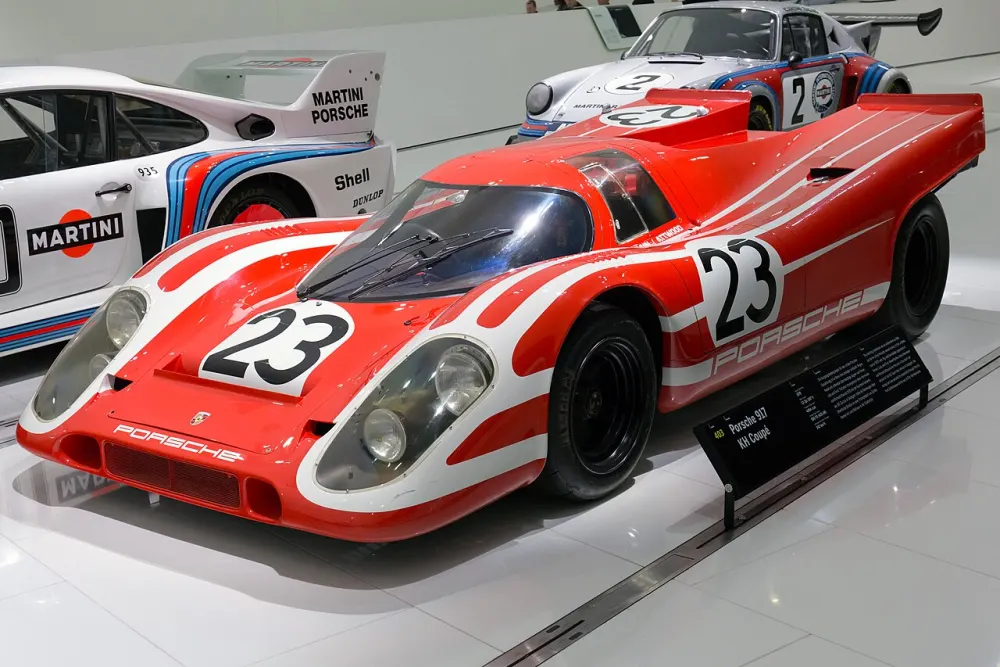
Test yourself on these cars in the daily Porsche quiz, and follow the Group C years on the Porsche timeline. For the car that started Porsche's Le Mans winning run in 1970, read the Porsche 917 history.
FAQ
What is the difference between the Porsche 956 and 962?
The 962 has its front axle moved about 12 cm forward so the driver's feet sit behind it, which IMSA required. The 956 raced from 1982; the 962 appeared in IMSA in 1984 and as the 962 C in the world championship from 1985.
How many times did the Porsche 956 win Le Mans?
Four times, from 1982 to 1985. The 962 C added wins in 1986 and 1987, and the Dauer 962 LM won in 1994, making seven for the family.
What was Stefan Bellof's Nordschleife lap record?
6:11.13 in a Porsche 956 on 28 May 1983, in practice for the Nürburgring 1,000 km. It stood until Timo Bernhard's 5:19.55 in the 919 Hybrid Evo in 2018.
Why did Porsche skip Le Mans in 1984?
The works team stayed away over a dispute about Group C fuel regulations. Joest Racing's private 956 B, driven by Henri Pescarolo and Klaus Ludwig, won the race.
Sources
- How the Porsche 956 became an endurance racing legend, Porsche
- The early days of Group C, Porsche Newsroom
- 919 Hybrid Evo breaks Nordschleife record, Porsche Newsroom
- Porsche 956: the anatomy of an endurance racing icon, evo
- The victorious Porsches at the 24 Hours of Le Mans: the 956, 24h-lemans.com
- The victorious Porsches at the Le Mans 24 Hours: the 962 LM, 24h-lemans.com
- Le Mans 24 Hours 1983 results, Racing Sports Cars
- Porsche 962, Wikipedia
Every figure here was checked against at least two independent sources, listed at the end.