Generations
Porsche 911 generations explained: every model code from 901 to 992
There have been eight 911 generations since 1963: the original 901, the G-model, then 964, 993, 996, 997, 991 and 992. The first four were air-cooled; since the 996, every 911 is water-cooled.
By the My Hangar editorsPublished 7 min read
Key takeaways
- The Porsche 911 has had eight generations: the original 911 (901), the G-model, 964, 993, 996, 997, 991 and 992.
- The 993, built until 1998, was the last air-cooled 911; the 996, shown in 1997, was the first water-cooled one.
- The 930 is not a separate generation: it is the internal code of the 911 Turbo launched within the G-model range in 1974.
- With 233,540 cars built, the 991 (2011–2019) is the most-produced 911 generation, according to Porsche.
- The 992 arrived in November 2018, and its 2024 update brought the first hybrid 911, the Carrera GTS T-Hybrid.
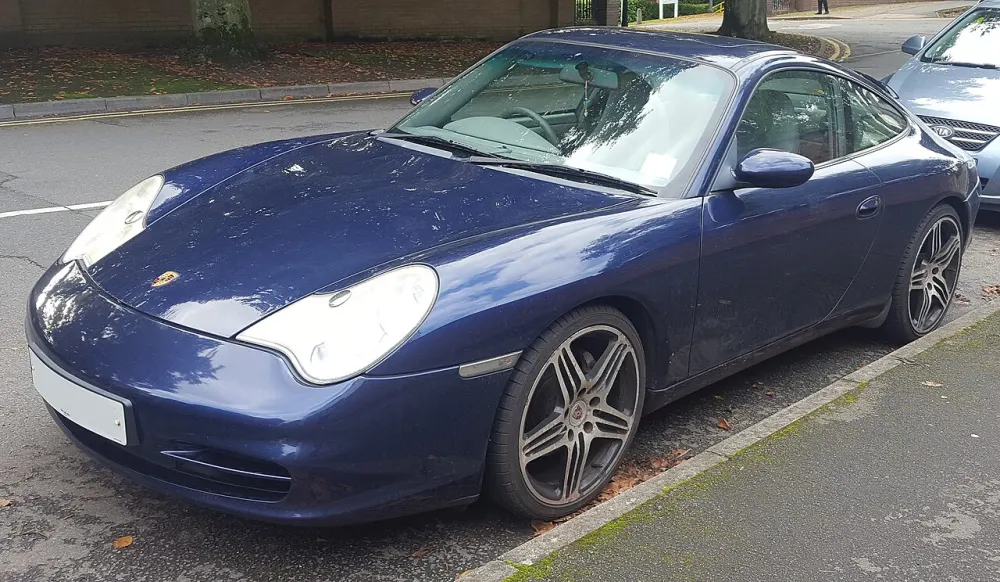
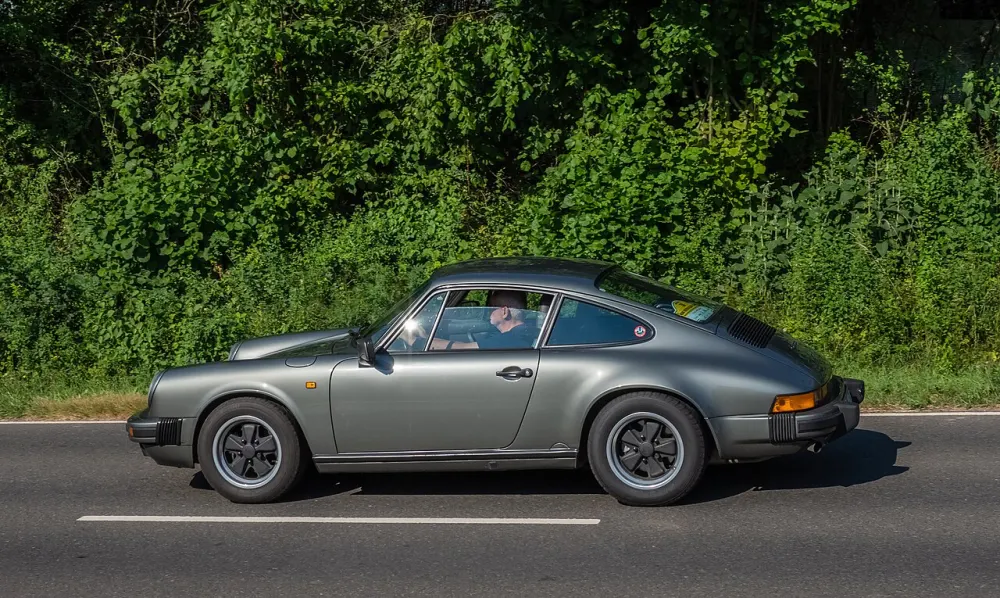
The Porsche 911 has had eight generations since its 1963 debut: the original 911 (901, 1963–1973), the G-model (1973–1989, which includes the 930 Turbo), the 964 (1988–1994), the 993 (1993–1998), the 996 (1997–2005), the 997 (2004–2012), the 991 (2011–2019) and the 992 (since 2018). The first four were air-cooled; every 911 since the 996 is water-cooled.
How many Porsche 911 generations are there?
There are eight, and Porsche itself counts them that way, from the "Ur-Elfer" of 1963 to the current 992. The years overlap because Porsche usually dates a generation from its public presentation, while the old car often stays in production for a few more months.
| Generation (code) | Years | Base engine (first version) | Cooling | Built | Defining fact |
|---|---|---|---|---|---|
| Original 911 (901, "F-model") | 1963–1973 | 2.0-litre flat-six, 130 PS | Air | n/a | Shown as the 901, renamed 911 in 1964 |
| G-model (incl. 930 Turbo) | 1973–1989 | 2.7-litre flat-six, 150 PS | Air | 196,000–198,500 | Bellows bumpers; first 911 Turbo (1974) |
| 964 | 1988–1994 | 3.6-litre flat-six, 250 PS | Air | 63,762 | About 85% new parts; launched as all-wheel-drive Carrera 4 |
| 993 | 1993–1998 | 3.6-litre flat-six, 272 PS | Air | 68,881 | Last air-cooled 911 |
| 996 | 1997–2005 | 3.4-litre flat-six, 300 PS | Water | 175,262 | First water-cooled 911 |
| 997 | 2004–2012 | 3.6-litre flat-six, 325 PS | Water | 213,004 | Oval headlights return; PDK from 2008 |
| 991 | 2011–2019 | 3.4-litre flat-six, 350 PS | Water | 233,540 | Most-built 911; first seven-speed manual |
| 992 | 2018– | 3.0-litre twin-turbo flat-six, 385 PS | Water | in production | First hybrid 911 (2024) |
Production figures are Porsche's own. For the G-model, two Porsche press texts give 196,397 and 198,496, so the table shows the range. Porsche does not publish a comparable figure for the first generation.
What do the 911's internal codes mean?
They are Porsche type numbers, the factory's own project numbers, and enthusiasts use them to tell the generations apart. The badge on the car has said "911" since late 1964; the code underneath has changed.
- 901 was the type number of the original car and the name it was first shown under, until Peugeot objected (the full story is in why the 911 is called 911).
- "F-model" and "G-model" come from Porsche's model-year letters. Porsche notes that the G-Series designation technically applies only to the 1974 model year, but the name stuck for the whole second generation. "F-model" is collector shorthand for the original car; Porsche itself calls it the original 911 or "Ur-Elfer".
- 930 is the internal code of the G-model 911 Turbo, not a generation of its own.
- 964 to 992 are the type numbers of each later generation. Facelifts are written with a suffix: 997.1 and 997.2, 991.1 and 991.2, 992.1 and 992.2.
What defined the air-cooled 911s (1963–1998)?
Four generations, one recipe: a flat-six in the tail, cooled by a large fan. Displacement grew from 2.0 to 3.6 litres over 35 years.
Original 911 (1963–1973)
The 901 premiered at the Frankfurt IAA in September 1963 and series production began on 14 September 1964. Its 2.0-litre flat-six made 130 PS, enough for 210 km/h according to Porsche. The range grew quickly: the four-cylinder 912 in 1965, the 160 PS 911 S a year later, the Targa "safety cabriolet" shown in autumn 1965, then 2.2 litres in 1969 and 2.4 litres in 1971. It ended with the 911 Carrera RS 2.7 of 1972, the first 911 to carry the Carrera name.
G-model and 930 Turbo (1973–1989)
Production of the second generation began in August 1973 for model year 1974. Its most visible change was the bumpers with black bellows, built to meet US rules by absorbing impacts at up to 8 km/h. Every 911 now had at least 2.7 litres; this grew to 3.0 litres in the 911 SC and 3.2 litres with 231 PS in the 1984 Carrera.
The 911 Turbo (type 930) was shown at the Paris Motor Show in October 1974 with a 3.0-litre turbocharged flat-six of 260 PS. From 1977 it had 3.3 litres, an intercooler and 300 PS. The G-model's 16-year run is the longest of any 911 generation.
964 (1988–1994)
Porsche says almost 85% of the 964's parts were new. It launched in 1988 as the Carrera 4, with all-wheel drive developed from the 959, and added ABS, power steering and coil springs instead of torsion bars. The 3.6-litre engine had twin spark plugs per cylinder and a catalytic converter for 250 PS, and a rear spoiler rose automatically above 80 km/h.
993 (1993–1998)
Shown at the IAA in autumn 1993, the 993 had flatter headlights, a new multi-link rear axle and a six-speed gearbox; its 3.6-litre engine started at 272 PS. In 1995 the Turbo moved to twin turbochargers and all-wheel drive. Nobody knew it yet, but the 993 was the last air-cooled 911. See air-cooled vs water-cooled 911 for why.
What changed when the 911 became water-cooled?
Almost everything except the layout. The 996, presented at the Frankfurt IAA in 1997, used water cooling because the four-valve cylinder heads needed to meet emissions rules could not be air-cooled reliably.
996 (1997–2005)
The base 3.4-litre engine made 300 PS. The body was 18.5 cm longer and about 50 kg lighter than the 993, and it shared its front end and many parts with the Boxster. The 996 also introduced the 911 GT3 in 1999.
997 (2004–2012)
Presented in July 2004, the 997 brought back oval clear-glass headlights. The Carrera had a 3.6-litre engine with 325 PS, the Carrera S a 3.8 with 355 PS and PASM adaptive dampers as standard. The 2008 update (997.2) added direct fuel injection and the PDK dual-clutch gearbox.
991 (2011–2019)
Unveiled at the 2011 IAA, the 991 had a wheelbase 10 cm longer and an aluminium-and-steel body. It offered the world's first seven-speed manual gearbox. With the 2015 update the Carrera models switched to twin-turbocharged 3.0-litre engines.
992 (since 2018)
Porsche unveiled the 992 in Los Angeles in November 2018, starting with the 450 PS Carrera S and 4S. Rear-drive models now share the wider body of the all-wheel-drive cars, the PDK has eight speeds, and Wet mode helps on wet roads. The base Carrera that followed has a 3.0-litre twin-turbo engine with 385 PS. The 2024 update (992.2) brought the Carrera GTS T-Hybrid, the first hybrid 911, with 541 PS combined.
Which 911 generation is the most produced?
The 991. Porsche says 233,540 were built, ahead of the 997 (213,004) and the 996 (175,262). The one-millionth 911 of all, an Irish Green Carrera S, left the Zuffenhausen line on 11 May 2017, during the 991 era.
The air-cooled generations were built in much smaller numbers: 63,762 cars for the 964 and 68,881 for the 993. If you think you can tell them apart by sight, the My Hangar Porsche quiz will test you on exactly that, and the Porsche timeline puts each launch in context.
FAQ
What is the newest Porsche 911 generation?
The 992, presented in November 2018. Its 2024 update, known as the 992.2, introduced the first hybrid 911, the Carrera GTS T-Hybrid.
Which was the last air-cooled Porsche 911?
The 993, built from 1993 until 1998. Porsche built 68,881 of them before the water-cooled 996 took over.
Is the 930 a separate 911 generation?
No. 930 is the internal code of the 911 Turbo sold within the G-model range from 1974 to 1989. It shares the second generation's body, with wider rear wings and a large rear spoiler.
Why is the first 911 called the F-model?
It is a collector term based on Porsche's model-year letters. Porsche calls the first generation the original 911 or "Ur-Elfer", and its internal type number was 901.
Which 911 generation sold the most?
The 991 (2011–2019), with 233,540 cars built according to Porsche.
Sources
- 1st Generation Porsche 911 (Ur-Elfer), 1963–1973, Porsche Newsroom
- 50 years of the Porsche 911 G-Series, Porsche Newsroom
- 3rd Generation Porsche 911 (964), 1988–1994, Porsche Newsroom
- 4th Generation Porsche 911 (993), 1993–1998, Porsche Newsroom
- 5th Generation Porsche 911 (996), 1997–2005, Porsche Newsroom
- 7th Generation Porsche 911 (991), 2011–2019, Porsche Newsroom
- The new Porsche 911: world premiere of the hybrid, Porsche Newsroom
- Porsche 911 (classic), Wikipedia
Every figure here was checked against at least two independent sources, listed at the end.