History
Horacio Pagani: from Argentina to Modena, the story of Pagani
Horacio Pagani was born in Casilda, Argentina, in 1955, joined Lamborghini in Italy in 1983, left in 1991 to found Modena Design and unveiled his first car, the Zonda C12, at Geneva in 1999.
By the My Hangar editorsPublished 5 min read
Key takeaways
- Horacio Pagani was born on 10 November 1955 in Casilda, in the Argentine province of Santa Fe.
- He built a Formula 2 car in Argentina that took about 5,000 hours of work and made its debut in March 1979.
- Pagani's own history places his Lamborghini years between 1983 and 1991, including the composite Countach Evoluzione of 1985.
- He founded the consultancy Modena Design in 1991, and its composites work helped pay for his own supercar.
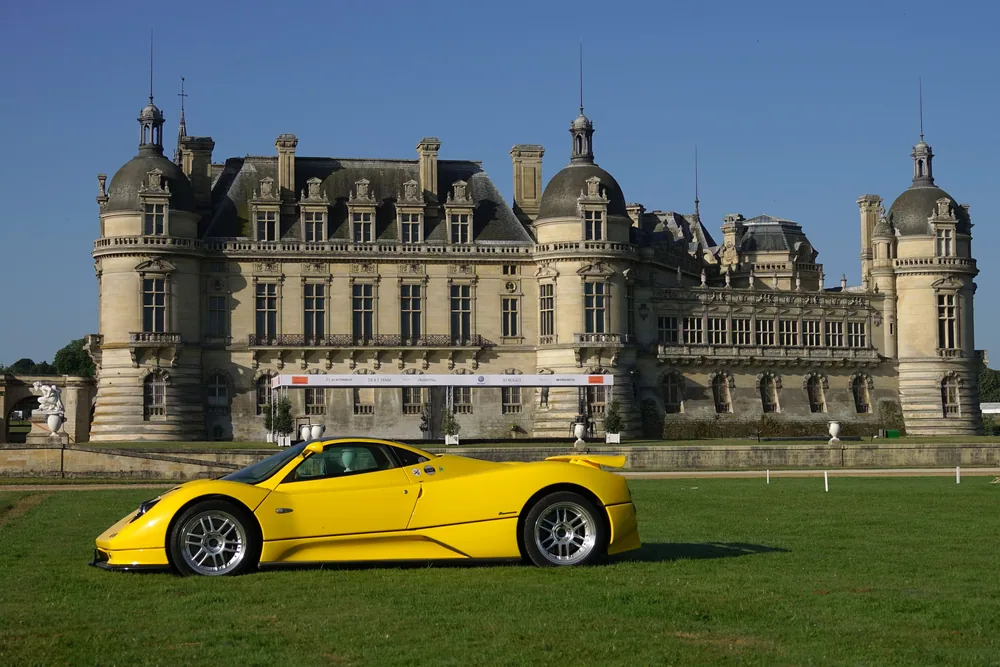
- The car planned as the Fangio F1 was renamed after Juan Manuel Fangio died in 1995 and appeared as the Zonda C12 at the 1999 Geneva Motor Show.
Horacio Pagani, born in Casilda, Argentina, in 1955, moved to Italy in the early 1980s, built a composites career at Lamborghini and left in 1991 to found Modena Design. That consultancy helped fund his own supercar, which appeared as the Zonda C12 at the 1999 Geneva Motor Show and is built at San Cesario sul Panaro, near Modena.
Where did Horacio Pagani grow up?
In Casilda, a small city in the Argentine province of Santa Fe with about 35,000 people today. He was born there on 10 November 1955 into a family with Italian roots, and spent his childhood reading car magazines and sketching what he saw in them.
Those magazines introduced him to Juan Manuel Fangio, the five-time Formula 1 champion. His reading also led him to Leonardo da Vinci, and to the idea that stayed with him: that art and science belong together.
His hands-on projects started early. At about fourteen he was given a broken Sachs Televel engine, and with his friend Gustavo Marani he built two minibikes after dropping a plan for a single go-kart. Before leaving school he fitted a fibreglass-reinforced Dune-Buggie kit to the frame of a scrapyard Renault Dauphine, a job that took five months.
What did he do before he left Argentina?
He tried university, then went into business for himself. In early 1974 he began industrial design at the National University of La Plata, 450 km from home, but political unrest kept suspending classes. Mechanical engineering at Rosario did not satisfy him either, so he returned to Casilda to teach himself.
There he opened an 80-square-metre workshop with a corrugated iron roof, where he was the only worker. The first order was a set of leather-covered bar benches. In 1978 his firm, Horacio Pagani Design, showed a caravan prototype called the Alpine, and orders followed for camper vans, pickups and a mobile studio for Radio Casilda.
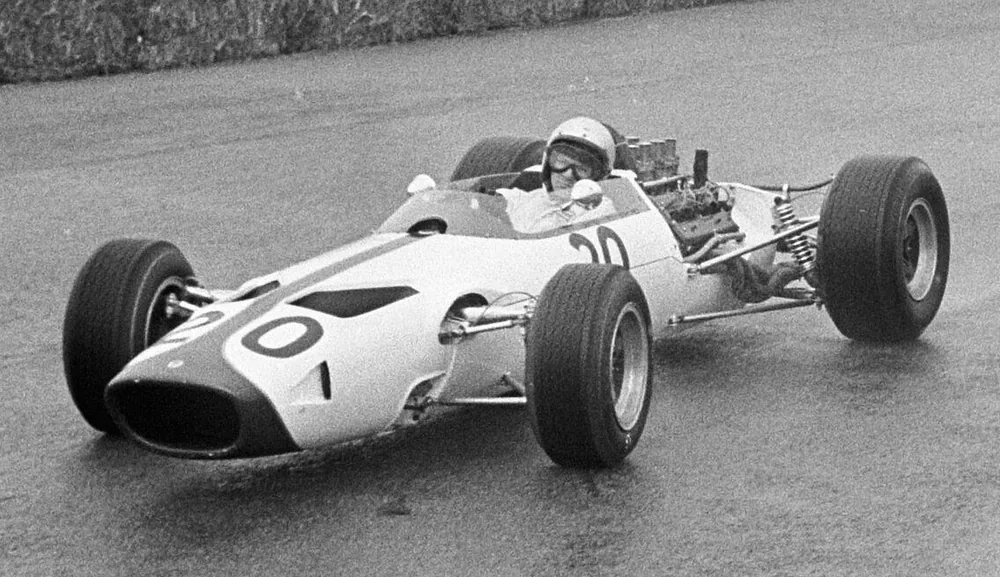
The turning point was a single-seater. Pagani's F2 car took over a year and about 5,000 hours to build. Agustín Beamonte agreed to drive it, and it made its debut in March 1979 at Las Parejas. The car also brought him into contact with the engineer Oreste Berta and with Fangio himself.
How did Horacio Pagani get to Lamborghini?
With letters of recommendation from Fangio and a meeting with Lamborghini's technical chief, Giulio Alfieri. Pagani's own history dates the Lamborghini years from 1983, and in one interview he recalled arriving that year, living in a tent and working in a garden centre and as a welder before the call came. Wikipedia gives 1982 for the move.
Accounts of his first job differ too. Pagani's history says Alfieri was impressed by his work and offered him a place on the LM project. Others have him starting on basic tasks, including sweeping floors.
What did Pagani do at Lamborghini?
He pushed composites when few people there saw the point. In 1985 he and his team built the Countach Evoluzione, which Pagani's history describes as the first car made entirely of composite materials. Evo credits his 1980s work at Lamborghini for his reputation as the father of carbon fibre.
Two years later he worked on the restyled Countach for the company's 25th anniversary, which sold well. He also worked on the P140, a planned smaller Lamborghini that never reached production.
The best-known story is the autoclave, the oven used to cure carbon parts. Lamborghini refused to buy one, so he borrowed the money and bought it himself, late in 1987 according to Wikipedia. He set up his own composites research business around that time.
The Gulf War of 1991 ended the arrangement. Lamborghini's then owner, Chrysler, was hit by the downturn, projects stopped, and Pagani decided to chase his own car.
When was Pagani founded?
Sources do not agree on one date, because the company grew in stages. Modena Design dates from 1991 in most accounts. For Pagani Automobili itself, Wikipedia gives 1992, Diariomotor describes it as newly founded in 1993, and evo says 1998.
Modena Design made composite parts for other firms, including Formula 1 and aerospace work, and that income paid for the car. Pagani's history says that when the Gulf War crisis forced a choice between a new factory and the car, he chose the car.
| Year | Milestone |
|---|---|
| 1955 | Born in Casilda, Argentina |
| 1974 | Starts industrial design at La Plata |
| 1978 | Horacio Pagani Design shows the Alpine caravan |
| 1979 | Pagani F2 makes its debut at Las Parejas |
| 1983 | Start of the Lamborghini years, in Pagani's own history |
| 1985 | Countach Evoluzione built in composites |
| 1991 | Leaves Lamborghini, founds Modena Design |
| 1993 | Prototype tested in the Dallara wind tunnel |
| 1994 | Mercedes-Benz agrees to supply V12 engines |
| 1999 | Zonda C12 shown at Geneva |
| 2011 | Huayra revealed as the next model |
Why was the first Pagani nearly called the Fangio?
Because Fangio backed it. The project was named the Fangio F1 in his honour, and he told Pagani it should have a Mercedes-Benz engine. Evo reports that Fangio, an honorary director at Mercedes-Benz, helped win the supply deal, which came in 1994.
Fangio died in 1995 before the car was finished. Pagani dropped the name out of respect and chose instead that of the Zonda, a wind of the Andes. Follow the rest of the story on the Pagani timeline.
Orders were strictly limited at first. CarThrottle reports that fewer than ten were accepted in the first year. The car's successor, and how far it moved on, is covered in our guide to the Zonda and Huayra. Horacio's sons Leonardo, named after da Vinci, and Christopher now work in the company.
Think you know the rest? Try the daily Pagani quiz.
FAQ
Who founded Pagani?
Horacio Pagani, an Argentine-born designer and engineer. He worked at Lamborghini before starting Modena Design in 1991, and he remains the founder and chief designer of the company that bears his name.
Where is Horacio Pagani from?
He was born on 10 November 1955 in Casilda, in Argentina's Santa Fe province. He moved to Italy in the early 1980s to work in the country's sports car industry.
Did Horacio Pagani work for Lamborghini?
Yes. Pagani's own history dates those years from 1983 to 1991. He worked on composites, the Countach Evoluzione and the anniversary Countach, and left when projects stopped during the Gulf War crisis.
Why is the Zonda not called the Fangio?
It was planned as the Fangio F1, but Juan Manuel Fangio died in 1995 before the car was ready. Pagani dropped the name out of respect and named the car after an Andean wind.
Sources
- History, Pagani
- Horacio Pagani: Car People You Should Know, CarThrottle
- Pagani Zonda review: prices, history and specs, evo
- La leyenda de Pagani, Diariomotor
- Museo y fábrica de Horacio Pagani, 16 Válvulas
- Horacio Pagani, the last automotive artist, SFC Riga
- Horacio Pagani, Wikipedia
- Pagani Automobili, Wikipedia
Every figure here was checked against at least two independent sources, listed at the end.