Engineering
Pagani Zonda and Huayra: differences, engines and carbotanium
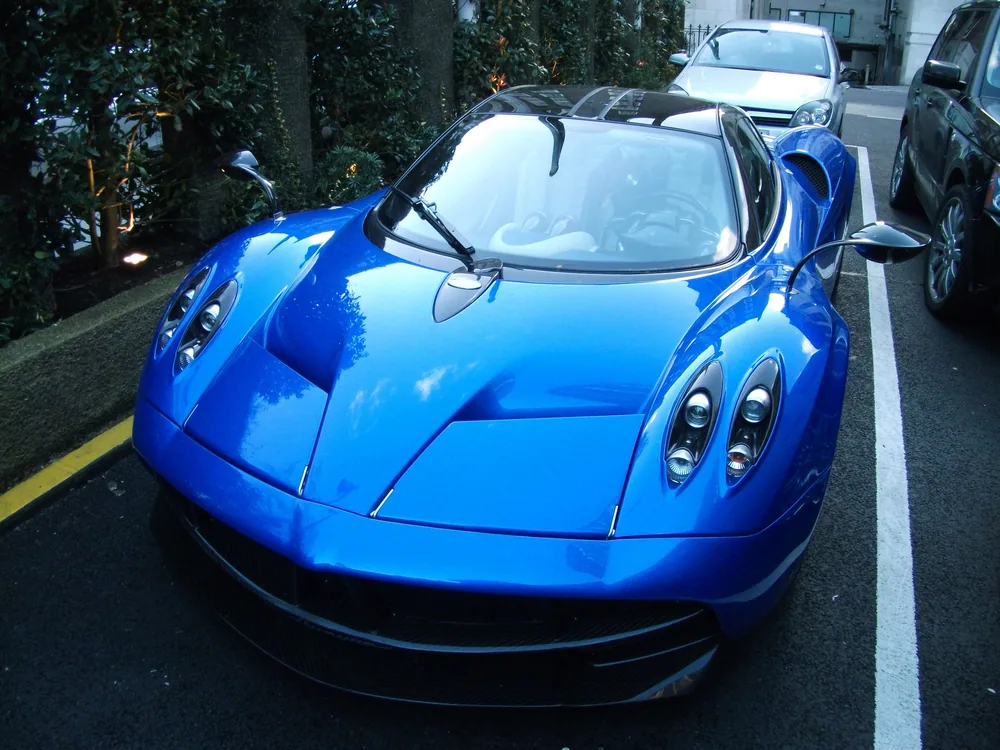
The Zonda uses a naturally aspirated Mercedes V12 of up to 7.3 litres. The Huayra replaced it in 2011 with a 5,980 cc twin-turbo AMG V12, 730 hp, 1,000 Nm, gullwing doors and four active flaps.
By the My Hangar editorsPublished 5 min read
Key takeaways
- The Zonda C12 made its debut at the 1999 Geneva Motor Show and the Huayra followed at Geneva in 2011.
- Every road Zonda uses a naturally aspirated Mercedes V12, while the Huayra uses a 5,980 cc twin-turbo Mercedes-AMG M158 V12.
- Pagani rates the Huayra at 544 kW (730 hp) and 1,000 Nm, against 678 CV and 780 Nm for the Zonda Cinque.
- Carbotanium is a carbon-fibre weave with titanium strands. Pagani says the Zonda Cinque was the first road-legal car with a carbon-titanium frame.
- The Huayra adds four computer-controlled flaps and gullwing doors, and at 1,350 kg dry it is heavier than the 1,210 kg Zonda Cinque.
The Pagani Zonda (1999) is built around a naturally aspirated Mercedes V12, from 6.0 to 7.3 litres. The Huayra (2011) replaced it with a 5,980 cc twin-turbo Mercedes-AMG M158, rated by Pagani at 730 hp and 1,000 Nm, and added gullwing doors and four active flaps. Both can use carbotanium, but only late Zondas do.
What are the main differences between the Zonda and the Huayra?
The engine, the aerodynamics and the doors. Top Gear described the Huayra as all-new rather than an updated Zonda, with a new tub, engine, gearbox and transmission. Pagani says the concept dates from 2003, under the project name C9, and that the work took seven years.
The figures below compare the first Zonda, a late limited-run road Zonda and the original Huayra.
| Specification | Zonda C12 (1999) | Zonda Cinque (2009) | Huayra (2011) |
|---|---|---|---|
| Engine | 6.0-litre V12 | 7.3-litre V12 | 5,980 cc twin-turbo V12 |
| Induction | Naturally aspirated | Naturally aspirated | Two turbochargers |
| Power | 394 hp | 678 CV (669 bhp) | 544 kW (730 hp) |
| Torque | 570 Nm | 780 Nm | 1,000 Nm |
| Gearbox | Five-speed manual | Six-speed sequential, robotised | Seven-speed sequential, robotised |
| Central structure | Carbon fibre | Carbon-titanium | Carbon-titanium |
| Dry weight | 1,250 kg | 1,210 kg | 1,350 kg |
The C12's output needs a warning. Pagani's page text says 394 hp and 570 Nm, but its spec list on the same page shows 450 CV and 590 Nm, and evo quotes 389 bhp. We use the text figure, which is closest to evo's. Pagani's spec list also shows a six-speed gearbox on a page that covers the C12 S too; evo gives the original car five speeds.
Which engines do the Zonda and Huayra use?
Both are Mercedes V12s, but of very different kinds. The Zonda started with the M120, a Mercedes engine in production since 1991, and grew to 7.0 and then 7.3 litres with AMG's help. Evo reports that the unit was reworked so heavily that it became a hand-built engine exclusive to Pagani. Late one-offs such as the 760RS reached about 750 bhp.
The Huayra's M158 is a twin-turbo design with a dry sump, and Top Gear calls the code unique to Pagani. Autozine traces it to the V12 of the SL65 AMG Black Series, while Top Gear points to the block of the Maybach S. Autozine also says Horacio Pagani would have preferred to stay naturally aspirated.
Pagani says the brief was for linear delivery with no lag, to avoid safety problems and constant intervention from the driving aids. The torque figure shows what changed most: 1,000 Nm against the 780 Nm of the Zonda Cinque.
What is carbotanium?
A composite whose carbon-fibre weave also contains strands of titanium. Press and enthusiasts call it carbotanium, while Pagani's own pages write carbon-titanium or carbo-titanium. Top Gear says it is stronger for its weight than ordinary carbon composite, and evo says the titanium reduces carbon fibre's tendency to shatter on impact.
The material arrived late in the Zonda's life. Pagani lists the C12 with a carbon-fibre central chassis and chrome-molybdenum steel frames front and rear. It appeared on the track-only Zonda R, and Pagani says the Zonda Cinque was the first road-legal car with a carbon-titanium frame.
On the Huayra it was there from the start. Top Gear describes a carbon-titanium tub, and Autozine extends the material to the roof frames and bodywork. The track-only Zonda R served as a test bed for both the material and the suspension.
Why is the Huayra heavier than a late Zonda?
Mainly because of the engine and the extra comfort. At 1,350 kg dry, Pagani's figure, the Huayra is 140 kg heavier than the 1,210 kg Cinque, which Autozine puts down to the turbocharged V12 and a more compliant set-up for the US market.
The gearbox shows how hard Pagani worked to limit the gain. The Huayra's seven-speed Xtrac unit has a single clutch and sits transversely behind the engine, which keeps weight from hanging far back. A twin-clutch gearbox would have added 60 kg according to Horacio Pagani, speaking to Top Gear, or at least 70 kg according to Autozine. Pagani quotes a 44/56 front-to-rear weight distribution for the Huayra, helped by a wheelbase some 65 to 70 mm longer than the Zonda's.
How do the Huayra's active aerodynamics work?
Four flaps, two at the front and two at the rear, move independently under computer control, and the front ride height can change as well. The Zonda had no equivalent system, according to Wikipedia's comparison of the two.
By adjusting them the car trades drag for downforce, with a drag coefficient that Horacio Pagani has put between 0.31 and 0.37. Raising the inside flaps also limits body roll in a corner, and the rear pair acts as an airbrake.
Both names come from moving air. The Zonda is a wind of the Andes, and the Huayra takes its name from an Andean wind god. Pagani's history calls him Huayra Tata, from Aymara legend, while Wikipedia gives Wayra Tata, a Quechua god. For the man behind them, read how Horacio Pagani got from Argentina to Modena. You can also place each model on the Pagani timeline or test yourself in the daily Pagani quiz.
FAQ
What engine does the Pagani Huayra have?
A 5,980 cc twin-turbo V12, the Mercedes-AMG M158. Pagani rates the original car at 544 kW (730 hp) and 1,000 Nm.
What engine does the Pagani Zonda have?
A naturally aspirated Mercedes V12, starting with the 6.0-litre M120 in the C12. Later road cars used AMG-developed 7.0 and 7.3-litre versions.
Is the Huayra faster than the Zonda?
It has far more torque than the road Zondas it replaced, and Top Gear said on its launch that it left even the Cinque behind. Published performance figures vary, so compare them only on the same test basis.
What is carbotanium made of?
Carbon fibre woven with strands of titanium. Exact recipes are not published, and Pagani itself uses the terms carbon-titanium and carbo-titanium.
Does every Zonda use carbotanium?
No. Early Zondas used a carbon-fibre central chassis. Carbon-titanium arrived with the Zonda R and, on road cars, the Zonda Cinque.
Sources
Every figure here was checked against at least two independent sources, listed at the end.