Models
Lamborghini naming: bulls, fighting and the model names explained
Most Lamborghini names come from Spanish bullfighting: a breed (Miura, Gallardo), a famous bull (Islero, Aventador) or a matador's sword (Espada). Countach is the best-known exception, a Piedmontese exclamation.
By the My Hangar editorsPublished 5 min read
Key takeaways
- Lamborghini names follow bullfighting because Ferruccio Lamborghini, born a Taurus, was struck by a 1962 visit to the Miura ranch near Seville.
- The Miura of 1966 began the habit after the plainly numbered 350 GT and 400 GT.
- Names may refer to a breed (Gallardo), an individual bull (Islero, Murciélago) or a weapon (Espada, Estoque).
- Countach is the famous exception: a Piedmontese exclamation of amazement, whose origin story itself has rival versions.
- LP stands for longitudinale posteriore; on later cars the number gives the power and the last digit the driven wheels.
Most Lamborghini names come from Spanish bullfighting, a habit that began with the Miura in 1966. Some honour a breed, such as Miura or Gallardo. Others honour one famous bull, such as Islero, Murciélago or Aventador, and Espada names the matador's sword. Countach is the best-known exception, a Piedmontese cry of amazement, and LP is a technical code for the engine layout.
Why are Lamborghinis named after bulls?
Ferruccio Lamborghini was a Taurus, and a 1962 visit to Don Eduardo Miura's ranch near Seville made a strong impression on him. CAR magazine and Jalopnik both link that visit to the raging bull he adopted when he founded the company in 1963.
His first cars had plain numeric names, the 350 GT and 400 GT. The mid-engined car his young team built in 1966 needed something stronger, and it became the Miura, after a line of bulls whose fame was already old. Jalopnik notes that Miura bulls had been on the family estate since 1842.
Which bull or term is behind each name?
The table lists the main production and limited models, with years taken from launch or first showing. The type column matters: not every name refers to a single animal.
| Name | Year | Type | The story |
|---|---|---|---|
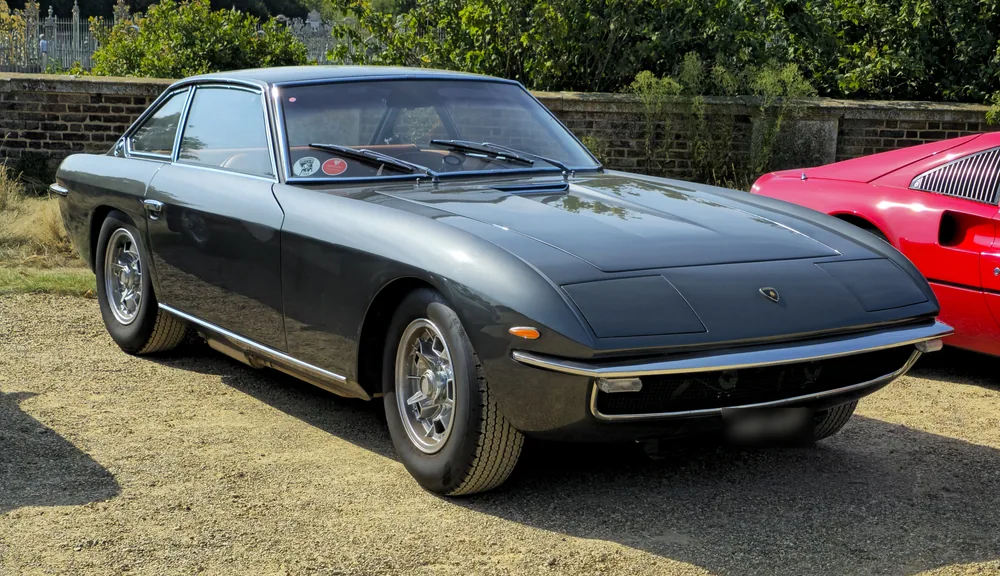
| Miura | 1966 | Breed | Fighting bulls of Don Eduardo Miura's ranch |
| Islero | 1968 | Bull | Miura bull that killed the matador Manolete in 1947 |
| Espada | 1968 | Weapon | The matador's sword |
| Jarama | 1970 | Place | Bull-breeding district, not the nearby circuit |
| Jalpa | 1981 | Breed | A breed of fighting bulls |
| Diablo | 1990 | Bull | Duke of Veragua's bull that fought El Chicorro in Madrid in 1869 |
| Murciélago | 2001 | Bull | Survived the sword in 1879 and was spared; the word means bat |
| Gallardo | 2003 | Breed | Historic breed behind the Miura line |
| Reventón | 2007 | Bull | Killed the bullfighter Félix Guzmán in 1943 |
| Aventador | 2011 | Bull | Fought in Zaragoza in 1993, winning the Trofeo de la Peña La Madroñera |
| Urus | 2012 | Animal | The aurochs, an extinct wild ox |
| Veneno | 2013 | Bull | Fatally wounded José Sánchez Rodríguez in 1914; the word means poison |
| Huracán | 2014 | Bull | Fought in Alicante in 1879; the word means hurricane |
| Revuelto | 2023 | Bull | A 19th-century fighting bull; the word also means mixed up, which suits its hybrid drivetrain |
| Temerario | 2026 model year | Bull | Traced to a bull of 1875; roughly reckless or bold |
These stories come from enthusiast and press retellings, often echoing company material, so treat fine details with care. Two examples show why.
- Murciélago: CAR and Jalopnik say it survived 28 sword strokes, LamboCars says 24.
- Urraco: LamboCars translates it as little bull, for a small, fierce breed, while CAR ties the name to the same fight as the Islero. We have left it out of the table because the origin is unsettled.
What does Countach mean?
It is an exclamation from Piedmont, roughly "wow", and the name broke the bull tradition. Most accounts agree on the meaning but not on who said it first.
Three versions circulate, and SlashGear records the conflict.
- The popular tale: Nuccio Bertone cried it when he first saw the prototype. CAR calls this apocryphal.
- Marcello Gandini's version: a very tall worker who made the locks in the workshop used the word constantly, and the name was floated as a joke in the workshop. In his words, as quoted on Wikipedia: "This is the only true story behind this word."
- Valentino Balboni's version: a security guard said it when he turned on the lights and saw the full-size model.
Gandini said the word literally means plague or contagion, but that it was used to express amazement or admiration.
What do LP, S and the numbers mean?
They are technical codes, not names. LP stands for longitudinale posteriore, Italian for longitudinal rear, the position of the engine in the Countach.
- P400 (Miura): the P gives the engine position and the 400 the four-litre displacement, according to Lamborghini's history page. Its engine sat crossways, so there is no L.
- LP400 and LP500 (Countach): three digits for nominal displacement, 400 for 3.9 litres and 500 for 4.8 or 5.0 litres. S, short for Sport, marked later high-performance versions.
- LP 550-2 (Gallardo): on later cars the number gives power and the last digit the driven wheels. Senatus describes 550 as the power in hp and 2 as rear-wheel drive.
- LP 700-4 (Aventador): by the same logic, 700 for power and 4 for all-wheel drive.
Do all Lamborghinis follow the bull rule?
No, though most do. SlashGear notes that the Sesto Elemento drew on the periodic table, and the numbered 350 GT and 400 GT predate the habit.
Two concepts show how far the theme can stretch. The Estoque of 2008 took the name of another matador's sword, and the hybrid Asterion was named after the Minotaur of Greek myth, part man and part bull. CAR and LamboCars both add that Lamborghini had first considered Cabrera, another bull's name, for the car that became the Huracán.
To see how the names fit the cars, read how the Miura and Countach defined the supercar and the Ferruccio and Enzo Ferrari story. Then try to match name and car in the My Hangar Lamborghini quiz, or follow the launches on the Lamborghini timeline.
FAQ
Why are Lamborghini cars named after bulls?
Ferruccio Lamborghini was a Taurus, and his 1962 visit to the Miura ranch inspired the raging bull emblem. The Miura of 1966 then started the habit of naming cars after bulls and bullfighting.
What does Countach mean?
Countach is a Piedmontese exclamation of amazement, close to "wow". Gandini credits a workshop locksmith, Balboni a security guard, and the tale about Nuccio Bertone is usually treated as apocryphal.
Which Lamborghini is named after the bull that killed Manolete?
The Islero of 1968. Islero was the Miura bull that killed the matador Manuel Rodríguez, known as Manolete, in 1947.
What does LP stand for on a Lamborghini?
Longitudinale posteriore, Italian for longitudinal rear, describing a lengthwise engine behind the cabin. On later models such as the Gallardo LP 550-2 it is followed by the power figure and the number of driven wheels.
Sources
- A load of bulls: a potted history of Lamborghini names, CAR magazine
- The Bulls Ferruccio Lamborghini Named The Miura After, Jalopnik
- 50 Years of Lamborghini Names Taken from Bullfighting, LamboCars
- 10 Iconic Lamborghini Car Names (And What They Mean), SlashGear
- Miura history, Automobili Lamborghini
- Lamborghini Countach, Wikipedia
- Lamborghini Gallardo LP 550-2 Valentino Balboni, Senatus
- First Look: 2026 Lamborghini Temerario, Double Clutch
- The Legend Of The Reliable Lamborghini Countach, Jalopnik
Every figure here was checked against at least two independent sources, listed at the end.