Models
Rolls-Royce Silver Ghost: why it was called the best car in the world
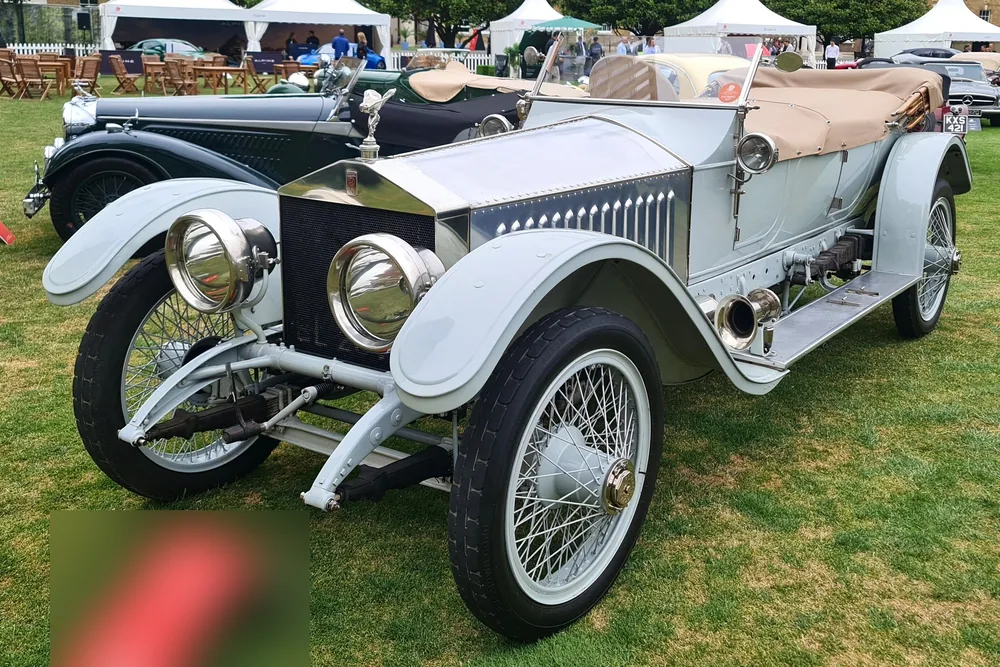
The Rolls-Royce 40/50 H.P. Silver Ghost earned the title through near-silent running and a 15,000-mile RAC-observed run in 1907. Who first printed it is disputed: Autocar is the usual answer, but not the only one.
By the My Hangar editorsPublished 5 min read
Key takeaways
- The Silver Ghost was the Rolls-Royce 40/50 H.P., launched in 1906 with a 7,036 cc side-valve six.
- Strictly, only chassis 60551, registered AX 201, was named The Silver Ghost, after its silver finish and quiet running.
- In 1907 AX 201 covered 15,000 miles under Royal Automobile Club observation, with 14,371 of them unbroken by an involuntary stop, according to Motor Sport.
- Autocar in 1907 is the usual credit for the phrase best car in the world, but another account names the Pall Mall Gazette in 1911.
- Rolls-Royce counts 6,173 cars built in Britain and 1,703 in Springfield, Massachusetts.
The Rolls-Royce 40/50 H.P., known as the Silver Ghost, earned its "best car in the world" reputation through near-silent running and public proof of endurance, above all a 15,000-mile RAC-observed run in 1907. Who first printed the phrase is disputed: most accounts credit Autocar in 1907, but we found no one reproducing the original text.
What was the Rolls-Royce Silver Ghost?
It was the 40/50 H.P., the single model Rolls-Royce built its reputation on. By 1906 the company had too many types with too few shared parts, and Claude Johnson pushed to concentrate on one. Royce answered with a new six-cylinder car, shown at Olympia in 1906.
The 40/50 name was literal. Rolls-Royce says the RAC's tax formula rated the car at 40 horsepower, and that it actually developed 50. As with every Rolls-Royce of the period, buyers took a rolling chassis and ordered the body from a coachbuilder.
| Silver Ghost | Figure |
|---|---|
| Engine | Side-valve straight-six, two blocks of three cylinders |
| Capacity | 7,036 cc, later 7,428 cc |
| Crankshaft | Seven main bearings, pressure lubrication |
| Gearbox | Four-speed with overdrive top; three-speed from 1909; four-speed from 1913 |
| Built in Britain | 6,173 (Manchester, then Derby from July 1908) |
| Built in the US | 1,703 (Springfield, Massachusetts, 1921–1926) |
Rolls-Royce dates the capacity increase to 1910, though other accounts say earlier. For the American total, Wikipedia gives 1,701.
Why was it called the Silver Ghost?
Because of one car. Johnson named chassis 60551, registered AX 201, The Silver Ghost, and gave it aluminium paint, silver-plated fittings and a Barker Roi-des-Belges body. "Ghost" stood for its quietness.
Rolls-Royce and Wikipedia call it the twelfth 40/50; Motor Sport calls it the thirteenth. Around 50 early cars received names, but the press took this one up for the whole model. Motor Sport insists that, strictly, only AX 201 is entitled to it, and Wikipedia says the company itself accepted the wider usage only in 1925, when the Phantom arrived.
Why was the engine so quiet?
Royce split the six into two groups of three cylinders, which addressed the vibration that troubled long six-cylinder engines of the time. Rolls-Royce also credits a harmonic damper on the crankshaft.
Motor Sport's 1977 ride in the original car is a useful check on the legend. Its writer found the engine no silent wonder at idle, but near-silent on the move, with almost inaudible gears apart from the overdrive top, and outstanding beside others of its age.
What did the 1907 trial prove?
That a car could run for weeks without trouble, when cars were notoriously unreliable. AX 201 won a gold medal in its class at the 1907 Scottish Reliability Trials, then started a longer run observed by the Royal Automobile Club.
- Distance: 15,000 miles, driven between London and Scotland at more than 400 miles a day, with the car locked up on Sundays.
- Stops: Motor Sport gives 14,371 miles without an involuntary stop, the interruption being a petrol tap that shook itself shut.
- Wear: the RAC had the car stripped afterwards. Motor Sport puts the cost of restoring it to as-new condition at £2 2s 7d.
- Result: Rolls-Royce calls it a new world record, and Classic & Sports Car says it smashed the previous 7,098-mile mark.
Details differ. Rolls-Royce places the fuel-tap delay in the Scottish event, and Wikipedia attaches the £2 2s 7d to 7,000 miles rather than to the full distance.
Who first called it the best car in the world?
Nobody has a clean answer, and the phrase is often attributed without a citation. Two claims name a publication; other accounts simply tie it to the car's results.
| Credit | Date | Who says so |
|---|---|---|
| Autocar, after its press test | 1907 | Wikipedia, Concours of Elegance |
| Pall Mall Gazette | November 1911 | The Market auction listing |
| No author named; earned in trials | 1907–1913 | Rolls-Royce |
| Reputation built in the Alpine Trial | 1913 | Top Gear |
The safest statement is that the credit usually goes to the press rather than the company, that the phrase grew with the trials, and that Rolls-Royce has used it ever since.
How did later events add to the reputation?
Through more public tests, not all of them the clean sweep later retellings suggest. In 1911 chassis 1701 ran from London to Edinburgh and back locked in top gear, averaging 19.59 mph, and later passed 101 mph at Brooklands with a streamlined body.
In 1912 James Radley's car failed on the Katschberg Pass in the Austrian Alpine Trial because its three-speed gearbox was geared too high. For 1913 the cars gained a four-speed gearbox with a low first gear. Rolls-Royce records first and third places, and Motor Sport says the cars dominated, but the team prize was lost in a collision with a non-competing car and went to Audi.
The same year, Carlos de Salamanca won the first Spanish Grand Prix, a touring-car race at Guadarrama, in a 40/50 Continental. The 40/50 was replaced by the Phantom in 1925, and American production ran on to 1926. Its roots go back to the 1904 meeting of Rolls and Royce, and later examples could wear the Spirit of Ecstasy.
Check how much of this stuck in the daily Rolls-Royce quiz, or place the car on the Rolls-Royce timeline.
FAQ
Why is the Silver Ghost called the best car in the world?
Because its quiet running and its public endurance runs, above all the 15,000 miles of 1907, set it apart from its rivals. The phrase is usually credited to Autocar in 1907, although other origins are claimed.
How many Rolls-Royce Silver Ghosts were made?
Almost 8,000. Rolls-Royce counts 6,173 in Britain and 1,703 in Springfield, Massachusetts; Wikipedia's total is 7,874.
What is AX 201?
The registration of chassis 60551, the original car named The Silver Ghost. It went into private hands in 1908, returned to the company in the late 1940s, and was used for publicity for decades.
What engine did the Silver Ghost have?
A side-valve straight-six of 7,036 cc, enlarged to 7,428 cc by about 1910, with its cylinders cast in two blocks of three.
Sources
- Models of the Marque, the 1910s: the 40/50 H.P. Silver Ghost, Rolls-Royce Motor Cars newsroom
- Another ghost story, Motor Sport Magazine, March 1977
- Summit meeting, Motor Sport Magazine, March 2002
- Original Rolls-Royce Silver Ghost joins Concours of Elegance line-up, Classic & Sports Car
- Car of the Week 18, Concours of Elegance
- 1920 Rolls-Royce Silver Ghost Tourer, The Market
- 100 years later, we drive the 1913 Alpine Trial, Top Gear
- Rolls-Royce Silver Ghost, Wikipedia
- Spanish Grand Prix, Wikipedia
Every figure here was checked against at least two independent sources, listed at the end.