Models
McLaren road cars explained: Sports, Super and Ultimate series
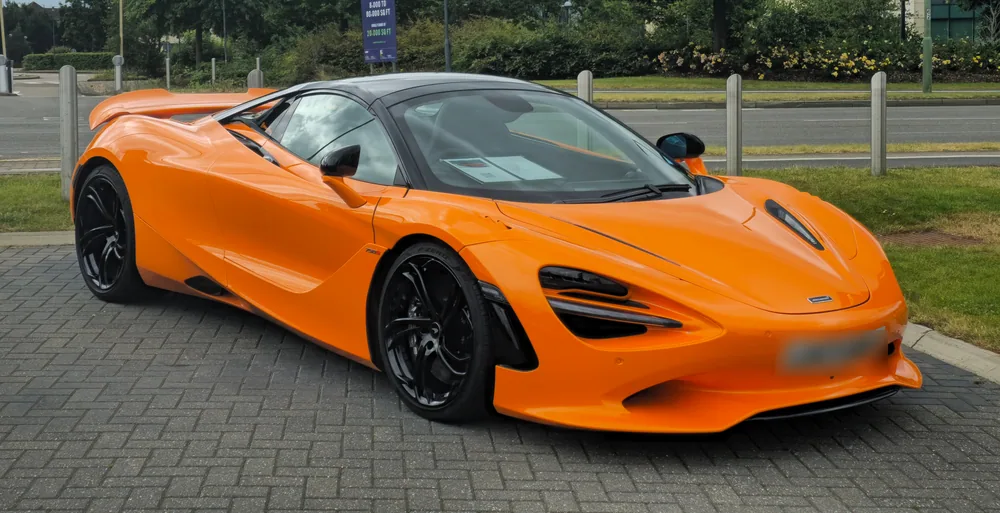
From 2015, McLaren split its road cars into Sports Series, Super Series and Ultimate Series: entry models such as the 570S, core cars such as the 720S and limited hypercars such as the P1.
By the My Hangar editorsPublished 5 min read
Key takeaways
- McLaren set up its three-tier structure of Sports, Super and Ultimate Series in 2015.
- The Sports Series began with the 570S and 540C, priced from £126,000, and ended with the 620R.
- The Super Series was the core V8 line, from the 12C and 650S through the 720S and 750S to the 788HS.
- The Ultimate Series holds limited models such as the P1 (375 built), Senna (500), Speedtail (106), Elva (149) and W1 (399).
- From 2019 the GT sat in its own family, and by 2021 French press reported a range of GT, Supercars and Ultimate.
McLaren road cars were sorted into three tiers in 2015: the Sports Series for entry cars such as the 570S, the Super Series for the core line such as the 720S, and the Ultimate Series for limited hypercars such as the P1 and Senna. A separate GT family followed in 2019, and the labels have since loosened.
What are the McLaren Sports, Super and Ultimate series?
They are a three-step ladder. The Sports Series sat at the bottom, the Super Series in the middle and the Ultimate Series at the top, with power, price and rarity rising up the ladder.
McLaren Automotive's modern line starts with the MP4-12C of 2011, which set the formula: a mid-mounted 3.8-litre twin-turbo V8 in a carbon-fibre tub. The numbers in most names give the power in PS, a habit that began with the 650S in 2014.
| Tier | Role | Examples | Engine |
|---|---|---|---|
| Sports Series | Entry level | 540C, 570S, 570GT, 600LT, 620R | 3.8-litre twin-turbo V8 |
| Super Series | Core range | 12C, 650S, 720S, 750S, 788HS | Twin-turbo V8, 3.8 then 4.0 litres |
| Ultimate Series | Limited top tier | F1, P1, Senna, Speedtail, Elva, W1 | Varies, V12, hybrid or V8 |
| GT (from 2019) | Grand touring | GT, GTS | 4.0-litre twin-turbo V8 |
What is the McLaren Sports Series?
It was the entry line, created to open up a market McLaren had not served. The 570S was unveiled at the 2015 New York show, the 540C followed at Shanghai, and production began at Woking in late 2015.
Autocar Professional reported prices of £126,000 for the 540C and £143,250 for the 570S, over 1,000 orders before the first handover, and a forecast that the full Sports Series family would more than double McLaren Automotive's annual volume, to over 4,000 cars. The line later added the lighter 600LT, and it closed with the 620R, a 620 PS road car developed from the 570S GT4 racer and limited to 225 units. Goodwood calls it the last Sports Series McLaren.
Spiders and the 570GT filled out the family, which ran until 2021.
What is the McLaren Super Series?
It was the centre of the range, and its best-known car is the 720S. The 12C and 650S are generally listed here, although they predate the Sports Series and the 2015 labels.
The 720S replaced the 650S in 2017 with a larger 4.0-litre V8 and 720 PS. The 750S took over in 2023, and in 2026 the 788HS arrived with 788 PS; evo calls it the last car on the 720S/750S platform. Wikipedia describes it as McLaren's final purely combustion-engined model.
The replacement is already teased. In late October 2026 Auto Express reported that the McL 820 will replace the 750S in 2027, with 820 PS (809 bhp).
What is in the McLaren Ultimate Series?
It holds the limited-run flagships, and it was partly assembled in hindsight. Evo notes that the P1 joined the label retroactively in 2015, and the F1 is counted as part of the line today.
| Ultimate model | Cars | Note |
|---|---|---|
| P1 | 375 | First McLaren hybrid, 903 bhp |
| Senna | 500 | Track-focused, about 800 PS |
| Speedtail | 106 | Three seats, driver in the centre |
| Elva | 149 | Open-top; first planned at 399 |
| W1 | 399 | Successor to the P1, 1,257 bhp |
The Speedtail's seating looks back to the McLaren F1's central driving position. The Elva shows how planned numbers can move: 399 became 249, then 149. The road-car idea itself is older than any of these: L'Argus counts fewer than five M6 GTs from 1969, in the days of Bruce McLaren and the team he founded.
Where do the McLaren GT and Artura fit?
Awkwardly, which is why the three-tier model is best read as history. The McLaren GT of 2019 sat outside all three tiers, with 620 PS and its own family, continued by the GTS.
The Artura, a 3.0-litre hybrid V6, is harder to place. It went on sale as the Sports Series ended, and evo says it might in theory replace those cars but costs far more. Wikipedia's model table lists it under Sports; L'Argus, reporting the range in 2021, puts it in a "Supercars" family with the 720 and 765, alongside GT and Ultimate families. Both views are in print, so the answer depends on who is writing.
Practically, the labels still help you read a used-car listing or an old road test. Recent reports on the newest cars use other words: evo and Auto Express both speak of "series production" models.
Want to put names to shapes? Try the daily McLaren quiz or browse the McLaren timeline.
FAQ
What is the difference between McLaren's Sports Series and Super Series?
The Sports Series was the cheaper entry line, such as the 540C and 570S. The Super Series was the core range above it, with more power, such as the 650S and 720S.
Which McLarens are in the Ultimate Series?
The F1, P1, Senna, Speedtail, Elva and W1 are the main road models. They are built in limited numbers, from 106 Speedtails to 500 Sennas.
Is the 570S a Sports Series or a Super Series car?
The 570S is a Sports Series car. It launched that tier in 2015, and the 540C joined it.
Does McLaren still use these series names?
Not consistently. L'Argus reported a move to GT, Supercars and Ultimate families in 2021, and the Sports Series ended that year, though "Ultimate Series" is still in use for the W1.
Sources
- McLaren. Dix ans de sportives de série, L'Argus
- McLaren Sports Series enters production, Autocar Professional
- McLaren P1 (2013–2015) review, evo
- McLaren W1 makes public debut, evo
- McLaren Artura 2025 review, evo
- First Drive: 2021 McLaren 620R Review, Goodwood Road & Racing
- New McLaren McL 820: 750S replacement will arrive in 2027 with 809bhp, Auto Express
- New McLaren 788HS: the last pure V8 McLaren?, evo
- McLaren Automotive, Wikipedia
- McLaren 570S, Wikipedia
Every figure here was checked against at least two independent sources, listed at the end.