Models
Porsche names explained: what Carrera, Targa, GTS, RS and the rest really mean
Most Porsche names come from racing: Carrera from the Carrera Panamericana, Targa from the Targa Florio, GTS from the 904 Carrera GTS, RS from Rennsport, GT2 and GT3 from racing classes.
By the My Hangar editorsPublished 6 min read
Key takeaways
- Carrera is Spanish for race and honours Porsche's results in the Carrera Panamericana; it first named a four-cam engine and the 356 A 1500 GS Carrera of 1955.
- Targa comes from the Sicilian Targa Florio road race; the 911 Targa was shown at the Frankfurt IAA in September 1965.
- GTS stands for Gran Turismo Sport and first appeared on the 904 Carrera GTS of 1963–64.
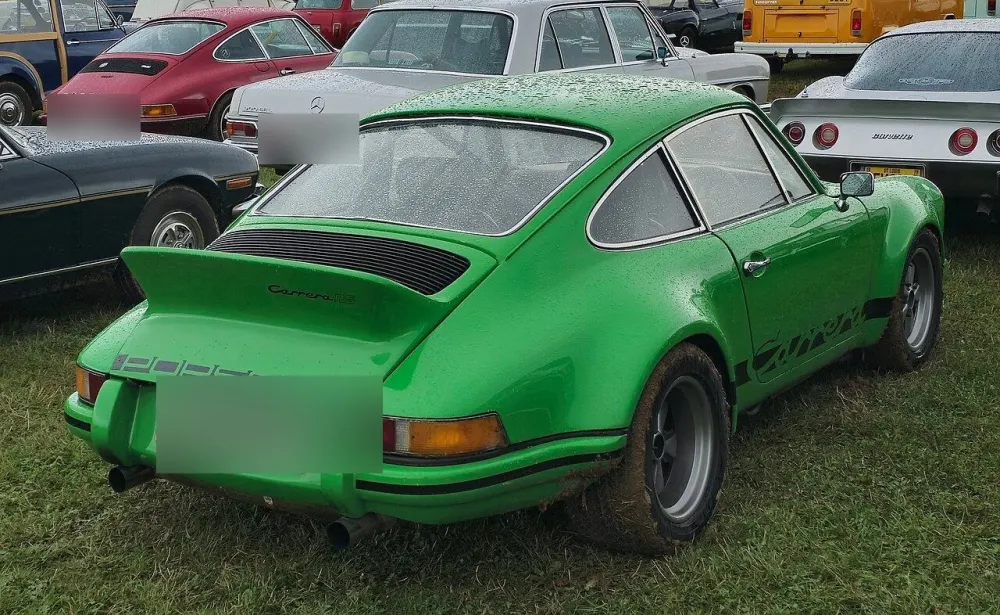
- RS stands for Rennsport (racing sport); the first 911 to wear it was the Carrera RS 2.7 of 1972.
- GT2 and GT3 take their names from the GT racing classes the cars were homologated for: the 993 GT2 of 1995 and the 996 GT3 of 1999.
Most Porsche model names come from racing. Carrera honours Porsche's results in the Carrera Panamericana road race in Mexico, Targa the Targa Florio in Sicily, GTS means Gran Turismo Sport (first used on the 904 Carrera GTS of 1963–64) and RS stands for Rennsport. GT2 and GT3 borrow the names of the racing classes they were built for. Others simply describe the hardware, such as Turbo.
Where does the name Carrera come from?
From the Carrera Panamericana, a Mexican road race held between 1950 and 1954. "Carrera" is Spanish for "race". Porsche took a class win there with the 550 Spyder in 1953, and in 1954 Hans Herrmann finished third overall in a 550, beaten only by two much bigger Ferraris.
Porsche first used the name for Ernst Fuhrmann's four-camshaft racing engine (type 547), and then for the fastest road cars that used it, starting with the 356 A 1500 GS Carrera of 1955. It went on the 904 Carrera GTS and the 906 Carrera 6, and the first 911 to carry it was the Carrera RS 2.7, presented at the Paris Motor Show on 5 October 1972, with "Carrera" written along its flanks.
Today the meaning has flipped. Carrera once marked the most powerful Porsche; on the current 911 it is the name of the core range.
What does Targa mean on a Porsche?
It comes from the Targa Florio, the Sicilian road race. Porsche had just won it for the fourth time in five years when the 911 Targa was named. In Italian, "targa" also means a plate, such as a licence plate.
The Targa was Porsche's answer to planned US safety rules that threatened the future of open cars. It kept a fixed stainless-steel roll bar, a removable roof panel and, at first, a folding plastic rear window. Porsche presented it at the Frankfurt IAA in September 1965 as a "safety cabriolet", and deliveries began in early 1967. According to Porsche, "Le Mans" and "Monza" were considered but already taken, and the name Targa was suggested by domestic sales manager Harald Wagner.
What do Turbo, S, 4 and 4S mean?
These four describe the car, not a race.
- Turbo: the 911 Turbo (type 930), shown at the Paris Motor Show in October 1974 with a turbocharged 3.0-litre flat-six of 260 PS, is described by Porsche as the first series-production sports car with an exhaust turbocharger. Since then Turbo has marked the top of the 911 range. On the electric Taycan, Turbo survives as a name for the most powerful versions even without a turbocharger.
- S: Porsche says S originally stood for "Super" or "Sport" and today means Sport: a stronger engine and more equipment. The first 911 S arrived in 1966 with 160 PS.
- 4: all-wheel drive. The first 911 badged this way was the 964 Carrera 4 of 1988, whose system was developed from the 959.
- 4S: all-wheel drive plus the wide Turbo body, first on the 993 Carrera 4S of 1995.
What do GTS, RS, GT2 and GT3 stand for?
All four come from motorsport homologation, when road cars were built so that racing versions could compete.
GTS: Gran Turismo Sport
GTS first appeared on the 904 Carrera GTS, a road-legal racer with a glass-fibre body that won the 1964 Targa Florio. Porsche revived the letters for the 928 GTS in 1991 and for the 911 with the 997 Carrera GTS of 2010, a 408 PS model placed between the Carrera S and the GT3. Today GTS sits above the S models.
RS: Rennsport
RS stands for Rennsport, German for "racing sport": a road-legal car derived from a race version. Porsche used it on 1950s racing spyders such as the 718 RSK, and the first 911 with it was the 1972 Carrera RS 2.7. Built to homologate the 911 for racing, it sold out its planned 500 cars within weeks, and more than 1,500 were eventually built.
GT2 and GT3: racing classes
Both names come from GT racing categories. The 911 GT2 of 1995 was a lightweight, rear-wheel-drive version of the 993 Turbo built for GT2-class racing. The first 911 GT3, a 996, was shown at the Geneva Motor Show in March 1999. Porsche chose not to call it RS and named it after the GT class its racing versions would compete in. Today's GT3 RS combines both naming traditions.
What do Spyder, Speedster, Sport Classic and T mean?
These are body styles and special editions, each with a long pedigree.
- Spyder: borrowed from coachbuilding, where it described a light two-seat open carriage. Porsche reserves it for open mid-engined cars, starting with the 550 Spyder of 1953.
- Speedster: a lower, more raked windscreen and less equipment for a sleeker look. The first was the 356 Speedster of 1954, built at the urging of US importer Max Hoffman.
- Sport Classic: a limited 911 with retro styling. The first, on the 997, was shown at the 2009 Frankfurt IAA with a ducktail spoiler and 408 PS, limited to 250 cars. The 992 Sport Classic of 2022 was limited to 1,250.
- T: Touring. The original 911 T of the late 1960s was the cheaper, less powerful entry model. Porsche revived it in 2017 for the 991 Carrera T, a lighter, more focused version of the base car.
Porsche names at a glance
| Name | Origin or meaning | First used on |
|---|---|---|
| Carrera | Carrera Panamericana road race (Mexico) | 356 A 1500 GS Carrera, 1955 |
| Targa | Targa Florio road race (Sicily) | 911 Targa, 1965 |
| Turbo | Exhaust turbocharger | 911 Turbo (930), 1974 |
| S | Originally Super or Sport; now Sport | 911 S, 1966 (on the 911) |
| 4 / 4S | All-wheel drive / plus wide body | 964 Carrera 4, 1988 / 993 Carrera 4S, 1995 |
| GTS | Gran Turismo Sport | 904 Carrera GTS, 1963–64 |
| RS | Rennsport (racing sport) | 911 Carrera RS 2.7, 1972 (on the 911) |
| GT2 / GT3 | GT racing classes | 993 GT2, 1995 / 996 GT3, 1999 |
| Spyder | Light open two-seat carriage | 550 Spyder, 1953 |
| Speedster | Low windscreen, stripped open car | 356 Speedster, 1954 |
| Sport Classic | Retro limited edition | 997 Sport Classic, 2009 |
| T | Touring | 911 T, late 1960s |
The numbers have their own story: read why the 911 is called 911 and see where each model fits in Porsche 911 generations explained. Then check whether you can spot a Carrera RS from a Sport Classic in the My Hangar Porsche quiz, or browse the launches on the Porsche timeline.
FAQ
What does Carrera mean on a Porsche?
Carrera is Spanish for "race" and honours Porsche's results in the Carrera Panamericana in Mexico in the early 1950s. It first named a four-cam engine and the 356 A 1500 GS Carrera of 1955; today it is the name of the core 911 range.
What does GTS stand for on a Porsche?
Gran Turismo Sport. The letters first appeared on the 904 Carrera GTS racer of 1963–64 and now mark the models positioned above the S versions.
What does RS mean on a Porsche?
RS stands for Rennsport, German for "racing sport": a road-legal model derived from racing. The first 911 RS was the Carrera RS 2.7 of 1972.
Why is it called a Targa?
After the Targa Florio road race in Sicily, which Porsche had won repeatedly by 1965. The word also means "plate" in Italian.
What is the difference between Spyder and Speedster?
At Porsche, Spyder is used for open mid-engined cars such as the 550 Spyder, while Speedster means an open car with a low, raked windscreen, starting with the 356 Speedster of 1954.
Sources
- What do Porsche model names mean?, Porsche
- Modellnamen und Typennummern (model names and type numbers), Porsche Newsroom
- 50 years of the 911 Carrera RS 2.7, Porsche Newsroom
- The first 911 S Targa and the origin of the Targa name, Porsche Newsroom
- Celebrating 20 years of the Porsche 911 GT3, Porsche Newsroom
- Porsche unveils new 992 911 Sport Classic, Goodwood Road & Racing
- 1995 Porsche 911 GT2, RM Sotheby's
- Porsche 904, Wikipedia
Every figure here was checked against at least two independent sources, listed at the end.